Oregon tried to solve its fair housing problems without maps, and that is a problem: "In 2019 and 2023, Oregon passed two laws requiring city housing plans to affirmatively further fair housing. But rather than using maps to inform policy, many Oregon cities are refraining from mapping to avoid confronting patterns of segregated housing."
Showing posts with label Environmental Planning. Show all posts
Showing posts with label Environmental Planning. Show all posts
28 July 2026


06 July 2026
Who will speak for the trees?
In 1971, Dr. Seuss published the Lorax in which the titular character tries to fight off developers by speaking out on behalf of the trees that they are cutting down in the name of progress. Famously he says, "I am the Lorax. I speak for the trees. I speak for the trees, for the trees have no tongues."
In that same year, the US Supreme Court spoke out on who could speak for the trees. In that case, Disney fought the Sierra Club for the right to build a ski resort in Mineral King Valley, CA. The court decided that the Sierra Club had no legal standing to speak on behalf of the trees. But Oyez reports on a very interesting dissenting decision,
"Justice William O. Douglas wrote a dissenting opinion in which he argued that the standing doctrine should allow environmental organizations such as the Sierra Club to sue on behalf of inanimate objects such as land. There is precedent for inanimate objects to have legal personality for the purpose of lawsuits, and “[t]hose who have that intimate relation with the inanimate object about to be injured, polluted, or otherwise despoiled are its legitimate spokesmen.”"
Despite that dissent, the US moved away from rights for those trees.
Other parts of the world have other views on the matter. More recently, the National Assembly in France has passed a declaration on the Universal Declaration of the Rights of Trees. Despite the name, it may effectively be more about stewardship than legal rights, but it certainly raises a serious question about these important organisms' roles in the ecological balance of the planet and the right ways to promote those relationships. Are these efforts more political/legal or symbolic?
Inspired by the ideas of the Universal Declaration, a town in Quebec has embraced the rights of their trees. The NY Times reports on Terrasse-Vaudreuil and its newly found recognition of its trees:
"Adopting the resolution was not merely symbolic, Mr. Bourdeau said in an interview. In Terrasse-Vaudreuil, practically, the resolution requires the town to prioritize canopy protection across all municipal planning. The next step is to review existing regulations and strengthen tree protections, the mayor said, followed by plans to plant and distribute trees to schools, businesses and residents in an ongoing effort to protect and diversify what has now been deemed a collective asset."
I appreciate that instead of treating it like a small one-off story, they provide a context that shows this is emblematic of a much larger perspective that hasn't quite found the right vehicle.
18 June 2026
A highly ranked program
Rutgers is a Top 20 landscape architecture program. While it isn't a surprise, it is nice to see that College Factual agrees, as they list RULA as #16. It also says that the MLA program is Top 10 in the country.
While their methods are not clear, it is easy to understand that the Rutgers Landscape Architecture program is exceptional, as it tackles big problems and produces innovative work and methods. At the undergraduate level, the LA program is intertwined with an Environmental Planning degree. Students in the BSLA and MLA programs are also integrated with the Environmental Geomatics program and have incredible opportunities to learn about GIS, geospatial technologies and drones at the Grant F. Walton Center for Remote Sensing and Spatial Analysis.
Rutgers Landscape Architecture is within the School of Environmental and Biological Sciences (SEBS). This context provides easy access to other sciences - soils, ecology, environmental and social sciences - for both faculty and students. Not only is this a unique context and unparalleled source of expertise, but it also helps build multidisciplinary experience, which is an essential element in contemporary landscape architecture.
Another reason that the program stands out is that the faculty include prolific researchers and scholars experienced designers. Multiple faculty have recently published important books while others demonstrate their impact through papers and funded research. These faculty often bring their scholarship into the studio, especially in the Praxis Studios. The department's community engagement makes it a leader within Rutgers and ASLA. The program's innovative faculty regularly publish research in urban forestry, spatial dimensions of human health, and landscapes of food.
Located halfway between New York City and Philadelphia, the Rutgers Landscape Architecture program benefits from professional exposure, office visits, and easy travel to some of the most important new built-works in the country. Job placement is remarkably strong, with alumni being prominent in leading offices around the country. The program has also benefited from a grant supporting student placement in National Park offices, which has increased public sector opportunities for students and alumni.
This is an exciting program increasingly known for swinging big and embracing innovation. No wonder it is featured in these rankings.
03 March 2026
Erosion can be fast
The Grand Canyon might make you think that erosion happens slowly, but this video of gully erosion shows that it can happen fast too.
23 February 2026
Data Centers
In New Brunswick they successfully fought against a new data center. Meanwhile in Louisiana, Governor Landry happily announced that three Amazon data centers were coming to Northeast Louisiana. Data Center Infrastructure is the newest planning board version of the big box store or cell tower - the controversial topic that is loved and hated and poorly understood.
16 February 2026
Not everything should go down the drain
Someone noticed sludge in the Elizabeth River and called it in. Based on the coverage in NJ.com, it looks like someone might have by-passed the sanitary sewage system and released it into a storm sewer catch basin instead. The EPA is investigating.
Using the EPA WATERS tool, we can see what the path might look like:

10 February 2026
Learn something
On Fridays this spring, OSU Center for Urban and Regional Analysis is hosting free webinars. Here are some topics worth watching for:
- Local Data, Local Impact: Community-Centered Research in Central Ohio
- What are child-friendly cities like, why do they matter, and how do we build them?
- Building Cities for Everyone: Disability-Forward Housing Futures
- Creating Age-Friendly Communities: Local Approaches from Practice, Policy, and Research
08 February 2026

02 February 2026
USGS Topographic Quad Maps
After talking about USGS topographic quads for NJ in class, these might be useful ways to explore the language used throughout the US on these amazing maps.
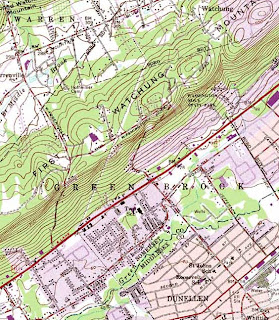
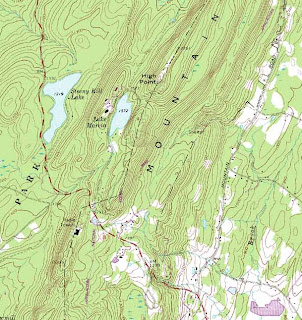
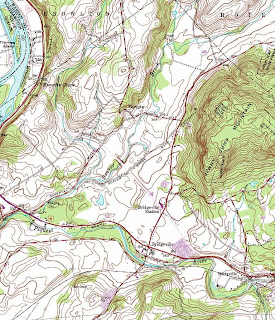
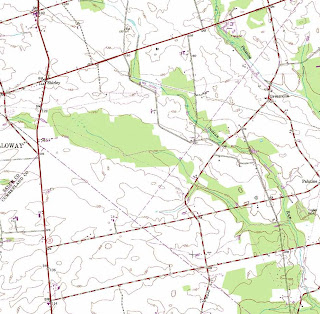
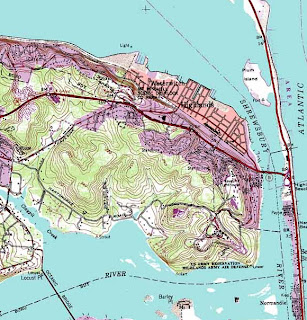
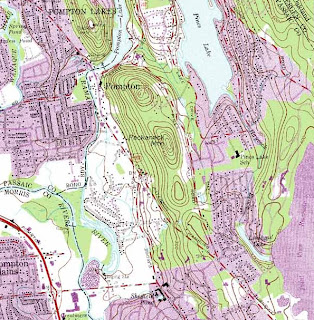
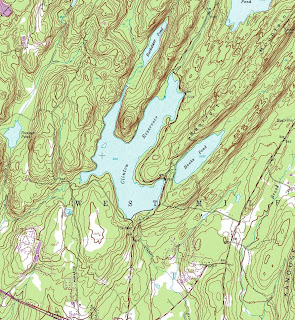
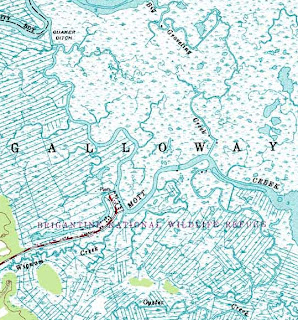
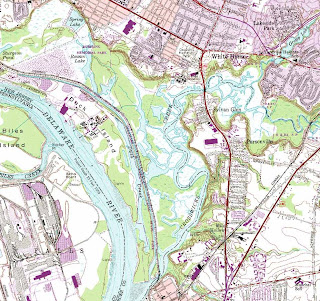 A special thanks goes out to Mike Siegel and the Rutgers Cartography Lab. This is a great resource for students and for pros.


 A special thanks goes out to Mike Siegel and the Rutgers Cartography Lab. This is a great resource for students and for pros.
20 January 2026
Updating Canada's Floodmaps
10% of all houses in Canada are in the floodplain, but the maps in Canada are out-of-date. It turns out that the question of whether they should update the maps to a more accurate outcome is being fiercely debated.
13 March 2025
Another $65,000 in the fight against climate change?
Is this our best response to increased flooding in a changing climate? New gates to close the roads?
11 March 2025
UNESCO World Heritage list in the US
You don't need to travel to Europe or South America to visit UNESCO World Heritage Sites. There are multiple sites within an easy drive of Rutgers. And there are even more all throughout the US (28, to be precise), with the National Park Service and the Department of Interior maintaining a list of future candidate sites to list. Here is a list/map of the US sites.
What should be added? What is a site that is significant to the entire world's population?
10 March 2025
FlowingData's warning about dishonest charts
In the GISciences, people often cite Mark Monmonier's How to Lie with Maps. It is a very accessible guide to the ways that maps can trick us and how cartographers, even well meaning ones, can create maps that mislead.
So I am quite taking with the chart equivalent. FlowingData has posted an accessible explanation about Dishonest Charts that can help us both as the creators of charts but also as critical readers of data that need to be wary of what at first seems obvious.
26 February 2025
Good neighbor policy?
In New Jersey, Home Rule gives the municipality substantial autonomy over its own planning and zoning decisions. As such, even a development on a shared border with a neighboring town is left largely to the one community. Hence, Edison just approved a new warehouse on its border with Metuchen despite objections from "Metuchen's land use attorney and planner."
25 February 2025
Pinelands CMP
Southern New Jersey has an unique landscape called the Pinelands. The UN-recognized landscape benefits from a variety of strategies and protections including the New Jersey Pinelands Commission's Comprehensive Management Plan (CMP). First adopted in 1980, the plan is an important tool for guiding growth while protecting these unique resources, including the very large Kirkwood-Cohansey aquifer. If the CMP is too much for you, this StoryMap offers an easy point of entry.
19 February 2025
18 February 2025
People and perception
Planning and designing for people is tricky because community perception doesn't always match reality. A striking example of this is the Mean World Syndrome in which people express grave concerns over crime and public safety at times during which these concerns are not well founded. What else might a community perception that can sometimes be shown to be misaligned with the facts?
Subscribe to:
Posts (Atom)


