The world's most dangerous tree is the Manchineel. That gives it quite a reputation. The Wikipedia entry has an Historical Accounts and In Popular Culture section.
20 August 2026


19 August 2026
Wiki - Oology
The study of bird's eggs is called Oology. The article describes the underground activities of egging, and mentions Colin Watson who was arrested and convicted repeatedly until he died falling from a tree while egging. It also mentions the secret society of eggers, the Jourdain Society, which was raided by the police.
18 August 2026
Wiki - Khone Phapheng Falls
The widest waterfall in the world (nearly 7 miles wide). Also, home to the largest freshwater fish in the world.
17 August 2026
Wiki - Taï National Park
Taï National Park in the Ivory Coast. The fauna list is extensive, with three different types of pangolin. Still, the threatened species are amazing: "Five mammal species of the Taï National Park are on the Red List of Threatened Species: pygmy hippopotamus, olive colobus monkeys, leopards, chimpanzees, and Jentink's duiker."
16 August 2026
Wiki - Living root bridge
Trees are amazing. Making a bridge out tree parts doesn't sound exceptional until you see this version where the tree parts are still alive: Living Root Bridge. One of the examples is the Rangthylliang 1 root bridge which is over 50 meters long. The See Also list includes the equally interesting Baubotanik and Fab Tree Hab.
15 August 2026
Wiki - Buridan's ass
The 14th century philosopher, Jean Buridan, grappled with free will and indecision. Later philosophers satirized his approach with Buridan's ass but it also is used as an understandable illustration of the concept. Its broader application can be seen in places like this piece, "US Climate Policy Caught Between Two Worlds — Are We Smarter Than Buridan’s Ass?"
14 August 2026
13 August 2026
12 August 2026
Wiki - Fogo (Island), Cape Verde
Cape Verde recently got some attention. One small piece of that small country is Fogo, the volcanic island. We have learned to look closer at little places, right?
11 August 2026
Wiki - Fogo Island, Newfoundland
For such a small and difficult to reach island, Fogo Island has a pretty lengthy entry. You may have seen it on the 1606 Bertius map of Newfoundland or on Season 2 of Severence. The histories include Marconi and the Treaty of Utrecht.

10 August 2026
Wiki - Samuel Seymour
According to Wikipedia, Samuel Seymour held a couple of interesting distinctions:
1) the last person to report having witnessed the assassination of U.S. President Abraham Lincoln on April 14, 1865
2) the oldest person to appear on television (at the time of his appearance),
09 August 2026
Wiki - Ice block expedition of 1959
That time that an insulation company drove a block of ice from Norway to the Equator. In Africa they met with Albert Schweitzer. Sometimes a publicity stunt is more than just that.
08 August 2026
07 August 2026
Wiki - Morgan Munitions Depot explosion
Harrowing story of a munitions plant explosion in Sayreville in 1918. In the 1990s, some shells were found near an elementary school and the resulting search found another 5,000 unexploded shells. more than 100 years later, the local high school is still called...the Bombers.

06 August 2026
Ancient Aquiry
Nearly 2,000 years ago, the ancient city of Aquiry was very big. A new paper in Nature says that LiDAR has helped them identify 20,000 earthworks in the city. Seems like a lot.
05 August 2026
Rutgers' Irises
Great to see Danielle Lohrman (RULA '27) so involved with this special partnership at Rutgers Gardens:
Historic Iris Partnership Blooms at Rutgers Gardens
Wiki - Western Brook Pond
Western Brook Pond, inside Gros Morne National Park, is a freshwater fjord. The fishing isn't great because the lake is ultraoligotrphic; the water is so clean that it doesn't foster life. And that is despite the prominent contributions of Pissing Mare Falls. It had a 30m tsunami in the early 20th century.
04 August 2026
03 August 2026
Wiki - Landlocked countries
Wikipedia has a lengthy entry on landlocked countries. It includes basic "records" like largest (Kazakhstan) and most populous (Ethiopia). Less basic, like the fact that Kyrgyzstan is the farthest landlocked country from any ocean. And a little odd was a list of countries that are landlocked by exactly two other countries.
But the truly unexpected section was about "double-landlocked" countries, which are countries surrounded by landlocked countries. In all the world, there are only two of these exist: Liechtenstein and Uzbekistan.
02 August 2026
01 August 2026
August quote
I should post this every year...
"When the first of August came round, the Professor realized he had pleasantly trifled away nearly two months at a task which should have taken little more than a week."
-Willa Cather (from The Professor's House, 1925)
Wiki - Binondo
31 July 2026
August with Wikipedia
As I travel down rabbit holes and (re) discover curiosities and interesting tidbits, I sometimes end up with some bookmarks for Wikipedia that might be interesting to others. In August, I will post a link to a curious Wikipedia entry each day. Some are more about the content, while others are more about the entry itself. Either way, I encourage a quick click on the link before you decide which it is.
Wikipedia's entry on Wikipedia is a good place to start. Or, you can skip directly to the Wikipedia Controversies page.
28 July 2026
Hexmap
The political news site Downballot has developed a hexagon-based cartogram for reporting congressional district data. Since we talk about approaches like this in our GIS classes, it is interesting to see one in such a prominent use.
Mapless fair housing in Oregon
Oregon tried to solve its fair housing problems without maps, and that is a problem: "In 2019 and 2023, Oregon passed two laws requiring city housing plans to affirmatively further fair housing. But rather than using maps to inform policy, many Oregon cities are refraining from mapping to avoid confronting patterns of segregated housing."
26 July 2026
10 July 2026
Cottonwood Fire in Utah
NASA has released a before/after image of the fires in Utah, with a slider bar map window. Vexcel has close-up images of the damage.
As an aside, Government Technology reports that Western US firefighting has an additional problem with the loss of many dispatcher in recent years.
06 July 2026
Who will speak for the trees?
In 1971, Dr. Seuss published the Lorax in which the titular character tries to fight off developers by speaking out on behalf of the trees that they are cutting down in the name of progress. Famously he says, "I am the Lorax. I speak for the trees. I speak for the trees, for the trees have no tongues."
In that same year, the US Supreme Court spoke out on who could speak for the trees. In that case, Disney fought the Sierra Club for the right to build a ski resort in Mineral King Valley, CA. The court decided that the Sierra Club had no legal standing to speak on behalf of the trees. But Oyez reports on a very interesting dissenting decision,
"Justice William O. Douglas wrote a dissenting opinion in which he argued that the standing doctrine should allow environmental organizations such as the Sierra Club to sue on behalf of inanimate objects such as land. There is precedent for inanimate objects to have legal personality for the purpose of lawsuits, and “[t]hose who have that intimate relation with the inanimate object about to be injured, polluted, or otherwise despoiled are its legitimate spokesmen.”"
Despite that dissent, the US moved away from rights for those trees.
Other parts of the world have other views on the matter. More recently, the National Assembly in France has passed a declaration on the Universal Declaration of the Rights of Trees. Despite the name, it may effectively be more about stewardship than legal rights, but it certainly raises a serious question about these important organisms' roles in the ecological balance of the planet and the right ways to promote those relationships. Are these efforts more political/legal or symbolic?
Inspired by the ideas of the Universal Declaration, a town in Quebec has embraced the rights of their trees. The NY Times reports on Terrasse-Vaudreuil and its newly found recognition of its trees:
"Adopting the resolution was not merely symbolic, Mr. Bourdeau said in an interview. In Terrasse-Vaudreuil, practically, the resolution requires the town to prioritize canopy protection across all municipal planning. The next step is to review existing regulations and strengthen tree protections, the mayor said, followed by plans to plant and distribute trees to schools, businesses and residents in an ongoing effort to protect and diversify what has now been deemed a collective asset."
I appreciate that instead of treating it like a small one-off story, they provide a context that shows this is emblematic of a much larger perspective that hasn't quite found the right vehicle.
personal news
Excited to announce I am embarking on a new phase of my service at Rutgers as I have transitioned to chairing the Department of Landscape Architecture. I am humbled to follow in some auspicious footsteps and honored to be granted this opportunity to serve the school, my colleagues, our students, alumni, and communities.
03 July 2026
David Robinson
The retirement of David Robinson is a huge loss for Rutgers and NJ, but I am happy for him nonetheless.
30 June 2026
New Climate site
Much of the data and information from Climate.gov has now migrated to Climate.us including the resilience toolkit and the maps.
This week, the map of interest might be the map hottest days in history. Note: New Brunswick hit 105.1 in 2010.
26 June 2026
Levels of agency
From a discussion of the different levels of agency at Swiss Miss:
“There are two kinds of people after dinner:
Those who ask, “Can I help?”
And those who are already doing the dishes.
One sounds helpful.
One is.
This plays out on every team every day. Don’t wait for permission. Do the dishes”
23 June 2026
Urban patterns
Architect Abhinav Bhardwaj has posted some great images on Instagram that illustrate the differences between coarse and fine urban development patterns. While I might quibble with the accuracy of the labels (American vs. European), I think the illustrations are certainly useful in distinguishing between different eras and approaches.
Interestingly, the Streetlife Design Competition has been posted with opportunities that include students and young professionals.
22 June 2026
GPN MAC in AC
The GPN Mid-Atlantic Conference will be in Atlantic City in October 2026 - registration is open. GPN, the Geospatial Professional Network, is the former URISA and the Mid-Atlantic Conference is a popular chance to find out what is happening in our region.
18 June 2026
A highly ranked program
Rutgers is a Top 20 landscape architecture program. While it isn't a surprise, it is nice to see that College Factual agrees, as they list RULA as #16. It also says that the MLA program is Top 10 in the country.
While their methods are not clear, it is easy to understand that the Rutgers Landscape Architecture program is exceptional, as it tackles big problems and produces innovative work and methods. At the undergraduate level, the LA program is intertwined with an Environmental Planning degree. Students in the BSLA and MLA programs are also integrated with the Environmental Geomatics program and have incredible opportunities to learn about GIS, geospatial technologies and drones at the Grant F. Walton Center for Remote Sensing and Spatial Analysis.
Rutgers Landscape Architecture is within the School of Environmental and Biological Sciences (SEBS). This context provides easy access to other sciences - soils, ecology, environmental and social sciences - for both faculty and students. Not only is this a unique context and unparalleled source of expertise, but it also helps build multidisciplinary experience, which is an essential element in contemporary landscape architecture.
Another reason that the program stands out is that the faculty include prolific researchers and scholars experienced designers. Multiple faculty have recently published important books while others demonstrate their impact through papers and funded research. These faculty often bring their scholarship into the studio, especially in the Praxis Studios. The department's community engagement makes it a leader within Rutgers and ASLA. The program's innovative faculty regularly publish research in urban forestry, spatial dimensions of human health, and landscapes of food.
Located halfway between New York City and Philadelphia, the Rutgers Landscape Architecture program benefits from professional exposure, office visits, and easy travel to some of the most important new built-works in the country. Job placement is remarkably strong, with alumni being prominent in leading offices around the country. The program has also benefited from a grant supporting student placement in National Park offices, which has increased public sector opportunities for students and alumni.
This is an exciting program increasingly known for swinging big and embracing innovation. No wonder it is featured in these rankings.
01 June 2026
18 May 2026
Blending local knowledge and science
NPS has a feature that looks at the ways that the Confederated Salish and Kootenai Tribes are responding to climate change. This quote sums it up well:
"Knowledge, once learned, cannot be taken away," Wagner said. Federal funds may completely disappear, he said, but "it's not going to take away the truth, and we have that knowledge now, and we will continue on our path to protect what's out there."
15 May 2026
Wiki places: Uggubseni
Ukupseni or Uggubseni, also called Playón Chico - described as one of the most densely populated islands.
14 May 2026
LAM in Hoboken
Landscape Architecture Magazine has a feature on the new OLIN park in Hoboken, Northwest ReslienCity Park.
06 May 2026
GIS History
Meagan Snow has posted a fabulous GIS history piece on the Library of Congress blogs, called SYMAPping the Puget Sound: Exploring Early Techniques in Computer Cartography.

05 May 2026
Tree planting at Rutgers
Exciting to see that a Rutgers landscape architecture and urban forestry project is getting attention. Read more about Josh Kover's project that got the community together to plant trees on a former road.
04 April 2026
18 March 2026
bell hooks quote
“Rarely, if ever, are any of us healed in isolation. Healing is an act of communion.”
― bell hooks
11 March 2026
Ghostly aerials of an Iceland glacier
After a fascinating Common Lecture today by Joyce Hsiang on glaciers and the cryosphere, I was surprised to see an amazing photo by Dani Guindo of an Icelandic glacier. The link can take you to a whole series of photos.
03 March 2026
Erosion can be fast
The Grand Canyon might make you think that erosion happens slowly, but this video of gully erosion shows that it can happen fast too.
25 February 2026
the world
“I arise in the morning torn between a desire to improve the world and a desire to enjoy the world. This makes it hard to plan the day.”
― E.B. White
23 February 2026
Data Centers
In New Brunswick they successfully fought against a new data center. Meanwhile in Louisiana, Governor Landry happily announced that three Amazon data centers were coming to Northeast Louisiana. Data Center Infrastructure is the newest planning board version of the big box store or cell tower - the controversial topic that is loved and hated and poorly understood.
16 February 2026
Not everything should go down the drain
Someone noticed sludge in the Elizabeth River and called it in. Based on the coverage in NJ.com, it looks like someone might have by-passed the sanitary sewage system and released it into a storm sewer catch basin instead. The EPA is investigating.
Using the EPA WATERS tool, we can see what the path might look like:

10 February 2026
Learn something
On Fridays this spring, OSU Center for Urban and Regional Analysis is hosting free webinars. Here are some topics worth watching for:
- Local Data, Local Impact: Community-Centered Research in Central Ohio
- What are child-friendly cities like, why do they matter, and how do we build them?
- Building Cities for Everyone: Disability-Forward Housing Futures
- Creating Age-Friendly Communities: Local Approaches from Practice, Policy, and Research
08 February 2026

02 February 2026
USGS Topographic Quad Maps
After talking about USGS topographic quads for NJ in class, these might be useful ways to explore the language used throughout the US on these amazing maps.
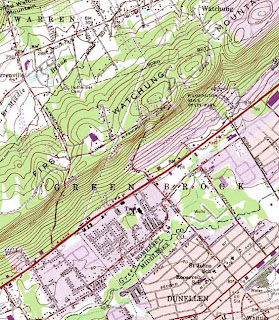
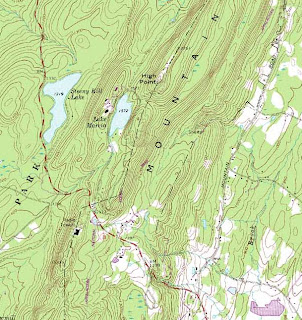
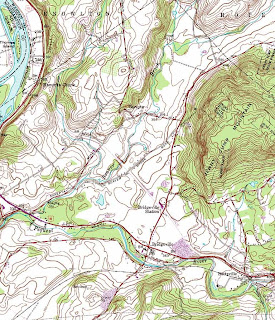
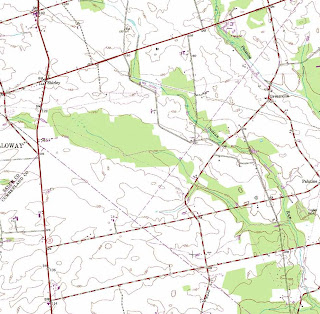
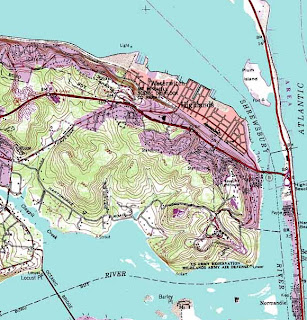
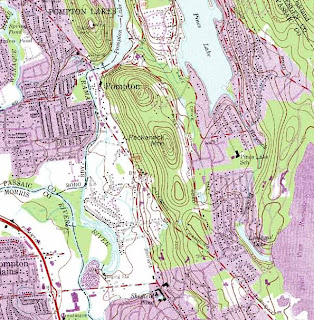
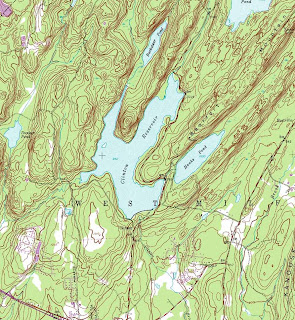
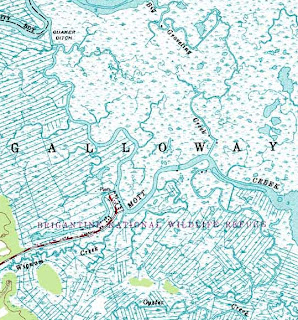
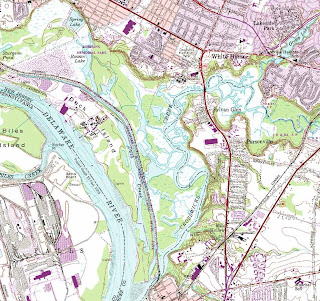 A special thanks goes out to Mike Siegel and the Rutgers Cartography Lab. This is a great resource for students and for pros.


 A special thanks goes out to Mike Siegel and the Rutgers Cartography Lab. This is a great resource for students and for pros.
27 January 2026
Federal government shedding PhDs
Science reports that the US Government now has 10,000 fewer STEM PhDs than it did a year before.
20 January 2026
Updating Canada's Floodmaps
10% of all houses in Canada are in the floodplain, but the maps in Canada are out-of-date. It turns out that the question of whether they should update the maps to a more accurate outcome is being fiercely debated.
16 January 2026
Submarine Cables
Check out this impressive sequence of annual maps designed to tell the evolving story of submarine cables. It would be easy to think that everything has gone to microwave or satellite communications, but these maps show an incredible growth in cables AND do it gorgeously.
Wiki-Poundbury
England has a town, designed by architect John Simpson, that was started in 1993 and should be completed in 2028. With roughly 5,000 residents, Poundbury is an experiment in planning, design, and social engineering which has been built with support along the way from Prince/King Charles (who studied architecture in school).
15 January 2026
14 January 2026
13 January 2026
Wiki-ICD-11
ICD-11 is the International Classification of Diseases, 11th Revision. It is a list of nearly 90,000 things that you could worry about.
12 January 2026
09 January 2026
Wiki - Calendar (New Style) Act 1750
Calendar (New Style) Act 1750 - Deleted 11 days from September 1752 in order to shift the calendar. Modified the calculation of the date for Easter.
08 January 2026
Wiki-Catalan Vault
The Catalan Vault is a brickwork arch that allows more open ceilings. Maybe you have seen it in a Gilded Age house or Grand Central Station.
07 January 2026
06 January 2026
Wiki-George Wyllie
George Wyllie - described himself as a "scul?tor" because his works always asked questions.
05 January 2026
02 January 2026
Things to think about...
Inside Higher Ed: 87 percent of Gen Z said they feel unprepared to succeed at work due to limited guidance, unclear paths to career from school and uncertainty about which skills matter most.
31 December 2025
Wiki-Cotard's delusion
Starting the year with some interesting Wikipedia entries.
Cotard’s delusion: also known as Cotard's delusion or walking corpse syndrome, is a rare mental disorder in which the affected person holds the delusional belief that they are deceased, do not exist, are putrefying, or have lost their blood or internal organs.
16 December 2025
Data Center water usage
Lots of people talk casually about how much water is used by data centers. It is worth reading this detailed accounting.
19 November 2025
Wilson
“The real problem of humanity is the following: we have paleolithic emotions; medieval institutions; and god-like technology. And it is terrifically dangerous, and it is now approaching a point of crisis overall.”
-E. O. Wilson
This fabulous quote is from a larger 2009 story in Harvard Magazine about the tensions and reconcilliation between Wilson and the recently deceased James Watson. (h/t Kottke)
12 November 2025
Terracotta
Our department just had an enticing lecture by Haemee Han, whose recent design in South Korea featured a creative use of terracotta.
The talk reminded me of an often overlooked source of terracotta here in Central NJ: the Atlantic Terra Cotta Company. It was based in Perth Amboy but continued much of its later production in Rocky Hill. You have seen their tiles and architectural ornamentation. They are on the Philly Art Museum and the Woolworth Building and the Flatiron Building. And many others.
This brief history of the local terracotta company is worth a peek.
23 October 2025
You may want to go hiking
After reading about Jean Muenchrath's hike on Mount Whitney, you might feel ready for a hike: “Well, yeah, and I’m carrying 15kg [her backpack] on my broken spine and pelvis, and I’ve got gangrene now in my butt because of the injury.”
16 September 2025
Feynman quotes
“The first principle is that you must not fool yourself and you are the easiest person to fool.”
― Richard P. Feynman
“I learned very early the difference between knowing the name of something and knowing something.”
― Richard P. Feynman
“I would rather have questions that can't be answered than answers that can't be questioned.”
― Richard Feynman
“I can live with doubt and uncertainty and not knowing. I think it is much more interesting to live not knowing than to have answers that might be wrong. If we will only allow that, as we progress, we remain unsure, we will leave opportunities for alternatives. We will not become enthusiastic for the fact, the knowledge, the absolute truth of the day, but remain always uncertain … In order to make progress, one must leave the door to the unknown ajar.”
― Richard P. Feynman
11 September 2025
28 August 2025
Other Katrina memories
As we are reminded of the 2005 damage caused by Hurricane Katrina, I encourage readers to reflect on stories beyond those from New Orleans. It was a huge storm with a wider path than many remember. Mississppi lost more than 200 lives when a storm saurge, possible as high as 30', washed across the coastal communities of Biloxi, Waveland, Pass Christian and Bay St. Louis. Houses built on 10' or 15' stilts were washed away. The Bay St Louis bridge, US 90, was collapsed.
Energy visualization
How much wind, solar, gas, or nuclear energy does your visit to this website require? Click and see.
26 August 2025
River clean up
The Danube is benefiting from a clean-up culture that has people competitively collecting plastic on the river in homemade boats. The ability to create a positive culture that helps the environment is a remarkable thing.
25 August 2025
20 August 2025
Two (maybe three) kinds of books
As I race to finish some of my summer reading, I found Austin Kleon's description of the centrifugal force of books to be quite intriguing.
18 August 2025
Celebrate with Rutgers
PAST, PRESENT, AND FUTURE OF BOTANY AT RUTGERS
24 October 2025
We are delighted to invite you to our special jubilee symposium to celebrate botany at Rutgers University, New Brunswick, NJ.
The symposium will be held on Friday, October 24th and will include presentations by invited researchers, a poster session, an open house at Chrysler Herbarium, and a field trip on Saturday, October 25th.
Please sign up for the Chrysler Herbarium’s mailing list to stay up to date with information about this event and other herbarium news at this link: https://tinyurl.com/CHRBlist.
Registration information will be sent to recipients of the mailing list in September.
07 August 2025
Ancient quote
“These individuals have riches just as we say that we ‘have a fever,’ when really the fever has us.” — Seneca
29 July 2025
The words of NYC
NYC's Urban Textscape mapped out all of the visible words in StreetView. "The data is astonishing; it feels like sifting through the city's source code"
02 July 2025
Trees quote
“The tree which moves some to tears of joy is in the eyes of others only a green thing that stands in the way. Some see nature all ridicule and deformity... and some scarce see nature at all. But to the eyes of the man of imagination, nature is imagination itself.”
― William Blake
26 June 2025
Floating islands
A nice article is out about the Princeton Hydro floating islands on Woodcliff Lake. These are intended to be a living tool fighting algae in the reservoir water.
25 June 2025
Trees quote
“Trees are sanctuaries. Whoever knows how to speak to them, whoever knows how to listen to them, can learn the truth. They do not preach learning and precepts, they preach, undeterred by particulars, the ancient law of life.”
― Hermann Hesse, Wandering
23 June 2025
The Subway is Not Scary
The Subway is Not Scary is an essay from Hamilton Nolan. If you are one of those people who avoids the subway in NYC, give him a hance to convince you that you should ride it more. I find it to be a pretty amazing system and, as he suggests, don't understand why some work so hard to avoid it.
02 June 2025
Dams and groundwater
In a recent post, The Hydraulic Mission Impossible!, Nik Kowsar looks at the damming of Western US rivers, with highly visible impacts, as a hint about what is happening below the surface. But, as he explains, the groundwater is where the biggest crisis lies hidden.
"New research using NASA’s GRACE satellites reveals the Colorado River Basin has lost 28 million acre-feet of groundwater since 2003—twice the volume lost from Lake Mead and Lake Powell combined."
08 May 2025
Subsidence is sinking our cities
The Washington Post takes a closer look at the rates of subsidence and reasons that our major cities are sinking.
05 May 2025
Robot lawn mowers
Thinking about the future? A new survey claims that 13% of lawn owners have robot lawn mowers. Warning: Lots of infographic and very little about methodology.
28 April 2025
Summer reading suggestions
Frequent question: I have some extra time this summer/semester/winter and would like to read an extra book or two. Can you suggest anything good?
It depends on your interest.
A) For trying to get a sense for Landscape Architecture as a profession:
An interesting book to read and explore is John O. Simmonds' Landscape Architecture. While quite dated, it is fairly easy to read, can often be acquired as a used book (especially online) and is interesting for folks in and out of the profession.
Another avenue to consider would be to get some recent issues of Landscape Architecture Magazine which is published by the American Society of Landscape Architecture and is meant as their semi-official portrayal of the state of the profession.
B) For environmental planning students I frequently recommend the following (although some are recommended as examples of trends that I may or may not fully endorse):
Ian McHarg's Design With Nature and A Quest for Life.
Anything written by Wendell Berry. My favorite was Home Economics, but he has lots to choose from.
Duany, Plater-Zyberk, and Speck's Suburban Nation: The Rise of Sprawl and the Decline of the American Dream.
James Howard Kunstler's Geography of Nowhere: The Rise and Decline of America's Man-Made Landscape.
Oh, what the heck. Maybe you should just pick from Planetizen's Top 20 Planning Books list for this stuff.
C) For those who are trying to move up from entry level students to serious students of landscape architecture, Dr. Allan Shearer has prepared this for his design students:
A few people have asked me for a list of books that might be of use to a landscape architecture education. Below is a starter-list which, I think, should offer something to everyone. I have not looked which of these are on the shelf of RU libraries, but all could be borrowed by way of interlibrary loan services. Similarly, I am not sure how many of these will be for sale at Borders or Barnes and Noble's, but everything should be available through Amazon or Alibris (a great site for used books).
There are several books by John R. Stilgoe that are well worth reading. He is an historian, not a designer, and holds a joint appointment between the Department of Landscape Architecture at the Harvard Graduate School of Design and the Visual & Environmental Studies Department of the Faculty of Arts and Sciences. Before mentioning the books, I should give a couple disclaimers: First, he will be speaking here next spring, so you might want to take the opportunity to get a sense of who he is, what interests him, etc. The topic has not been set, but he might very well ask you if you see the arrow in the FedEx sign. Second, JRS was my dissertation advisor (and J.B. Jackson, author of The Necessity for Ruins, was his). And no, I am not required to be a shill for his books. Also worth mentioning, he writes a bi-monthly column in the Sunday Boston Globe--South Shore Edition. You can find these by searching his name on Google News.
John Stilgoe, Common Landscapes of North America. His first major work, this book examines how North America has been intentionally shaped from the colonial era through the early nineteenth century by non-designers. Topics include measures taken by government--such as the Ordering of Towns which was penned before the Puritans stepped off the Arabella, the Spanish Law of the Indies, and the Jefferson-era Northwest Ordinance; by farmers--how northerners made fences to keep things in vs. how southerners made fences to keep things out and why barns are red; and by what might be considered visionary industrialists--such as the people who funded the Pennsylvania Turnpike and the Erie Canal. As one might expect, this book is chock full of historical facts, but its real strength is that demonstrates how "traditional" practices for shaping the landscape are not conventions to be followed uncritically. Instead, they are based on a complex combination of ideals and practicalities. At a minimum, this book would complement your landscape history class in that it describes the "non-art" shaping of the environment. But separate from that potential, I think this book would be of interest to everyone, regardless of whether you are in the landscape architecture, landscape industry, or environmental planning & management programs.
John Stilgoe, Outside Lies Magic. Relatively short and very approachable, this book was written for a broad audience and intended to get everyone to go outside, look around, and think about the implications of what they see. For example, how does the US Post Office organize space and how, in turn, do we--in part--live by that organization?
John Stilgoe, Landscape and Images. This book is a compilation of some of JRS' articles and essays. Topics include the role of photography in shaping our understanding of the landscape (for better and worse), the specter of hobgoblins in suburbia, and bikinis. This book came out last year through the University of Virginia Press and I do not know if it is available as a paperback yet.
Simon Schama, Landscape and Memory. Schama is another historian, but unlike Stilgoe does not focus on the environment. (For example, a previous book was on Dutch painting and he has recently been compiling a multivolume history of the Britain.) As a result of his range, he is not as insightful on particular points about landscape change, but his breadth makes connections that a more specialized mind might miss. Some of the places described in Landscape and Memory will be familiar to you from your landscape history class; others--like Mount Rushmore--you will know from elsewhere. What I think is useful about this book is its organization: Rather than go through a discussion of these sites by time or by location, it is arranged in three parts by material: wood, water, and rock. This perspective can help you re-think not only what you learned in your history class, but how you might apply design themes based on materials in studio.
William Cronan, Natures Metropolis. If you are looking for patterns in this list, Cronan is also an historian. If he has a fault, it would be that he occasionally sentimentalizes some activities associated with shaping the environment. That particular problem is not so evident in this history of Chicago in which he describes how the idea (the promise?) of "progress," natural resources, and technology combined to create a new kind of urban condition. I recommend this book not because I think everyone should know about America's second city, but because it lays out, in clear language, how possibilities can be combined to create something bigger than most people can imagine. Whether or not such things should be built is another question, but it is happening at a rapid clip in China as you read. Admittedly, this book will be of more obvious interest to those in the environmental planning & management program, but it could help everyone think about the built environment.
J. Nicholas Entrikin, The Betweenness of Place: Towards a Geography of Modernity. This book is not an easy read: most graduate students need to keep a very good dictionary at hand, and you will want to (or need to) pause and think about what is expressed after each and every page. In essence, Entrikin tries to synthesize two opposing ways we understand the creation of regions. On the one side, there is the German "science of space" view which holds that law-like forces of change operate universally over time. On the other side is the French, "description of place" view which holds that regions emerge from entirely idiosyncratic opportunities and decisions. If you can get through it, it will help you to understand arguments of geographic limitation-determinism.
Gaston Bachelard, The Poetics of Space. If you pick up Kevin Lynch and Gary Hack's Site Planning, you will be able to start applying what you read very quickly; It's just that kind of book. The Poetics of Space is the opposite in term of easy application, but it is arguably as important. You do not "use" this book. Instead, you live with it, and as you do it infuses your own ideas and makes them richer. Most of the points are made in terms of architecture—and indeed, this book is read by just about every architect at some point in his or her education—but do not let that get in the way of you reading it. (Stilgoe thought it important enough that he wrote an introduction to one of the more recent editions.)
Edward T. Hall, The Hidden Dimension. Hall is an anthropologist who writes on a variety of issues that frequently go unnoticed in daily life because they are so ingrained in a culture. In this book he examines what might be considered the dynamics of personal space and indirectly, what designers might do to influence how social places are designed.
Niall Kirkwood, The Art of Landscape Detail and Weathering and Durability in Landscape Architecture. Kirkwood now deals with bioremediation and other technologies for brown field sites, but his first book and follow-up were careful studies of construction details. On the surface, they are about what combinations of material and forms work, what do not work, and why. However, their underlying premise is that for site scale design to be successful, the ideas of the larger scheme should be expressed in the thoughtful execution of the smallest elements. Admittedly, most books on building details are hopelessly dull and this text might suffer a certain lack of glamour. But if you want to further explore how a curb or a flight of steps might matter and, moreover, how thinking about these things might contribute to a richer design process, then these books are worth a look. Also of note, when I last looked, they were quite expensive.
James Corner [Editor], Recovering Landscape: Essays in Contemporary Landscape Architecture. Corner is the Chair of the Landscape Architecture Department at the University of Pennsylvania. Some of the essays in this collection are difficult to read, but if you are interested in wrestling with big ideas, it is a good place to start.
Giuliana Bruno, Atlas of Emotion: Journeys in Art, Architecture, and Film. Another disclaimer: I was GB's teaching fellow for several years. There is "smart," there is "really smart," and there is "scary smart"—so smart that you are glad the person uses their mind for good and not to rule the planet for their own enrichment. Giuliana Bruno is scary smart. This book is about the relationship between seeing and traveling, about the "motion" in emotion. That topic alone makes it engaging, but what I think is even more important about this book is the way it brings together different arts.
Malcolm McCullough, Abstracting Craft: The Practiced Digital Hand. During pin-ups and reviews we have talked about how the making of drawings and models is a matter of craft—of knowing about the qualities of materials and how they can be shaped for a certain effect. Very soon you will be making representations with a computer in addition to with a lead holder and chipboard and you might be wondering, is there such a thing as "digital craft"? After all, most AutoCad plots look as if they could have been made by anyone any time. McCullough, who was trained as an architect and urban planner, thinks that digital craft does exist, even if the ideas of craft are not discussed or taught in a computer lab. This book places digital media within a larger context of visual arts. It will not teach you how to make the most of the Photoshop magic wand tool, but it will introduce you to a way of thinking about your efforts with keyboard and mouse that will lead to better works.
Douglas Cooper, Drawings and Perceiving: Life Drawings for Students of Architecture and Design. Cooper teaches at Carnegie Mellon and this book might be considered a translation or adaptation of the well known The Natural Way to Draw by Kimon Nicholaides for designers. The instructions and exercises are quite good.
Robert W. Gill, Basic Rendering. This book is all about black and white rendering. Its strength is its discussion of how light behaves on the objects around us. It will help you to become a master of stippling.
27 March 2025
Harris & Ewing Collection
The Library of Congress online includes the 41,000 photographs in the Harris & Ewing Collection, all searchable.


1911 photograph of a street in Bogota, Colombia.

 Entrance to Glacier National Park in 1914.
Camp Dix in 1918.

24 March 2025
Trail survey
If you use trails in New Jersey, here is a survey from the NJ DEP about trails and trail use.
16 March 2025
Lost species
How can we lose a plant species? Especially one that is common and naturally occurring? Well, this is such a concern that every year we "celebrate" a Day of Commemoration for Lost Species. And the list keeps growing.
13 March 2025
Another $65,000 in the fight against climate change?
Is this our best response to increased flooding in a changing climate? New gates to close the roads?
11 March 2025
UNESCO World Heritage list in the US
You don't need to travel to Europe or South America to visit UNESCO World Heritage Sites. There are multiple sites within an easy drive of Rutgers. And there are even more all throughout the US (28, to be precise), with the National Park Service and the Department of Interior maintaining a list of future candidate sites to list. Here is a list/map of the US sites.
What should be added? What is a site that is significant to the entire world's population?
10 March 2025
FlowingData's warning about dishonest charts
In the GISciences, people often cite Mark Monmonier's How to Lie with Maps. It is a very accessible guide to the ways that maps can trick us and how cartographers, even well meaning ones, can create maps that mislead.
So I am quite taking with the chart equivalent. FlowingData has posted an accessible explanation about Dishonest Charts that can help us both as the creators of charts but also as critical readers of data that need to be wary of what at first seems obvious.
Subscribe to:
Posts (Atom)


