In studio someone asked about good graphic examples to look at for color, fonts, layout, and symbol inspiration. While it is hard to provide large libraries AND endorse their contents, I have come up with a few links worth of eye candy that might get you thinking in new directions.
ASLA 2006 Student Awards - more than just good graphics
NJ State Mapping contest - with Rutgers students as winners
ESRI's Map Museum - maps on virtually every topic
Visual Tools for Planners from the Lincoln Institute - 2 links since I can't tell the difference
Now here is where I go astray:
Hipkiss' Scanned Old Maps - Could give us ideas for faux-antique
Strange Maps - clearly not such good design ideas, but plenty of fun
Data Visualization - a few great examples that have nothing to do with our project
Edward Tufte - a graphics and visualization blog from a real master
things to look at - a blog for graphic ideas
15 October 2007


Eminent Domain movie from Asbury Park

For those following the eminent domain debate, this should be of particular interest. Filmmaker Christina Eliopoulos has made a documentary about her hometown Asbury Park that looks back while looking forward. She uses historic films footage and images to set the stage for a story about the current use of various public policies in Asbury Park to try to reshape its future. Since Asbury Park has been viewed in recent decades as rough and rundown it is no surprise that they are turning to controversial practices like eminent domain to create new economic directions for the community, but I suspect that the movie will show that these techniques are not always used judiciously.
The history of Asbury Park is incredible, which makes it even sadder that it has seen such sad times. But the processes of change promise to be painful too. Hopefully this film will screen somewhere near you (and me) soon. (Mapped)
14 October 2007
weekend funny
Instead of mentioning the countless meaningful things happening in the world, I'll just pass along this link from McSweeney's:
Trouble Report From the GUSSSSB (Government of the United States Secret Smithsonian Storage Building)
Like all government forms, the questions never seem to fit the situation:
Trouble Report From the GUSSSSB (Government of the United States Secret Smithsonian Storage Building)
Like all government forms, the questions never seem to fit the situation:
Basic Description of Problem: Found crate with the Ark of the Covenant in it. Now everyone's dead.
Wlidcats rising
The battle of my Alma Maters is over. As the graphs show, the Sagarin computers now fully recognize Kentucky as real team. But, they also still think of UK as being far behind LSU, despite beating them yesterday. While the old numbers predicted that Kentucky would lose by 13, the updated numbers predict that Kentucky would lose by 3 if they played again. Based on what I saw yesterday, that actually sounds about right to me.
It also predicts a narrow margin of victory for Kentucky against Florida next week. We'll see if they have any gas left.

The graph above is the ranking. But below is the rating or score. Kentucky has separated from Rutgers and Wisconsin for now. But next weekend could shuffle the deck pretty quickly.

It also predicts a narrow margin of victory for Kentucky against Florida next week. We'll see if they have any gas left.
The graph above is the ranking. But below is the rating or score. Kentucky has separated from Rutgers and Wisconsin for now. But next weekend could shuffle the deck pretty quickly.
13 October 2007
History weekend in Somerset County
Somerset County has a series of tours and sites to visit this weekend. Of particular interest to our LA Juniors would be the driving tours:
Northern Driving Tour
Central Driving Tour
Southern Driving Tour
It all seems very timely after getting a tour of the Belcher-Ogden House yesterday.
Northern Driving Tour
Central Driving Tour
Southern Driving Tour
It all seems very timely after getting a tour of the Belcher-Ogden House yesterday.
12 October 2007
Metaphors as design tools
Research Design Connections reports on a recent paper explaining the role of metaphors in design work. The summary reports on a paper by Hernan Casakin in the International Journal of Design that examines the applications of metaphors.
He found that although, “Most literature conceives metaphors as analytical devices that facilitate the understanding of an unknown situation in terms of a familiar one,” participants in his study found metaphors mainly to be “a tool supporting the production of innovative design solutions” and only secondarily analytical and conceptual aids.It is exciting to see someone who has been so serious in examining something like this in a methodical and scientific manner.
11 October 2007
Where is the Crossroads of the Revolution?
 Sure, the Revolutionary War started up in Massachusetts at Concord and Lexington. Sure, it ended at Yorktown in Virgina. But some are arguing that the center of it all belongs here at or near Exit 9. After all, NJ was home to Washington's Crossing, the Battle of Monmouth, the Battle of Princeton, and many others. That news story was carried locally in, at least, the Trenton Times, and reflects the excitement that many New Jerseyans have for this turning point in world history.
If you want to get out and experience some colonial living this weekend, there is a celebration in Somerset County with 25 different open sites including the Jacobus Vanderveer House in Bedminster.
Demographic mapping online
We've come a long way from the old TIGER maps online.
Now there is a speedy and elegant tool called Social Explorer that lets you make Census maps lickity split. while it doesn't give the user the same level of control as a full-featured GIS would, it is amazingly smooth. It lets users pick a study area, select a demographic feature and map it out in just seconds. This isn't just the usual population density map or income map.
For instance, we can map the percentage of residents using public transportation. It shows that even on Staten Island people are very clearly more actively using mass transit than here on the mainland. There is more commuting around the Princeton Junction train station and the NE Corridor is moderately visible.
 Compare that with this map of percent of residents working for non-profits. Either Princeton has some of the most compassionate and caring people or there are some large 501(c)s there.
 And look where the Hungarians are. Ever since the Hungarian Revolution it has been clear that New Brunswick was a hub, but the Census data really helps show how significant this area still is for Hungarian-American culture.

Now there is a speedy and elegant tool called Social Explorer that lets you make Census maps lickity split. while it doesn't give the user the same level of control as a full-featured GIS would, it is amazingly smooth. It lets users pick a study area, select a demographic feature and map it out in just seconds. This isn't just the usual population density map or income map.
For instance, we can map the percentage of residents using public transportation. It shows that even on Staten Island people are very clearly more actively using mass transit than here on the mainland. There is more commuting around the Princeton Junction train station and the NE Corridor is moderately visible.
 Compare that with this map of percent of residents working for non-profits. Either Princeton has some of the most compassionate and caring people or there are some large 501(c)s there.
 And look where the Hungarians are. Ever since the Hungarian Revolution it has been clear that New Brunswick was a hub, but the Census data really helps show how significant this area still is for Hungarian-American culture.
10 October 2007
Yoshiaki Shimizu on copying

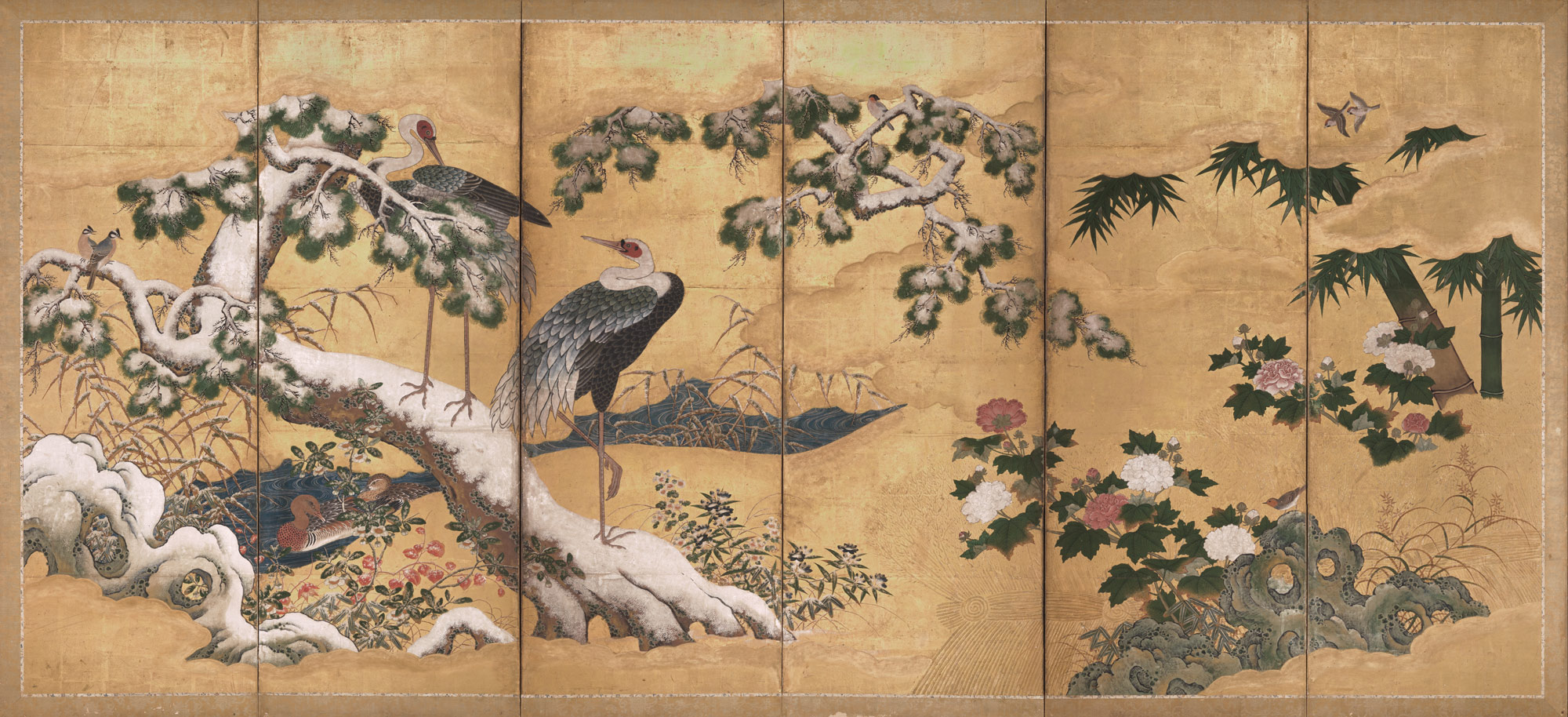
Dr. Shimizu spoke about the ways that copies and copying are an integrated activity within a variety of Japanese arts. It was hard for me to live blog because I was just learning many of the names and histories, so you will have to settle for graphic highlights.
One of the examples was the calligraphy of Teika. He was a great poet and writer but his calligraphy was good enough to copy.
He also talked about the ways that artistic technique was handed down from one generation to the next. One of his examples came from the Japanese art collection at the Met. My appreciation for Japanse art has always been fairly uninformed, but I feel pretty inspired to take another stab at it after this talk. Some of the ink and silk work was beautiful, and the copying processes were meticulous in ways I had not imagined.
 He also spoke about the Edo Castle in Tokyo, which is one of those great landscapes that more of us should get to know. (anyone want to fund a field trip?) Someday I will get there.
LECTURE: Copies and Copying in Japanese Culture: Calligraphy, Painting, and Architecture
Copies and Copying in Japanese Culture:
Calligraphy, Painting, and Architecture
Yoshiake Shimizu., Ph.D.
Frederick Marquand Professor of Art and Archaeology
Princeton University
Wednesday, October 10
Cook-Douglass Lecture Halls Room 110
4:00 - 5:15
The evolution of a given medium of art or a discipline
of design never occurs in isolation. Instead, there
is a continuous exchange across all the creative
practices about social concerns and critical positions
expressed through a language of lines, shapes, and
forms. In this talk, Yoshiake Shimizu, the Marquand
Professor of Art and Archaeology at Princeton University,
will share his observations on the interrelationships
between painting, calligraphy, and architecture in
Japanese art.
Professor Shimizu specializes in Japanese and Chinese
painting and calligraphy. He received his B.A. in
Art History from Harvard, an M.A. in Art History
from the University of Kansas and, M.F.A. and Ph.D.
in Art and Archaeology from Princeton. He has taught
at University of California at Berkeley, University
of Heidelberg, and Ritsumeikan University in Kyoto,
and has been a Curator of Japanese Art at the Freer
Gallery of Art, Smithsonian Institution, Washington,
DC, and Guest Curator, National Gallery of Art,
Washington, DC. Earlier this year, he was co-curator
of "Awakenings: Zen Figure Painting in Medieval Japan"
at the Japan Society in New York. Beyond presenting
the traditions of Zen Buddhist figure painting in
medieval Japan, it introduced a shift the thinking
about Zen paintings. His publications include: Japanese Ink Paintings (with Carolyn Wheelwright);
Masters of Japanese Calligraphy (with John
Rosenfield); and Japan: The Shaping of Daimyo
Culture, 1185-1868.
Calligraphy, Painting, and Architecture
Yoshiake Shimizu., Ph.D.
Frederick Marquand Professor of Art and Archaeology
Princeton University
Wednesday, October 10
Cook-Douglass Lecture Halls Room 110
4:00 - 5:15
The evolution of a given medium of art or a discipline
of design never occurs in isolation. Instead, there
is a continuous exchange across all the creative
practices about social concerns and critical positions
expressed through a language of lines, shapes, and
forms. In this talk, Yoshiake Shimizu, the Marquand
Professor of Art and Archaeology at Princeton University,
will share his observations on the interrelationships
between painting, calligraphy, and architecture in
Japanese art.
Professor Shimizu specializes in Japanese and Chinese
painting and calligraphy. He received his B.A. in
Art History from Harvard, an M.A. in Art History
from the University of Kansas and, M.F.A. and Ph.D.
in Art and Archaeology from Princeton. He has taught
at University of California at Berkeley, University
of Heidelberg, and Ritsumeikan University in Kyoto,
and has been a Curator of Japanese Art at the Freer
Gallery of Art, Smithsonian Institution, Washington,
DC, and Guest Curator, National Gallery of Art,
Washington, DC. Earlier this year, he was co-curator
of "Awakenings: Zen Figure Painting in Medieval Japan"
at the Japan Society in New York. Beyond presenting
the traditions of Zen Buddhist figure painting in
medieval Japan, it introduced a shift the thinking
about Zen paintings. His publications include: Japanese Ink Paintings (with Carolyn Wheelwright);
Masters of Japanese Calligraphy (with John
Rosenfield); and Japan: The Shaping of Daimyo
Culture, 1185-1868.
High Tech High
Microsoft has helped build a brand new high-tech high school in Philadelphia. Every student will have a Tablet and the roof will be green. Will it change student performance or just make them more gimmicky?
“In those schools where we've introduced technology into the classrooms in such a way, the children are better behaved, the attendance is much better and the children are doing better academically,” says Vallas (CEO School District of Philadelphia).Interestingly enough, the conditions for graduation include a requirement that you apply for college. Would this change the next generation of Geomatics students all that much? Will this allow us to focus less on the technology and more on the GIScience? It will be interesting to see.
09 October 2007
Falling leaves
NJ.com has a short post quoting our favorite urban forester, Jason Grabosky, who says that the recent climate patterns mean our leaves are going to change soon and fall fast. The dry weather has been good for golfers but bad for leaf peepers.
And, they almost got the name of the school right. SEBS not CEBS. It is going to take a while to get that straightened out.
And, they almost got the name of the school right. SEBS not CEBS. It is going to take a while to get that straightened out.
Celebration, Florida
 Today's EDA lecture took a look at the trend of New Urbanism and how some planners and designers are worked to use physical design to shape community. Much of this is a response to urban sprawl which has been captured well by the National Geographic's New Suburb page. At the heart of it is an network of designers and planners that call themselves the Congress for New Urbanism.
One of the examples in class was Celebration, Florida which has two different official web pages: The city and the town center. During class we saw some quotes from Michael Pollan's exploration of Celebration several years ago in the NYTimes Sunday Magazine. But almost no one anticipated the possibility of 50% of the homes being for sale.
But there is much more information out there. Before class officially began I showed some of the Slate Slide Show looking at Celebration and how it is settling in. And Travel and Leisure magazine has written about a slew of the New Urban communities sprinkled around Florida.
These communities raise a different question about how sustainable they really are. New LEED standards could help evaluate that.
Andy Griffith Show
Since I mentioned a cultural reference in class that didn't connect for many of the students, I feel I need to help connect with contemporary culture. We spoke about The Andy Griffith Show, which is on TVLand these days. If you are not already familiar with the show, you might want to watch a few minutes of an episode online to get a sense for the small town lifestyles that they were presenting. The show's opening theme was a classic, but for some reason it was scrubbed out of this clip.
New Urban sightseeing
The last stop in our DC trip was to The Kentlands in Gaithersburg, MD. Designed by Duany, Plater-Zyberk, it is generally seen as a classic New Urban development.


We saw plenty of the hallmarks of New Urbanism: alleys, front porches, small front yards. And, no cul-de-sacs anywhere we looked.


We saw plenty of the hallmarks of New Urbanism: alleys, front porches, small front yards. And, no cul-de-sacs anywhere we looked.


So is this!
 This is just an awesome looking project from Chile. And like the other posts below, it is NOT an obvious example of exactly what Landscape Architecture is, but it clearly falls well within the boundaries of LA. While we are clearly not training students for a project like this, I'd like to think that on our better days we are educating students in a way that prepares them unexpected opportunities and creative outcomes that this represents.
This is landscape architecture too
 Claude Cormier, Landscape Architects got mentioned in the Talent Pool section of Fast Company this month. His name is unfamiliar to many in the US LA community, but the work might be more familiar. Certainly he isn't new on the scene, MoCo Loco interviewed him about a year ago.
After writing about how landscape architecture clearly includes the regional landscape design (or landscape planning (or environmental planning)) that is going on at places like EDAW, Jones and Jones and Design Workshop, I felt I should also mention another element that falls within the boundaries of LA while not fitting the centristic model of being an icon of exactly what LA is.
08 October 2007
EDA lecture on New Urbanism
 As I prep for my EDA lecture on New Urbanism, I should mention that Seaside turned 25 earlier this year. You can look back at other Places and Space posts on New Urbanism.
NPR reports on the growing trend to keep maps and GIS data secret as a means for fighting terrorism. This isn't just about hiding Dick Cheney's house, but it also includes keeping maps of fire hydrants and water mains secret.
Examples of Landscape Architecture
 I recently had a student ask me whether he was better suited for landscape architecture or environmental planning. In answering that, I shared some websites for firms that are generally considered landscape architecture firms but that pursue projects that border on (or cross over into) environmental planning or landscape planning. The above image is a Design Workshop project at Pikes Peak that they have slotted into Regional Planning. Here are some of the firm sites where we were looking primarily at their projects and trying to find that invisible line:
EDAW
Design Workshop
Jones and Jones
O2
Subscribe to:
Posts (Atom)


