06 February 2012
Planning column by Barry Chalofsky
One of our planning instructors, Barry Chalofsky, has written a opinion piece called "Shift Environmental Focus Back to the Future", in the Trenton Times. He says we need to shift in how we approach environmental planning in New Jersey because this is a unique time: "I believe that this truly represents the best opportunity we have had since the early 1970s to really make a difference in the future of our environment and our state."


Planning board meeting excitement
Here is a different reason to postpone a planning board meeting. And it gives you a hint of where you might look for an upcoming meeting that could last longer than one hour.
04 February 2012
Rutgers Alum in the news
One of our RU LA alums, Nina Zinn, is in the RVA news. The story describes how Nina has been working in Richmond to promote growing healthier food, “You can have a very pleasing landscape and still be able to harvest from it.” It is a hot trend and nice to see yet another one of ours doing well.
03 February 2012
The Regional Student Forum
The other day when I posted a link to internships at DVRPV, I didn't realize just how student friendly they were. It turns out that they also maintain a Regional Student Forum that is a great place for learning about a variety of opportunities, including networking events and other internships, for students in the Philadelphia region.
Roberto Rovira's Azimuth Studio
Speaking of Florida International University, check out the Azimuth Studio website by FIU Prof. Roberto Rovira.
02 February 2012
The Barrett Foundation Prize
The Barrett Foundation Prize has been established to create an incentive for fresh, creative ideas regarding public land stewardship. It challenges academic teams to work together to formulate innovative solutions to the escalating problems of natural resource management in the context of an economic slowdown, demographic changes, changing American values, and increasing anthropogenic impacts on natural systems.
Through a pre-proposal selection process, ten teams will be selected as finalists and invited to submit complete business plans for the challenge. Each final team will be eligible for reimbursement of start-up expenses of up to $1,000. From the ten final teams, a first prize winning team will be selected and will receive a $50,000 cash award. Four runners up will each receive a $10,000 cash award.
Look at the detailed announcement soon: The deadline is March 16, 2012.
Through a pre-proposal selection process, ten teams will be selected as finalists and invited to submit complete business plans for the challenge. Each final team will be eligible for reimbursement of start-up expenses of up to $1,000. From the ten final teams, a first prize winning team will be selected and will receive a $50,000 cash award. Four runners up will each receive a $10,000 cash award.
Look at the detailed announcement soon: The deadline is March 16, 2012.
01 February 2012
A crisp looking Yosemite
We talked recently in class about the 17-gigapixel image of Yosemite Park. But this timelapse video is pretty cool too.
Readings
For Intro to Geomatics , it turns out that we just don't have enough class time to discuss all of the readings. So, we are going to try discussing them here. The comments are open to all, including readers who are not part of the class.
Z. Aslıgül Göçmen and Stephen J. Ventura "Barriers to GIS Use in Planning" (JAPA)
Mapping Solar (ArcUser)
Mapping Transportation and Health (PlaNetizen)
GIS Designing our Future (ArcNews)
Since we were just dipping our toes into GIS this week, these articles were meant to highlight the different ways that GIS can be used by different groups. But the planning piece also showed that there are some fairly mundane issues that still loom large on the GIS horizon.
Z. Aslıgül Göçmen and Stephen J. Ventura "Barriers to GIS Use in Planning" (JAPA)
Mapping Solar (ArcUser)
Mapping Transportation and Health (PlaNetizen)
GIS Designing our Future (ArcNews)
Since we were just dipping our toes into GIS this week, these articles were meant to highlight the different ways that GIS can be used by different groups. But the planning piece also showed that there are some fairly mundane issues that still loom large on the GIS horizon.
Spatial autocorrelation game
Talk about fun! No, let's talk about the spatial autocorrelation game instead. We may not have time to play it in class, but you can follow the link
30 January 2012
Topo maps
Here are some more unusual USGS topo quad maps. The first is of Venice, LA - effectively the last town on the Mississippi River before the delta and the Gulf. The high point on the map is the levee, along the South side of the river. It looks like there are 2 contour lines, and the bottom of the map says they are 5 foot contours, so the levee would be a little higher than 10 feet above see level. The rest of the maps has nearly no contour lines anywhere. Flat, flat flat.

The second map is from an adjacent quad but has no contour lines. Instead of labeling the contour interval at the bottom, there is simply a note that says "Entire Area Below 5 Feet". And, in the corner you'll notice that there is no legend for roads, either. But they still made the map. The USGS didn't say, "Oh there isn't muc land there" or "there is absolutely no topography there". They made the maps. And I bet these maps get used too.

Be careful, the linked images are quite large. But if you want to go back to the source, you can head over to Libre Map to get all of the topos for Louisiana.

The second map is from an adjacent quad but has no contour lines. Instead of labeling the contour interval at the bottom, there is simply a note that says "Entire Area Below 5 Feet". And, in the corner you'll notice that there is no legend for roads, either. But they still made the map. The USGS didn't say, "Oh there isn't muc land there" or "there is absolutely no topography there". They made the maps. And I bet these maps get used too.

Don't you think that cities look like...
Cats or seastars or hands? Strange Maps found someone thought so.
28 January 2012
Brick quote
“If you think of a brick, for instance, and you consult the orders, you consider the nature of a brick. This is natural. You say to brick, ‘What do you want brick?’ And the brick says to you . . .”
—Louis I. Kahn
27 January 2012
Coping with a changing world
HBR posted an interesting column by Bill Taylor, "Are You Learning as Fast as the World Is Changing?"
You're not going to learn faster (or deeper) than everyone else if you seek inspiration from the same sources as everyone else. Educators know that we learn the most when we encounter people, experiences, and ideas that are the least like us. And yet, we spend most of our time with people and in places that are the most like us — our old colleagues, our familiar offices, our reassuring neighborhoods. If you want to learn faster, look and live more broadly.What are you doing to expand your sphere?
26 January 2012
2012 Summer Design Scholars
Deadline approaching!
Hanbury Evans Wright Vlattas + Company is accepting applications for its class of 2012 Summer Design Scholars. This is a juried selection, open to upper-level undergraduates and graduate students in architecture, urban design, landscape architecture, and interior design.
We hope you will distribute this link to your students, friends and school acquaintances. The submission deadline is Monday, FEBRUARY 20. Selection will be made by March 15. If you are not the person who should receive this information, we would appreciate your assistance in getting it into the right hands. You can learn more about our program (and applicants can apply) at this link:
www.hewv.com/scholar
This is the 10th year of the program, and our scholars have reported their experiences to be rewarding and life-changing. Scholars, including international students, have come from the Savannah College of Art + Design, McGill, Universidad de Monterrey, UPenn, Yale, Carnegie Mellon, Tulane, Virginia Tech, UVA, Clemson, Penn State, Ohio State, Kansas State, Iowa State, Georgia Tech, and Hampton University. Several Summer Scholar “alumni” have accepted full-time positions with our firm.
If you have other questions, please contact Nick Vlattas, nvlattas@hewv.com
or 757-321-9608.
Hanbury Evans Wright Vlattas + Company is accepting applications for its class of 2012 Summer Design Scholars. This is a juried selection, open to upper-level undergraduates and graduate students in architecture, urban design, landscape architecture, and interior design.
We hope you will distribute this link to your students, friends and school acquaintances. The submission deadline is Monday, FEBRUARY 20. Selection will be made by March 15. If you are not the person who should receive this information, we would appreciate your assistance in getting it into the right hands. You can learn more about our program (and applicants can apply) at this link:
www.hewv.com/scholar
This is the 10th year of the program, and our scholars have reported their experiences to be rewarding and life-changing. Scholars, including international students, have come from the Savannah College of Art + Design, McGill, Universidad de Monterrey, UPenn, Yale, Carnegie Mellon, Tulane, Virginia Tech, UVA, Clemson, Penn State, Ohio State, Kansas State, Iowa State, Georgia Tech, and Hampton University. Several Summer Scholar “alumni” have accepted full-time positions with our firm.
If you have other questions, please contact Nick Vlattas, nvlattas@hewv.com
or 757-321-9608.
The Emerging Ecological Paradigm of Agriculture and Scholarship
Hear Executive Dean Goodman Give Special Lecture on January 31
As one of the foremost authorities on agriculture, agricultural research, sustainability, the environment and related topics, Executive Dean Bob Goodman is called upon frequently to address diverse groups at various venues. Those of us close to home will have the pleasure of hearing him on Tuesday, January 31, 2012, at 11 a.m. in the Alampi Room of the Marine and Coastal Sciences Building on the G.H. Cook Campus. Dean Goodman and Associate Dean Xenia Morin will team up to present "The Emerging Ecological Paradigm of Agriculture and Scholarship."
As one of the foremost authorities on agriculture, agricultural research, sustainability, the environment and related topics, Executive Dean Bob Goodman is called upon frequently to address diverse groups at various venues. Those of us close to home will have the pleasure of hearing him on Tuesday, January 31, 2012, at 11 a.m. in the Alampi Room of the Marine and Coastal Sciences Building on the G.H. Cook Campus. Dean Goodman and Associate Dean Xenia Morin will team up to present "The Emerging Ecological Paradigm of Agriculture and Scholarship."
25 January 2012
Live Blog: JeanMarie Hartman on Water/Land Interaction
"Land Water Interactions and Collaborations"
Recent explorations undertaken while on sabbatical from teaching
Dr. JeanMarie Hartman
Sabbatical
University of Akron group called Syanpse
Worked out of the Bath Nature Preserve
View Larger Map
Began with a study of moving water at Bath - how did the streams flow? What did they do? What were they like?
Looked at environmental art - Ed Burtynsky, Chris Jordan, Natalie Jeremijenko, Andy Golsdworthy
Working with the University of Akron, in Ohio, they turned the Folk Hall parking lot into a 2 day watershed event
Erosion and Fractures
Adding water to clay
Resulting in the Ground Water exhibition
Landforms and tiles
Finding the way through

How can we make this happen more often? How can we foster more of these relationships?
Recent explorations undertaken while on sabbatical from teaching
Dr. JeanMarie Hartman
Sabbatical
- a time of reflection
- a time of re-grouping
- a time for quiet contemplation
- a time for manic productivity
University of Akron group called Syanpse
Worked out of the Bath Nature Preserve
View Larger Map
Began with a study of moving water at Bath - how did the streams flow? What did they do? What were they like?
Looked at environmental art - Ed Burtynsky, Chris Jordan, Natalie Jeremijenko, Andy Golsdworthy
Working with the University of Akron, in Ohio, they turned the Folk Hall parking lot into a 2 day watershed event
Erosion and Fractures
Adding water to clay
Resulting in the Ground Water exhibition
Landforms and tiles
Finding the way through

How can we make this happen more often? How can we foster more of these relationships?
DVRPC: A great place for internships
I am getting a lot more questions about internships these days and, when I see a good one, I try to post it and tag it with "jobs".
One place that regularly advertises internships is the Delaware Valley Regional Planning Commission. So check the DVRPC internship page frequently. They currently have one posted called Environmental Planning Urban Forestry which could be great for planners, designers, and landscape industry students.
One place that regularly advertises internships is the Delaware Valley Regional Planning Commission. So check the DVRPC internship page frequently. They currently have one posted called Environmental Planning Urban Forestry which could be great for planners, designers, and landscape industry students.
24 January 2012
Manalapan Planning Board meeting
I have been told that there is a Manalapan Planning Board meeting this Thursday night. I gather that it might be a continuation of some of the Ray Catena case. Before you go you might want to call the Planning & Zoning Department at (732) 446-8350 just to make sure that the meeting is really happening and that you know where you are going.
Dr. Stuart Pimm "Biodiversity: the most beautiful carbon"
Thursday, January 26, 2012 4:00 PM
Alampi Room, IMCS Building
EcoGSA Eminent Ecologist Seminar:
Dr. Stuart Pimm "Biodiversity: the most beautiful carbon".
Dr. Pimm is committed to the study of biological diversity. He has written over 200 scientific papers. His latest research covers many topics on species extinctions and he is committed to creating an interface between science and policy.
Alampi Room, IMCS Building
EcoGSA Eminent Ecologist Seminar:
Dr. Stuart Pimm "Biodiversity: the most beautiful carbon".
Dr. Pimm is committed to the study of biological diversity. He has written over 200 scientific papers. His latest research covers many topics on species extinctions and he is committed to creating an interface between science and policy.
23 January 2012
How much does this history really shape our landscape today?
The Elbow Room video from Schoolhouse Rock.
Make sure you track the lyrics too (after the break)
Make sure you track the lyrics too (after the break)
21 January 2012
Land Water Interactions and Collaborations
Landscape Architecture Common Lecture series
Dr. Jean Marie Hartman
"Land Water Interactions and Collaborations"
Wednesday, January 25
4:00 pm in CDL 110
"Much of what is visible in the landscape is the result of water acting over time, and in various ways, on the materials that compose the environment. Yet, the roles of water (in processes such as erosion, plant growth, soil formation, micro-climate variations) remain invisible. For many years, Hartman’s work has studied the roles of water in the landscape through direct scientific inquiry. During her recent sabbatical, she began a series of inquiries that combine scientific information with artistic experimentation in collaboration with several artists. This lecture will present a series of illustrative vignettes of projects and results related to making the roles of water in the landscape more visible, and thereby more understandable. Each distinct vignette provides insight into how collaboration between artists and scientists can re-phrase and represent knowledge."
Dr. Jean Marie Hartman
"Land Water Interactions and Collaborations"
Wednesday, January 25
4:00 pm in CDL 110
"Much of what is visible in the landscape is the result of water acting over time, and in various ways, on the materials that compose the environment. Yet, the roles of water (in processes such as erosion, plant growth, soil formation, micro-climate variations) remain invisible. For many years, Hartman’s work has studied the roles of water in the landscape through direct scientific inquiry. During her recent sabbatical, she began a series of inquiries that combine scientific information with artistic experimentation in collaboration with several artists. This lecture will present a series of illustrative vignettes of projects and results related to making the roles of water in the landscape more visible, and thereby more understandable. Each distinct vignette provides insight into how collaboration between artists and scientists can re-phrase and represent knowledge."
Internships: Apply immediately
National Park Service Designing the Parks Internships
The National Park Service (NPS) is contemplating creating several paid student internships for graduate, undergraduate, and high school students designed to complement the innovative Designing the Parks initiative. The National Park Service is a founding partner of Designing the Parks, which is a public-private partnership to promote the importance of well-designed public parks in contemporary society. The initiative provides a forum for collegial, interdisciplinary discussion through workshops, competitions, and pilot projects that aims to build a common foundation of design principles for guiding 21st century public park planning and design. (see www.designingtheparks.org for background and more information)
The purpose of the internships is to assist the NPS and its partners further refine six guiding principles, while building a diverse base of young, prospective design and planning professionals knowledgeable of the design, planning, and preservation work of the National Park Service.
(details after the jump)
The National Park Service (NPS) is contemplating creating several paid student internships for graduate, undergraduate, and high school students designed to complement the innovative Designing the Parks initiative. The National Park Service is a founding partner of Designing the Parks, which is a public-private partnership to promote the importance of well-designed public parks in contemporary society. The initiative provides a forum for collegial, interdisciplinary discussion through workshops, competitions, and pilot projects that aims to build a common foundation of design principles for guiding 21st century public park planning and design. (see www.designingtheparks.org for background and more information)
The purpose of the internships is to assist the NPS and its partners further refine six guiding principles, while building a diverse base of young, prospective design and planning professionals knowledgeable of the design, planning, and preservation work of the National Park Service.
(details after the jump)
The fall in review
A quick check of visitors statistics show that from September 1st to December 1st one of my old blogs got much of the site's traffic. A post called Hiking Manhattan, Part 1 from 2008 was suddenly very popular. In October it accounted for a quarter of all of the traffic on the blog. When I looked it over, I saw that it was just photos from from that year's hike tip-to-tip of Manhattan. But I was puzzled how search engines and visitors might get so excited since it has very little text. At least I was puzzled until I saw two of the photos. Can you spot them?

Here is a graph of traffic for Sept, Oct, Nov showing the sudden popularity and then unpopularity of this entry. The absolute highest peak was October 14th when it got over 400 hits.

Here is a graph of traffic for Sept, Oct, Nov showing the sudden popularity and then unpopularity of this entry. The absolute highest peak was October 14th when it got over 400 hits.
20 January 2012
Internship for geomatics and planning students?
An 8-10 week internship for an eligible student interested in natural resource management and coral reef ecosystems to work in a NRCS field office serving the watershed conservation needs of local land users primarily on agricultural lands. In Hawaii!
7th Annual Governor Tauese P.F. Sunia Memorial Coral Reef Conservation Summer Internship
Opening Date: January 18, 2012
Closing Date: February 29, 2012
(more details after the jump)
7th Annual Governor Tauese P.F. Sunia Memorial Coral Reef Conservation Summer Internship
Opening Date: January 18, 2012
Closing Date: February 29, 2012
(more details after the jump)
Immigrant support in NJ
Mapping of immigrant issues has become a regular feature now with PBS and the NYTimes getting involved. At RIIM we are not immune from this trendy trend. The map below shows groups that have self-identified as immigrant organizations as well as a larger group of community-based organizations.
View Larger Map
I know this is hard to use when it is so small. But you can drop the legend if you need to. Plus, if the census data backdrop is not helpful for you, there is a larger map with population change as the backdrop and a larger map of the same data that you can access with streets and aerial photography.
View Larger Map
I know this is hard to use when it is so small. But you can drop the legend if you need to. Plus, if the census data backdrop is not helpful for you, there is a larger map with population change as the backdrop and a larger map of the same data that you can access with streets and aerial photography.
Plants internship in Delaware
Delaware's Mt. Cuba Center is a well-known gardens that has multiple "12-week summer internships are designed for college undergraduate and graduate students majoring in horticulture, landscape architecture, related plant science fields, or ecology, and who are interested in getting hands-on training and academic instruction in naturalistic garden design and native plants."
Apply by March 1st.
Apply by March 1st.
19 January 2012
Spring 2012 Speaker Series
Mark your calendars now, the Spring 2012 Speaker Series looks great.

1.18.12 Sunil Bald
Typecasting
1.25.12 Jean Marie Hartman
Land_Water Collaborations
2.8.12 Ron Henderson
Routine Maintenance
2.15.12 Joyce Hsiang & Bimal Mendes
Territorial Practices
2.22.12 Alan Brake
Death & Life of Great American Landscapes
2.29.12 Dawn Wright
Esri's New Ocean Science and Ocean GeoDesign Initiative
3.23.12 Cornelia Hahn Oberlander
In Conversation
4.11.12 Julie Bargmann
D.I.R.T. Studio
4.18.12 Kim Mathews & Signe Nielson
Landscape Representation_Concept to Construction

1.18.12 Sunil Bald
Typecasting
1.25.12 Jean Marie Hartman
Land_Water Collaborations
2.8.12 Ron Henderson
Routine Maintenance
2.15.12 Joyce Hsiang & Bimal Mendes
Territorial Practices
2.22.12 Alan Brake
Death & Life of Great American Landscapes
2.29.12 Dawn Wright
Esri's New Ocean Science and Ocean GeoDesign Initiative
3.23.12 Cornelia Hahn Oberlander
In Conversation
4.11.12 Julie Bargmann
D.I.R.T. Studio
4.18.12 Kim Mathews & Signe Nielson
Landscape Representation_Concept to Construction
Get out!
Hutcheson Memorial Forest Tour
Sunday, January 22nd at 2:00 p.m.
Tour Leader: Rick Lathrop
(Ecologist)
“Winter Ecology at Hutcheson Memorial Forest.”
The Hutcheson Memorial Forest (HMF) is a unique area consisting of one of the last uncut forests in the Mid-Atlantic States, along with the surrounding lands devoted to protection of the old forest and research into ecological interactions necessary to understand the forest. The tract is administered and protected by Rutgers University.
It is apparently the only uncut upland forest in the Piedmont of New Jersey, and appears on the National Park Service Register of Natural Landmarks.
Tours leave from the entrance of the woods on Amwell Road (Rt. 514) in Somerset. From New Brunswick, follow Hamilton Street west past JFK Blvd, Cedar Grove Lane and Elizabeth St. HMF is on the left past Gardener’s Nook Nursery. The driveway is located just past the guardrail over the brook.
The trail may be muddy in places so come prepared.
The tour through the woods and fields takes between one and two hours.
Tours are free and reservations are not required for these guided tours.** Groups of more than ten persons may not attend the guided tours. Such groups are invited to arrange special tours.
Sunday, January 22nd at 2:00 p.m.
Tour Leader: Rick Lathrop
(Ecologist)
“Winter Ecology at Hutcheson Memorial Forest.”
The Hutcheson Memorial Forest (HMF) is a unique area consisting of one of the last uncut forests in the Mid-Atlantic States, along with the surrounding lands devoted to protection of the old forest and research into ecological interactions necessary to understand the forest. The tract is administered and protected by Rutgers University.
It is apparently the only uncut upland forest in the Piedmont of New Jersey, and appears on the National Park Service Register of Natural Landmarks.
Tours leave from the entrance of the woods on Amwell Road (Rt. 514) in Somerset. From New Brunswick, follow Hamilton Street west past JFK Blvd, Cedar Grove Lane and Elizabeth St. HMF is on the left past Gardener’s Nook Nursery. The driveway is located just past the guardrail over the brook.
The trail may be muddy in places so come prepared.
The tour through the woods and fields takes between one and two hours.
Tours are free and reservations are not required for these guided tours.** Groups of more than ten persons may not attend the guided tours. Such groups are invited to arrange special tours.
18 January 2012
Get ready for summer
It is not too early to think about summer internships...
PAID INTERNSHIPS AVAILABLE for UNDERGRADUATES at the Southern
California Earthquake Center
The Southern California Earthquake Center (SCEC) is headquartered at
the University of Southern California. Founded in 1991, SCEC has a
mission to gather new information about earthquakes in Southern
California, integrate this information into a comprehensive and
predictive understanding of earthquake phenomena, and communicate this
understanding to end-users and the general public in order to increase
earthquake awareness, reduce economic losses, and save lives. SCEC is
funded by the National Science foundation and the United States
Geological Survey.
There are 2 SCEC summer internship programs offered to undergraduate
students who are interested in earth sciences and/or its related
fields (Geography/GIS, Computer Science, Civil Engineering, etc.):
UseIT (Undergraduate Studies in Earthquake Information Technology)
Work as a team to develop technical tools for scientists, educators,
and policy makers to communicate important concepts about earthquakes,
faults, seismic hazard mitigation, and earthquake risk reduction.
Term & Location: Summer 2012 (8 weeks - 6/11 to 8/3) at the University
of Southern California
SURE (Summer Undergraduate Research Experience)
Conduct primary field, laboratory, and/or theoretical research under
the supervision of leading scientists in the fields of geophysics,
earthquake geology, seismology, tectonics, and geodesy.
Term & Location: Summer 2012, (~10weeks - Dates determined with
mentor) at various SCEC institutions
Applications are being accepted now! To apply, visit:
http://www.scec.org/education/college/internships/application.php
Priority consideration deadline is Monday, February 27, 2012. Stipend: $5000
Please note that applicants for UseIT and SURE must be continuing
undergraduate students through the Fall of 2012 and must be either a
US Citizen or US Permanent Resident. For example if you are graduating
in August 2012 you are not eligible for the program.
To learn more about the specific programs, please visit
http://www.scec.org/internships
Questions? Contact us at: internships@scec.org
PAID INTERNSHIPS AVAILABLE for UNDERGRADUATES at the Southern
California Earthquake Center
The Southern California Earthquake Center (SCEC) is headquartered at
the University of Southern California. Founded in 1991, SCEC has a
mission to gather new information about earthquakes in Southern
California, integrate this information into a comprehensive and
predictive understanding of earthquake phenomena, and communicate this
understanding to end-users and the general public in order to increase
earthquake awareness, reduce economic losses, and save lives. SCEC is
funded by the National Science foundation and the United States
Geological Survey.
There are 2 SCEC summer internship programs offered to undergraduate
students who are interested in earth sciences and/or its related
fields (Geography/GIS, Computer Science, Civil Engineering, etc.):
UseIT (Undergraduate Studies in Earthquake Information Technology)
Work as a team to develop technical tools for scientists, educators,
and policy makers to communicate important concepts about earthquakes,
faults, seismic hazard mitigation, and earthquake risk reduction.
Term & Location: Summer 2012 (8 weeks - 6/11 to 8/3) at the University
of Southern California
SURE (Summer Undergraduate Research Experience)
Conduct primary field, laboratory, and/or theoretical research under
the supervision of leading scientists in the fields of geophysics,
earthquake geology, seismology, tectonics, and geodesy.
Term & Location: Summer 2012, (~10weeks - Dates determined with
mentor) at various SCEC institutions
Applications are being accepted now! To apply, visit:
http://www.scec.org/education/college/internships/application.php
Priority consideration deadline is Monday, February 27, 2012. Stipend: $5000
Please note that applicants for UseIT and SURE must be continuing
undergraduate students through the Fall of 2012 and must be either a
US Citizen or US Permanent Resident. For example if you are graduating
in August 2012 you are not eligible for the program.
To learn more about the specific programs, please visit
http://www.scec.org/internships
Questions? Contact us at: internships@scec.org
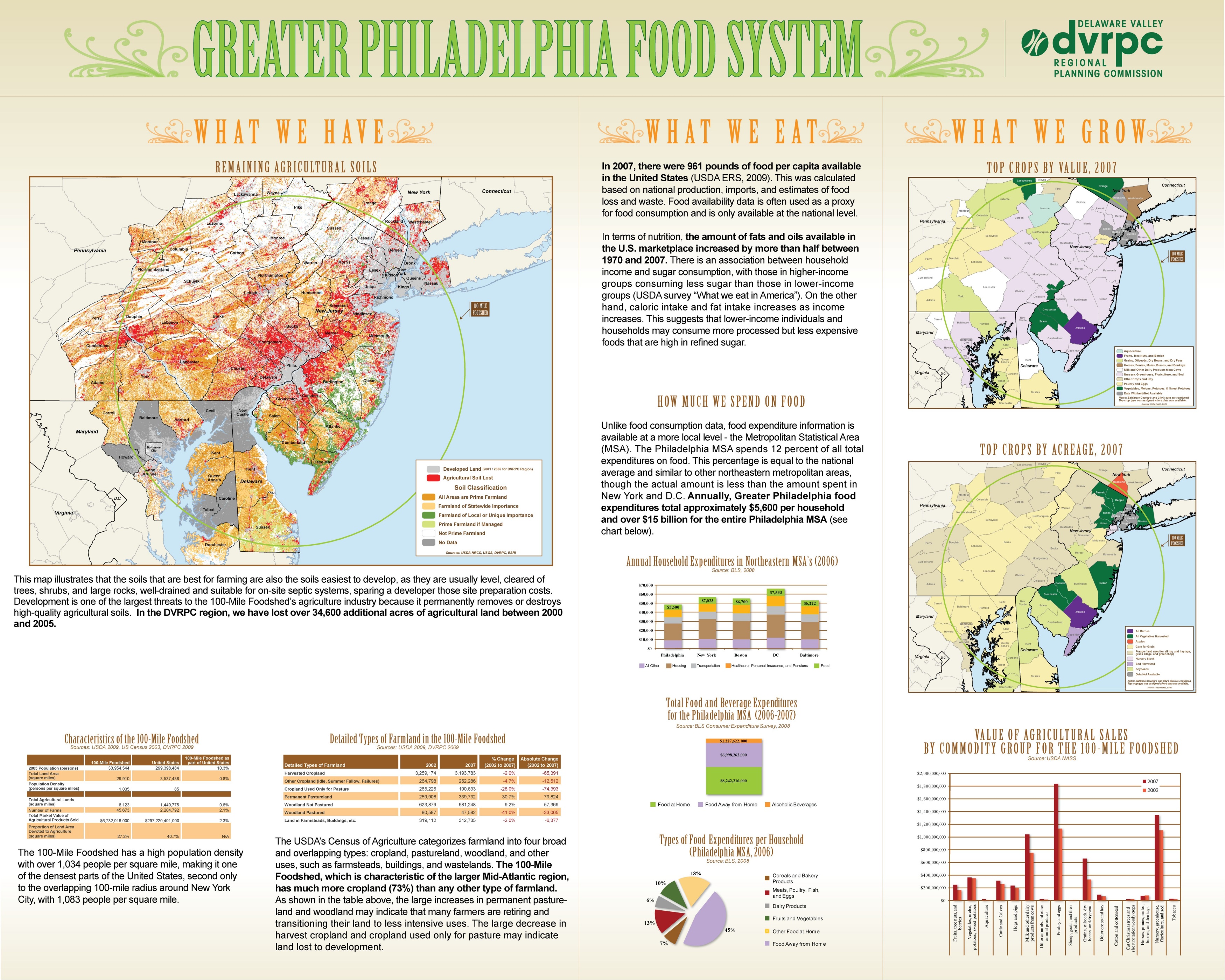
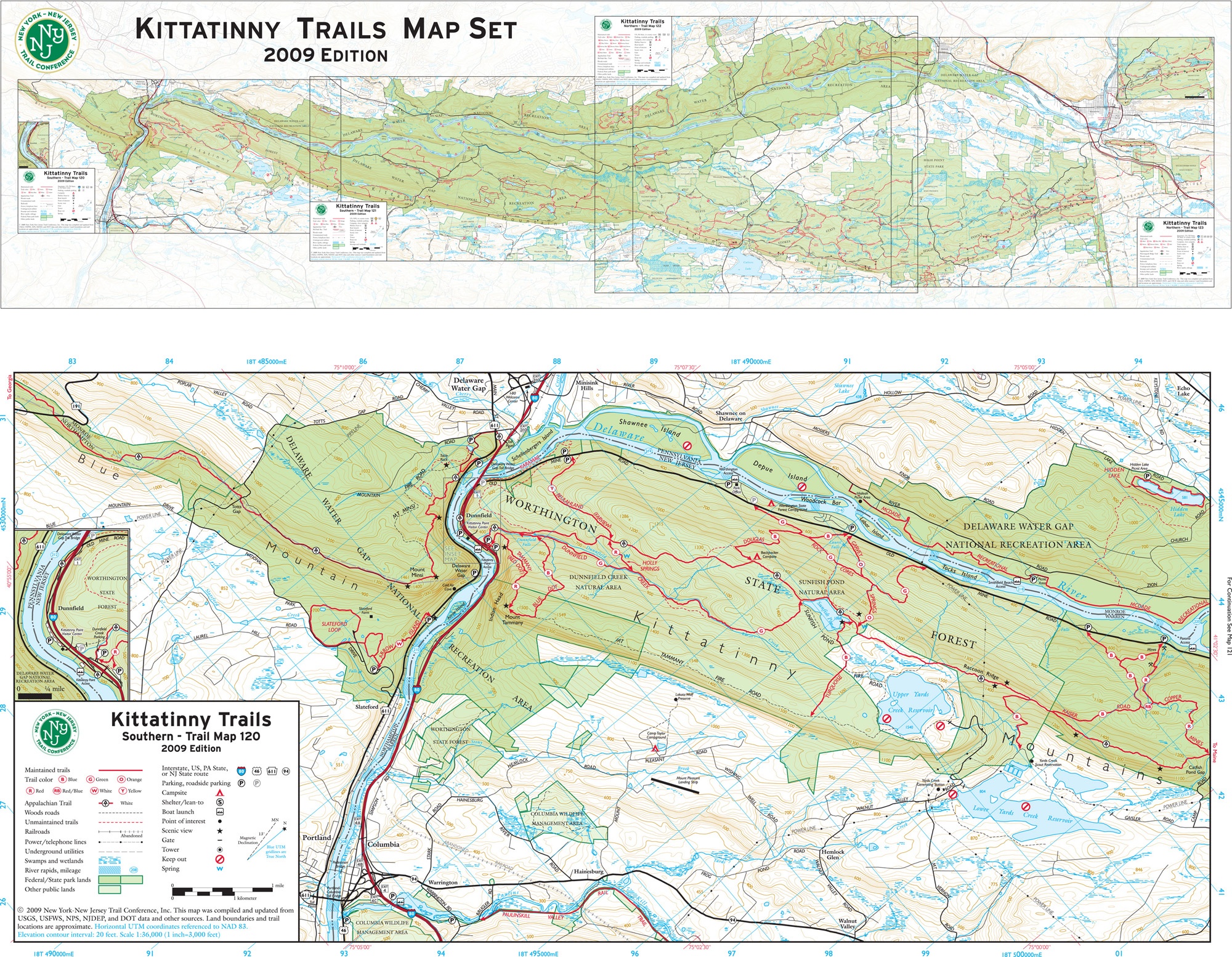
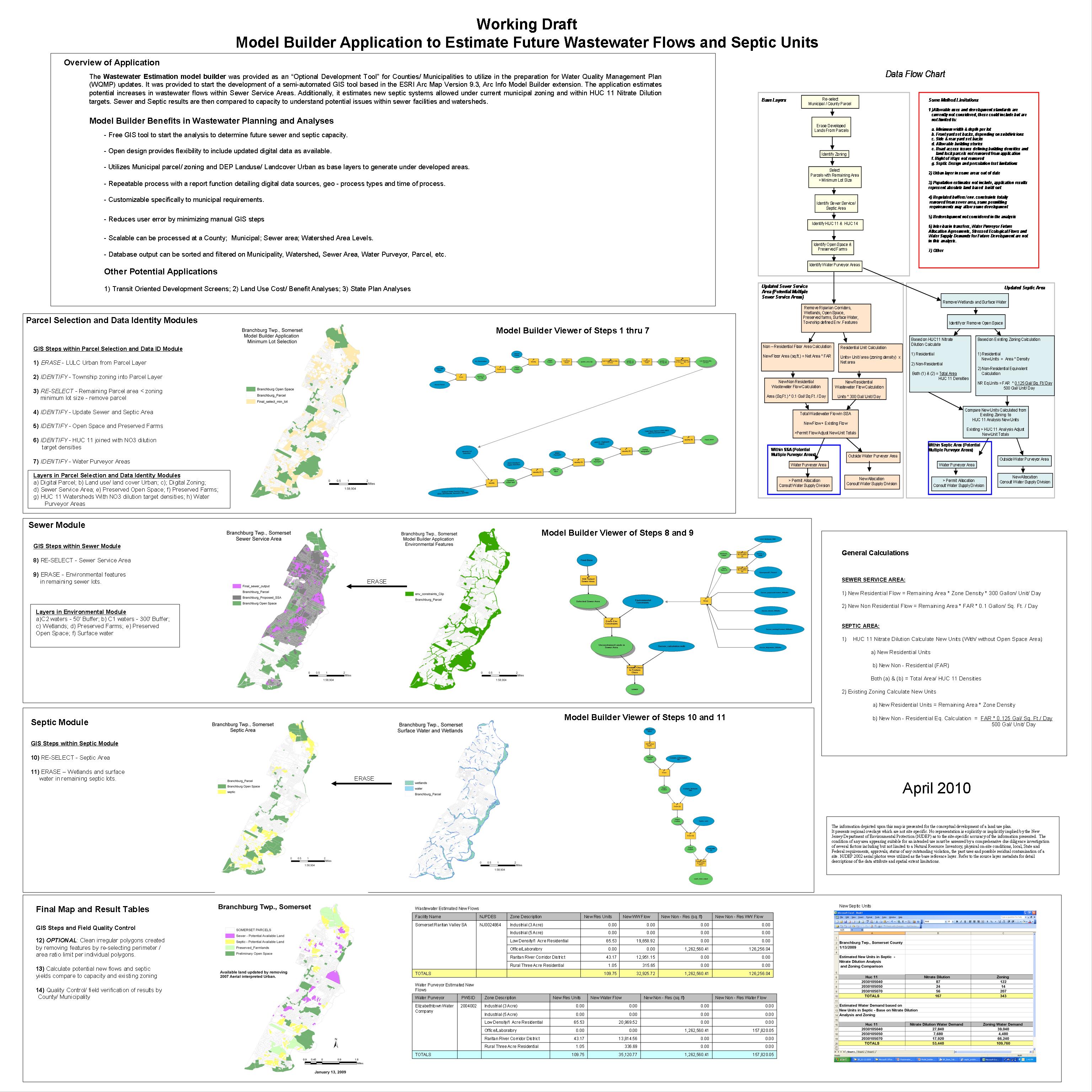
First day eye candy
A little visual seasoning to make the first day of Geomatics just a little more flavorful.
From the NJ DEP Map Contest.


 From CRSSA:


From the NJ DEP Map Contest.



Which neighborhood do you want?
Urban neighborhoods are a tough thing to make right. It can be hard to attract businesses if the mix doesn't seem right. But, many neighborhoods find that if they become popular and successful, they have to worry about their success backfiring and having the very things that made it interesting get replaced by blander alternatives.
Leave it to The Onion to analyze the situation and highlight the real problems. One of the fake quotes sums up the fatigue of living in a real place burdened with real relationships: "It would be such a relief to walk in somewhere and have some disinterested college-age kid take my order without even making eye contact."
Leave it to The Onion to analyze the situation and highlight the real problems. One of the fake quotes sums up the fatigue of living in a real place burdened with real relationships: "It would be such a relief to walk in somewhere and have some disinterested college-age kid take my order without even making eye contact."
17 January 2012
Here is a News21 video about artist Matt Moore using time-lapse video photography to document (or memorialize) the crops on his family's farm as development moves in.
Lost in Sprawl from News21 Berkeley 2011 on Vimeo.
Studio Sumo Lecture on Typecasting
Wednesday, January 18 at 4:00 pm
Cook-Douglass Lecture Hall, Room 110
Sunil Bald, co-principle in Studio Sumo
The talk will examine how SUMO identifies, maps, translates, and materializes the social, physical, and cultural forces that shape the built environment into a body of architectural work that embraces a multi-layered and heterogeneous understanding of "context."
Cook-Douglass Lecture Hall, Room 110
Sunil Bald, co-principle in Studio Sumo
The talk will examine how SUMO identifies, maps, translates, and materializes the social, physical, and cultural forces that shape the built environment into a body of architectural work that embraces a multi-layered and heterogeneous understanding of "context."
La Segrera
In 2007 I taught a studio in Barcelona, Spain during which the students designed new developments that would cover up an old train yard while preserving a nearby Calatrava bridge. At the time there were plans for a Frank Gehry building on the site. Now a design competition has been run to design the same site, La Segrera. The winning team was Team Camí Comtal (AldayJover, RCR and West 8) which created a plan for an urban hub at this central spot what will become a 4 km long green corridor.
16 January 2012
Annoying buzzeword and catchphrases
Black Walnut Dispatch, a blog about gardening and nature, has posted their list of the Top Ten Most Annoying Garden Buzzwords and Catchphrases of 2011. I don't that I agree with that many of them, but that is the point of a list like this.
13 January 2012
Budget cuts hurt biodiversity research
A painful reminder that quality databases and access to them aren't free.
Cognitive science leads to more metaphorical trees
The NY Times had a feature this past weekend looking at the trend in architecture that is leading to more built structures that resemble trees. After describing several impressive projects, the author writes, "How many designers are clued in to the ongoing cognitive revolution and its potential for the built environment is unclear." Based on the recent work I have seen, the answer appears to be "not many".
12 January 2012
More landscape architects on TV
Tonight there will be one more (fake) landscape architect on TV. Rob Schneider starts as "Rob" in the new sitcom, "Rob". Rob is a landscape architect with mild-OCD, but his mom displays the classic stereotyped understanding of landscape architecture saying, “I just wish sometimes you people wouldn’t use a leaf blower; it’s so noisy.” Not sure that low-brow comedy was the type of publicity that the ASLA was looking for, but the reviews suggest that it might not last too long.

11 January 2012
Parking lots
Micahel Kimmelman had an extensive piece on parking lots in the NY Times. Online it came with a slideshow of parking lots that was a nice distraction. But I was baffled by the range used in estimating the available parking as "105 million and maybe as many as 2 billion parking spaces in the United States." That's a big difference.
Here is Renzo Piano's parking for Fiat in Turin:
View Larger Map
And the parking lot at DIA: Beacon got a nod too:
View Larger Map
Here is Renzo Piano's parking for Fiat in Turin:
View Larger Map
And the parking lot at DIA: Beacon got a nod too:
View Larger Map
10 January 2012
A different connection between GIS and immigration
After 20 years in the US local GIS consultant, Atanas Entchev, was detained last fall for 65 days over what sounds like a fairly technical bureaucratic detail. After 2 or 3 years working on RIIM I shouldn't be surprised by stories like this, but it seems like there are so many of them near us these days.
06 January 2012
What makes one map better than others?
Seth Stevenson at Slate singles out David Imus’ “The Essential Geography of the United States of America” as America's best wall map. But his explanation of the cartography and design helps the reader understand fully what makes this map so outstanding. It is a nice high-profile piece for design.
05 January 2012
Is OS Maps ready to challenge Google Maps?
Now that Google Maps has decided to start charging, the Google Map API world is frantically looking for an alternative. MIT's Technology Review asks whether Open Source Maps the answer?
02 January 2012
Governor of Maryland starts the new year with a plan
Despite what the Washington Post characterized as "vehement opposition," Maryland's governor has used an executive order to create the state's first long-term plan for smart growth. According to the Post, opponents described this end run around the legislature as war on rural Maryland and "the height of arrogance." As a sign of the times, the governor denied a) this being part of a UN plan, b) an alien-implanted chip steering his behavior, and c) taking this as a directive from the recently deceased Kim Jong Il.
Since his 2nd term began in 2011, he still appears to have some time to joust with the legislature as they try to undo or alter this decision. But it can be hard to implement a long-term plan like this if it really turns out to be widely unpopular.
Since his 2nd term began in 2011, he still appears to have some time to joust with the legislature as they try to undo or alter this decision. But it can be hard to implement a long-term plan like this if it really turns out to be widely unpopular.
31 December 2011
Cape May
In our Cape May project, the student thought it seemed curious how the government kept replenishing the same beaches over and over in the name of aesthetics. Now the COE and Cape May are justifying it is as a safety issue. But the next Nor'Easter may test that like the last ones.
30 December 2011
Sad end of the year
Famous landscape architect, Wolfgang Oehme, has passed away. His use of native and meadow plants may be his signature, but his career covered a lot of other ground.
19 December 2011
Rybczynski interview
ThinkProgress recently interviewed Witold Rybczynski about the future of suburbs and cities. As you can see from this quote, he doesn't accept unproven conventional wisdom as fact:
Q. What do you make of polls that say that large numbers of Baby Boomers and Millennials are interested in, if not moving back to the city, then at least living more “urban” lifestyles?
A. I suspect that if you took a poll of Americans you would find that most people would like to be thin. We are an obese nation. The question is, is this something people will act on?
I’m simply not sure what those polls really mean — whether they’re wishful thinking or whether they’re a significant change that people will act on.
17 December 2011
16 December 2011
NRDC Climate Change Map
Climate Change is a hard thing to visualize. It is complex and happens over time in a way that complicates acknowledging it. But the localized weather events have started to get so much attention that the NRDC has made an interactive temporal map showing the different weather records set this year in the US.
(h/t Infrascape)
(h/t Infrascape)
15 December 2011
Reading Days
At Rutgers, today is considered a Reading Day, with Final Exams starting tomorrow. What better way to celebrate Reading Days than with book reviews, like the PlaNetizen Top 10 Books of 2011? Of the ones I haven't seen yet, I think I might be most intrigued by Matt Dellinger's Interstate 69: The Unfinished History of the Last Great American Highway. ASLA's the DIRT has a list of top books that includes Maps.
13 December 2011
Tsunami resource
Google has created an unbelievable resource for exploring and understanding the full scope of the Japanese tsunami: Memories for the Future. They have already generated a massive update of StreetView images and created this interface which allows you to flip between Before and After photos. Exploring the devastation is painful but helps you realize the full extent of the damage.
12 December 2011
Corey Booker
Mayor Booker will be speaking about breaking through cultural barriers,
"Cultural Barriers, Communication, Cory Booker." Tonight at the College Ave Student Center MPR at 6:30 p.m.
This event is sponsored by Rutgers Shalom/Salaam (Student Jewish/Muslim Organization), Project Civility, Our Committee to Advance Our Common Purposes, and the Rutgers Bias Prevention Education and Awareness Campaign.
Food is provided and participants are asked to make a donation to RAH (Rutgers Against Hunger) at the door.
"Cultural Barriers, Communication, Cory Booker." Tonight at the College Ave Student Center MPR at 6:30 p.m.
This event is sponsored by Rutgers Shalom/Salaam (Student Jewish/Muslim Organization), Project Civility, Our Committee to Advance Our Common Purposes, and the Rutgers Bias Prevention Education and Awareness Campaign.
Food is provided and participants are asked to make a donation to RAH (Rutgers Against Hunger) at the door.
Drive more carefully
As our students prepare for finals and the long road trip home, ITO World's map of "road casualties" may make them think less about the finals and more about the trip.


09 December 2011
Interesting quote
"The human eye is an incredibly powerful instrument, capable of discerning pattern and nuance with startling speed and efficiency. GIS capitalizes on this most powerful of the senses to provide police personnel with a visual gateway to the databases they collect in the course of their business. The ability of GIS to not only visualize, but to analyze immense datasets provides insights that would otherwise remain undetected."
-Tom Casady, Chief of Police, Lincoln Police Department (NE)
From the NAPSG website
08 December 2011
Community Gardens at Duke Farms
As the Community Gardens on Duke Farms get extra attention, our own Laura Lawson discusses the importance of these as part of the larger movement.
07 December 2011
Live Blog: West 8's America Work
West 8's American Work
Jamie Maslyn Larson, RLA, ASLA
Principal and Partner, West 8 New York
West 8 is based in Rotterdam but has an office in New York.
They do artful interventions. Have industrial designers on staff so they can create unusual fixtures and features with ornamentation and tactile qualities, in house. Many projects use artificiality to draw attention to the hand of man in the landscape.
The opening overture was an overview of the Eropean work that helped establish West 8 as a notable firm. European examples included a the cow horizon project, storm surge barrier, Schouwburgeplein, Kröller-Müller Museum Sculpture Garden, and the Expo.02 Yverdon-les-Bains.
The interlude was a discussion of the differences between the English picturesque and the Dutch tradition. What is our landscape DNA?
Some of the work is translating (scalegirl=mermaid)Some of the work is forcing interaction across the Atlantic
Wave Decks in Toronto Central Waterfont
Longwood Gardens
Respite and retreat
Elevated wooden bridge through the woods
Miami Beach Soundscape
Lincon Park next to Frank Gehry's New World Symphony
View Larger Map
The big American project is
Governors Island in New York Harbor
Trust for Governors Island
No permanent private residential is ever allowed on the island - mostly off the map, but very democratic
As a former military facility, it was difficult to access and was not on Google Map for a while
The ferry ride is part of the experience
ADA accessibility is a goal
Taking away lots of the parking
Instead of wooden shoes, they've designed wooden bikes for exploring the site
Smaller spaces within the parks are key, like Liggett Terrace
2400 trees will be planted in Phase I, including Hammock Grove
Even though it is flat, they wanted it to have its own form like a skyline giving it identity
The island is being givenn added topography in anticipation of sea level rise - don't want to plant ANY trees that won't make it 100 years
Phase I opens in the Fall of 2013!
View Larger Map
Here are 2 others to look at since they were not in the lecture:
Swamp Garden in Charleston SC
Tulsa Riverfront in Oklahoma
Jamie Maslyn Larson, RLA, ASLA
Principal and Partner, West 8 New York
West 8 is based in Rotterdam but has an office in New York.
They do artful interventions. Have industrial designers on staff so they can create unusual fixtures and features with ornamentation and tactile qualities, in house. Many projects use artificiality to draw attention to the hand of man in the landscape.
The opening overture was an overview of the Eropean work that helped establish West 8 as a notable firm. European examples included a the cow horizon project, storm surge barrier, Schouwburgeplein, Kröller-Müller Museum Sculpture Garden, and the Expo.02 Yverdon-les-Bains.
The interlude was a discussion of the differences between the English picturesque and the Dutch tradition. What is our landscape DNA?
Some of the work is translating (scalegirl=mermaid)Some of the work is forcing interaction across the Atlantic
Wave Decks in Toronto Central Waterfont
Longwood Gardens
Respite and retreat
Elevated wooden bridge through the woods
Miami Beach Soundscape
Lincon Park next to Frank Gehry's New World Symphony
View Larger Map
The big American project is
Governors Island in New York Harbor
Trust for Governors Island
No permanent private residential is ever allowed on the island - mostly off the map, but very democratic
As a former military facility, it was difficult to access and was not on Google Map for a while
The ferry ride is part of the experience
ADA accessibility is a goal
Taking away lots of the parking
Instead of wooden shoes, they've designed wooden bikes for exploring the site
Smaller spaces within the parks are key, like Liggett Terrace
2400 trees will be planted in Phase I, including Hammock Grove
Even though it is flat, they wanted it to have its own form like a skyline giving it identity
The island is being givenn added topography in anticipation of sea level rise - don't want to plant ANY trees that won't make it 100 years
Phase I opens in the Fall of 2013!
View Larger Map
Here are 2 others to look at since they were not in the lecture:
Swamp Garden in Charleston SC
Tulsa Riverfront in Oklahoma
06 December 2011
yet another 9/11 memorial in the crossfire
9/11 memorials seem to still be a regular source of controversy, so maybe it isn't a surprise that the new Mercer County 9/11 Memorial is getting some unusual attention. It is interesting that former Rutgers basketball coach Kevin Bannon gets mentioned.
05 December 2011
It's Crucian that you see this
Sarah Nitchman is blogging her work in St Croix. It looks like an absolutely great experience.
03 December 2011
D.I.R.T.'s Courtyard at Bldg 92
NYC has a new D.I.R.T. project in the Brooklyn Navy Yard. Being so close, I think we'll hear more about this. Especially since they welcome school groups.
View Larger Map
View Larger Map
30 November 2011
The Art of Ecology
There are only a few days left to see the GROUND WATER: OUT OF SIGHT/SITE OUT OF MIND exhibit at the Sculpture Center in Cleveland, which includes work by Rutger's Jean Marie Hartman. If, like me, you can't make the trip then you can just enjoy some of Dr. Hartman's photography and blogging on it.
Public Farm 1

This Friday at 12:35 in Blake Hall Room 152, Dan Wood and Amale Andraos of WORK Architecture Company, NYC will be presenting their urban ag project that was built for MoMA Queen, Public Farm 1. It's a fresh look at community-building and agriculture in the City. All are welcome.
The cost of cool computers
2 DEC | 3PM (Reception to follow) | Lucy Stone Hall, RM B115, LC
Mapping the real informal economy: global circuits of electronic waste (e-waste) in the Millennium City of Accra, Ghana
Richard Grant Professor and Director of Urban Studies, Department of Geography and Regional Studies | University of Miami
Mapping the real informal economy: global circuits of electronic waste (e-waste) in the Millennium City of Accra, Ghana
28 November 2011
Landscape Architecture and Ecological Restoration: Designing for the Other 99.9%
LA Fall Lecture Series presents Jason Husveth
Recipient of the 2011 Department of Landscape Architecture Alumni Award
Wednesday, 11/30 at 4:00 pm
Cook/Douglas Lecture Hall
3 College Farm Road
New Brunswick, NJ
Landscape Architecture and Ecological Restoration: Designing for the Other 99.9%
Landscape Architecture is defined by the American Society of Landscape Architects as: the science and art of design, planning, management and stewardship of the land. Landscape Architecture involves natural and built elements, cultural and scientific knowledge, and concern for resource conservation to the end that the resulting environment serves a useful and enjoyable purpose. Successful landscape architecture maximizes use of the land, adds value to a project and minimizes costs, all with minimum disruption to nature (ASLA, 2011).
The Society for Ecological Restoration (SER) promotes Ecological Restoration as a means of sustaining the diversity of life on Earth and reestablishing an ecologically healthy relationship between nature and culture (SER, 2011).
Jason Husveth is a professional ecologist charged with the responsibility of planning, designing, and restoring diverse, complex, ecologically functioning, and sustainable natural landscapes within the Upper Midwest. While these landscapes are often used passively by and for the human population, their primary purpose is often to restore ecological structure and function for the sustained benefit of native flora and fauna. This lecture will present project examples of Mr. Husveth’s work to demonstrate the process of applying biological and ecological research to design and implement ecological restoration projects for a diverse array of native plant and animal species at various spatial scales.
Jason Husveth is Principal Ecologist and founder of Critical Connections Ecological Services, an ecological consulting firm based in the Minneapolis / St. Paul metropolitan area of Minnesota. A native of Somerset County, New Jersey, Jason earned his Bachelor of Science from the Rutgers University’s Landscape Architecture program in 1995. He received his Master of Science in Landscape Architecture from the University of Minnesota in 1999, where he assisted in the development of biological indicators to assess the quality of Minnesota wetlands, and investigated the relationships between watershed urbanization, stormwater runoff, and associated impacts to wetland biological communities. As a professional, Jason works at the nexus of landscape architecture and ecological/environmental sciences; always seeking to better understand the structure, function, and natural history of biological systems and the often complex relationships among their biotic and abiotic components. With this information, Jason strives to design, create, and restore complex natural systems for use by a diverse array of native plant and animal species within rural, urban, and developing landscapes of the Upper Midwest.
In addition to his professional practice, Mr. Husveth has served as board member and past President of the Minnesota Native Plant Society, is a lifetime member of the Society of Wetland Scientists, helped to establish the Midwest-Great Lakes Chapter of the Society for Ecological Restoration (SER), and currently serves as an appointed Manager of the Carnelian Marine St. Croix Watershed District and the Superior Hiking Trial Association.
Recipient of the 2011 Department of Landscape Architecture Alumni Award
Wednesday, 11/30 at 4:00 pm
Cook/Douglas Lecture Hall
3 College Farm Road
New Brunswick, NJ
Landscape Architecture and Ecological Restoration: Designing for the Other 99.9%
Landscape Architecture is defined by the American Society of Landscape Architects as: the science and art of design, planning, management and stewardship of the land. Landscape Architecture involves natural and built elements, cultural and scientific knowledge, and concern for resource conservation to the end that the resulting environment serves a useful and enjoyable purpose. Successful landscape architecture maximizes use of the land, adds value to a project and minimizes costs, all with minimum disruption to nature (ASLA, 2011).
The Society for Ecological Restoration (SER) promotes Ecological Restoration as a means of sustaining the diversity of life on Earth and reestablishing an ecologically healthy relationship between nature and culture (SER, 2011).
Jason Husveth is a professional ecologist charged with the responsibility of planning, designing, and restoring diverse, complex, ecologically functioning, and sustainable natural landscapes within the Upper Midwest. While these landscapes are often used passively by and for the human population, their primary purpose is often to restore ecological structure and function for the sustained benefit of native flora and fauna. This lecture will present project examples of Mr. Husveth’s work to demonstrate the process of applying biological and ecological research to design and implement ecological restoration projects for a diverse array of native plant and animal species at various spatial scales.
Jason Husveth is Principal Ecologist and founder of Critical Connections Ecological Services, an ecological consulting firm based in the Minneapolis / St. Paul metropolitan area of Minnesota. A native of Somerset County, New Jersey, Jason earned his Bachelor of Science from the Rutgers University’s Landscape Architecture program in 1995. He received his Master of Science in Landscape Architecture from the University of Minnesota in 1999, where he assisted in the development of biological indicators to assess the quality of Minnesota wetlands, and investigated the relationships between watershed urbanization, stormwater runoff, and associated impacts to wetland biological communities. As a professional, Jason works at the nexus of landscape architecture and ecological/environmental sciences; always seeking to better understand the structure, function, and natural history of biological systems and the often complex relationships among their biotic and abiotic components. With this information, Jason strives to design, create, and restore complex natural systems for use by a diverse array of native plant and animal species within rural, urban, and developing landscapes of the Upper Midwest.
In addition to his professional practice, Mr. Husveth has served as board member and past President of the Minnesota Native Plant Society, is a lifetime member of the Society of Wetland Scientists, helped to establish the Midwest-Great Lakes Chapter of the Society for Ecological Restoration (SER), and currently serves as an appointed Manager of the Carnelian Marine St. Croix Watershed District and the Superior Hiking Trial Association.
Euclid v Ambler turns 85
Celebrating the 85th anniversary of Euclid v Ambler, Urban Land has a great post exploring the relevance of zoning in today's world.
23 November 2011
An altered sense of perspective
"The common belief that we gain ‘historical perspective’ with increasing distance seems to me to utterly misrepresent the actual situation. What we gain is merely confidence in generalization that we would never dare to make if we had access to the real wealth of contemporary evidence."
- Otto Neugebauer
22 November 2011
What's a good H for someone like me?
I have no idea. But Google Scholar Citations makes it easier to find out. They've added a feature called Google Scholar Citations that allows scholars to create their own scholar citations page that includes an H-index, which is a citation index that measures a mix of productivity and popularity in citations. It also includes other index scores and a timeline of when they were cited. I wouldn't want it used in my promotion evaluations, but it is fun to play around with.
21 November 2011
When does Coney Island get one?
Have you seen the roller coaster track for pedestrians? The loops have a walkability problem, but I love the idea of trying to turn walking into a thrilling experience.
20 November 2011
Cities have changed
StrangeMaps uses Cedric Price's examples of eggs as a way to illustrate how cities have changed over time.
18 November 2011
Cool class: Environmental Law
The new and improved Environmental Law class (11:374:460) will help you gain skills for variety of careers. Many environmental positions require background in the major environmental laws. This class not only gives you such understanding but also teaches you to find a law, read a regulation, and write a citizen comment.
A 300 level law class will no longer be offered by any department.
This class is being offered by Human Ecology’s new faculty member Dr. Cymie Payne, who has worked on California state climate change policy and coastal resource management in New England and California. Her experience includes both government positions and private practice. She specializes in international law and recently appeared in a proceeding before the International Tribunal for the Law of the Sea on behalf of the International Union for Conservation of Nature.
In addition, she has also taught in law schools and can provide insight into the application process and the job market. On top of all this, she is also very down to earth and interested in teaching.
17 November 2011
Al Boeke
The NY Times has a lengthy obituary for the architect Al Boeke, which tells some of the story of Sea Ranch. As much as we've heard about it in recent lectures, it really hits home in this piece.
16 November 2011
LiveBlog: Reconceptualizing "Home" Through the Lens of Tent Cities."
Abby Harmon
“We're Only Borrowing Time [on this earth] Anyway...": Reconceptualizing "Home" Through the Lens of Tent Cities."
While many of these residents reject the label of homeless, these communities often called names like: Hobo camps, Bum camps, Homeless cities. While these aren't new, cities of more than 50 residents didn't become common until the late 1990s.
Internally some have structure (like mayors or voting structures) while others remain flexible and informal. In Nickelsville, WA she heard how being appointed or elected to positions within the communities could transform the individual and their self-esteem.
Informal housing is perceived as legitimate by those dwelling in it. The very notion of homelessness is a relatively new one, since 100 years ago Americans often went long periods without a house to call a home. By the 1950s, suburbs were such idealized housing that "substandard" housing was obliterated by efforts like urban renewal.
For many cities, the common solution is to frame this as a land use issue. Destroying a tent city is not described by the cities as destroying homes. It comes back to questions about what is a home.
The harsh Illinois winter created an interest in hardened shelters or huts. But the City didn't recognize these more humane alternatives, so it left the homeless in tents. "Tent cities are an unacceptable standard of living" and "A home is a residence" were key challenges that Abby spoke to.
Being with a group, or a spouse made people feel more at home. For many, the tent city is something they choose over a shelter. One resident said that if you can sit down in comfort and exhale, it is a start. Access seemed more important than ownership.
Dignity Village, Portland OR is city-recognized and big enough to be in Wikipedia and clearly visible on air photos. Tent City in Lakewood NJ has pictures on their web site but they are hidden in the trees.
Big questions: If building codes and zoning don't work, what is an appropriate standard of living? Do regulations make things worse rather than better? If it isn't urban blight, what is it? If Americans support single family residences as a standard, are tent cities closer to the American dream than group shelters?
The NYTimes just published a series of maps that show that suburbanization has resulted in a pattern that dramatizes the spatial patterns of separation between rich and poor.
“We're Only Borrowing Time [on this earth] Anyway...": Reconceptualizing "Home" Through the Lens of Tent Cities."
While many of these residents reject the label of homeless, these communities often called names like: Hobo camps, Bum camps, Homeless cities. While these aren't new, cities of more than 50 residents didn't become common until the late 1990s.
Internally some have structure (like mayors or voting structures) while others remain flexible and informal. In Nickelsville, WA she heard how being appointed or elected to positions within the communities could transform the individual and their self-esteem.
Informal housing is perceived as legitimate by those dwelling in it. The very notion of homelessness is a relatively new one, since 100 years ago Americans often went long periods without a house to call a home. By the 1950s, suburbs were such idealized housing that "substandard" housing was obliterated by efforts like urban renewal.
For many cities, the common solution is to frame this as a land use issue. Destroying a tent city is not described by the cities as destroying homes. It comes back to questions about what is a home.
The harsh Illinois winter created an interest in hardened shelters or huts. But the City didn't recognize these more humane alternatives, so it left the homeless in tents. "Tent cities are an unacceptable standard of living" and "A home is a residence" were key challenges that Abby spoke to.
Being with a group, or a spouse made people feel more at home. For many, the tent city is something they choose over a shelter. One resident said that if you can sit down in comfort and exhale, it is a start. Access seemed more important than ownership.
Dignity Village, Portland OR is city-recognized and big enough to be in Wikipedia and clearly visible on air photos. Tent City in Lakewood NJ has pictures on their web site but they are hidden in the trees.
Big questions: If building codes and zoning don't work, what is an appropriate standard of living? Do regulations make things worse rather than better? If it isn't urban blight, what is it? If Americans support single family residences as a standard, are tent cities closer to the American dream than group shelters?
The NYTimes just published a series of maps that show that suburbanization has resulted in a pattern that dramatizes the spatial patterns of separation between rich and poor.
Harvest the Goodness of GIS
The ghosts of GIS Days past have brought back a few of the graphic reminders of the early years:


A special thanks to Caroline Phillipuk, whose GIS Day posters outlived the celebrations.


A special thanks to Caroline Phillipuk, whose GIS Day posters outlived the celebrations.
GIS Day Moment of Silence
One of the best and nicest PPGIS guys I know anywhere is Mark Bosworth from Portland Metro's GIS office. Sadly, he has gone missing and hasn't been found, despite the best efforts of local authorities and Lance Armstrong.
Our sincerest GIS Day wish is for his safe return.

Our sincerest GIS Day wish is for his safe return.

Google Map mystery
Celebrate GIS Day with another Google Map mystery, what could it be? It is bigger than a 1/2 mile by a mile.
View Larger Map
There are more at Gizmodo, but I think the others are less mysterious than this.
View Larger Map
There are more at Gizmodo, but I think the others are less mysterious than this.
What do you do when the map is wrong?
One of the big changes in cartography is the ease with which corrections can be made, as is now being shown in the corrections to Greenland that are being made in the Times Atlas of the World in response to the recent climate change cartocontroversy.
15 November 2011
Tshidvizhe community mapping video
GIS does things that hand drawn maps cannot. But as GIS Day approaches, it is important to recognize that sometimes hand drawn maps accomplish things that GIS cannot. This video shows the Tshidvizhe community coming together to create a hand drawn map the places that matter to them.
Reviving our culture, Mapping our future from CTA on Vimeo.
Reviving our culture, Mapping our future from CTA on Vimeo.
If so, trying to find a more public park?
If so, you might want to check it on this interactive map from New York World. It could be helpful this morning in avoiding a repeat of Zucotti Park.
The Emergent Forest of the Future
Ecology & Evolution Graduate Program Seminar
Dr. Peter Del Tredici
Senior Research Scientist
Arnold Arboretum of Harvard University
"Deeply Disturbed: The Emergent Forest of the Future"
Thursday, Nov. 17, 2011
4:00 p.m.
Alampi Room, Marine and Coastal Sciences
Refreshments at 3:30
Dr. Peter Del Tredici
Senior Research Scientist
Arnold Arboretum of Harvard University
"Deeply Disturbed: The Emergent Forest of the Future"
Thursday, Nov. 17, 2011
4:00 p.m.
Alampi Room, Marine and Coastal Sciences
Refreshments at 3:30
Along the Raritan
We've been following news about the Raritan River all semester, and you never know what the next story will be. But I was still surprised by seeing the Home News and Tribune report that "an inert bomb was discovered on Oct. 13 during a parking lot excavation at a distribution center for the AriZona Beverage Co. in Raritan Center." The Raritan Center are is the site of the army's old Nixon Nitration Works, so maybe it shouldn't be a as much of a surprise. But a bomb is still a shocker, even in times of war.
14 November 2011
Geographry Awareness Week
To celebrate Geography Awareness Week, ESRI's Education Community blog is supposed to have a special series of posts. There is also an effort to step up political engagement. And, of course, Wednesday is GIS Day.
Tent cities
LA Fall Lecture Series presents Abbilyn Harmon
Wednesday, 11/16 at 4:00 pm,
Cook/Douglas Lecture Hall
“We're Only Borrowing Time [on this earth] Anyway...": Reconceptualizing "Home" Through the Lens of Tent Cities."
Harmon presents a critical analysis of dominant American meaning(s) of ‘home’ through an eamination of ‘home’ in the context of tent cities. Drawing on empirical research conducted with residents of a tent city in Champaign-Urbana, Illinois, as well as media coverage of tent cities across the U.S., she weaves the silenced perspectives of tent city residents into a broader discussion about land, private property, ‘home’ and legitimacy. Harmon employs an interdisciplinary approach to her study of tent cities, bringing together the fields of critical geography, urban planning, political theory and social history. In privileging the perspectives of tent city residents, Harmon presents a trenchant critique directed by those who are most negatively impacted by the effects of dominant perspectives of ‘home.’ Workshop Title: “Making “Home” in the Void: Materialities and Realities of Homelessness.”
Abbilyn Harmon is a PhD candidate in the Department of Landscape Architecture at the University of Illinois Urbana Champaign. Harmon brings an activist paradigm to her work, fluidly merging her scholarship and teaching with her work in the community. During her time as a PhD student, she has worked for the East St. Louis Action Research Project, an interdisciplinary service learning and community engagement program, where she developed an Action Research seminar focused on improving conditions of homelessness in the community. From 2009-2010, she organized with a local tent community, using her research to assist the group in meeting their goals, while gaining a more complete understanding of the role of tent cities as a form of housing. Harmon’s scholarship approaches landscape as a construction that is both born of, and in turn shapes social relations. Particularly for her dissertation work, titled Determining Critical Factors in Community-Level Planning of Homeless Service Projects, Harmon attempts to understand community landscapes in terms of social accessibility—of the spaces themselves and of the planning processes that create them—and how this accessibility is impacted by normative beliefs about home and homelessness. Her work has been recognized by the U.S. Department of Housing and Urban Development (HUD) with a 2010-2012 Doctoral Dissertation Research Grant.
Go see a Congressman
Representative Rush Holt, the only scientist in Congress, will be speaking
to our next-generation scientists.
7-8 pm Nov 21 Cook Campus Center MPR
to our next-generation scientists.
7-8 pm Nov 21 Cook Campus Center MPR
Trees down at area gardens
Area arboreta have been impacted by the recent storms. Even Rutgers Gardens.
13 November 2011

10 November 2011
Grad Progam Open House

Join us at our MLA Open House to Explore the Possibilities of Advanced Graduate Education!
08 November 2011
RU Students talk about the LA Summer Program Germany
Wednesday, 11/9at 4:00 pm,
Cook/Douglas Lecture Hall
3 College Farm Road
New Brunswick, NJ
RU Students talk about the LA Summer Program Germany
This past summer undergraduate and graduate landscape architecture students from Rutgers as well as graduate students from Chatham University Pittsburgh, PA went to Germany.
We explored a country where the cultural interpretation of nature and landscape has supported the creation of a strong environmental movement, fostering innovative solutions in Landscape Architecture, Architecture and Urban Planning. We studied such solutions and their cultural context. Our discussions were also related to planning and design challenges we face in the US. Visiting Berlin, the Ruhr area and the Munich region we learned that Germany is more than Autobahn and Oktoberfest. A special highlight was the design workshop in landscape architecture in cooperation with our partner school Technische Universität München.
They would like to share our experiences with you and hope that you might enjoy some of the images as they enjoyed the trip.
Cook/Douglas Lecture Hall
3 College Farm Road
New Brunswick, NJ
RU Students talk about the LA Summer Program Germany
This past summer undergraduate and graduate landscape architecture students from Rutgers as well as graduate students from Chatham University Pittsburgh, PA went to Germany.
We explored a country where the cultural interpretation of nature and landscape has supported the creation of a strong environmental movement, fostering innovative solutions in Landscape Architecture, Architecture and Urban Planning. We studied such solutions and their cultural context. Our discussions were also related to planning and design challenges we face in the US. Visiting Berlin, the Ruhr area and the Munich region we learned that Germany is more than Autobahn and Oktoberfest. A special highlight was the design workshop in landscape architecture in cooperation with our partner school Technische Universität München.
They would like to share our experiences with you and hope that you might enjoy some of the images as they enjoyed the trip.
National Park Passports
We were just talking in studio about environmental and historic education, an area in which the National Park Service has some expertise. One of the programs the used to get people to settle into a park and take it seriously is the Junior Ranger program. To get their badge, junior rangers often have to complete a series of activities, attend a ranger-led talk/hike, answer questions, etc. For some families, it forces them to see and experience parts of the parks they wouldn't have otherwise.
The other is the National Parks Passports program, which let's you stamp your passport booklet at each park you visit. This program gets visitors to go to more parks, and more obscure parks. Some passport junkies have posted their stories and and nearly complete collections of passport stamps.Maybe these don't translate well to our local parks. But what is the equivalent? What would get people more engaged here?

The other is the National Parks Passports program, which let's you stamp your passport booklet at each park you visit. This program gets visitors to go to more parks, and more obscure parks. Some passport junkies have posted their stories and and nearly complete collections of passport stamps.Maybe these don't translate well to our local parks. But what is the equivalent? What would get people more engaged here?
Touch the water
A report on river access points on the Banks of the Old Raritan shows lots of opportunities, but they are well hidden and sometimes not easy to use.
07 November 2011
British Architects and High-tech
Once again Witold Rybczynski has posted a slide show that teaches you a lot with minimal words and images.
04 November 2011
Should Princeton merge?
Will Princeton Borough and Princeton Township finally set aside their few remaining differences and become one? Voters will decide (yet again)on Tuesday. The Star-Ledger offers a preview that reminds us of some past efforts:
Consolidation can’t move forward unless a majority of voters in both the township and the borough say yes. Residents of the township, which wraps around the borough like a doughnut, approved a merger by a three-to-one margin in 1996, but it died when 55 percent of borough residents voted no. The measure was also rejected in 1953 and 1979.But the article also includes a list of all 22 of New Jersey's doughnut towns.
03 November 2011
Job in Newark
If parks and community design are you thing, you might want to check out this job in Newark with the Trust for Public Lands.
Cool class: Art and the City
If you need an elective, you might want to check out Art and the City (762:496:03) which works to give students an understanding of the ways in which art is used in civic design. It is being taught at Bloustein and is recruiting students from Mason Gross. It also includes a guided Mural Arts Tour of West Philadelphia.
02 November 2011
Tim Marshall follow-up
Rather than a live blog, I simply offer a list of links related to the places we heard about today in lecture. Most are official link, since it was really about organizations not images:
EDA's land use images
After talking about some municipal patterns of land use in EDA yesterday, I wanted to share a few of the lists:
Cool class: Blogging and Podcasting for the Environment
Not many classes have a YouTube video to advertise their work. Here is one that does.
ENVIRONMENTAL COMMUNICATION CLINIC:
BLOGGING AND PODCASTING FOR THE ENVIRONMENT 11:374:493
9:15-12:15 Thursdays. Blake 131.
Want to make videos? Enhance your resume?
The goal of the environmental communication clinic is to give students problem-solving skills and hands-on experience to help them in the job market.
Working in groups, students in the Spring 2012 class will develop audio and video podcasts to promote environmentally responsible behavior on campus. To do so, students will first determine their communication goals (Increase recycling at RU football games? Reduce bottled water use in the student centers? Reduce carbon footprint of the dorms? Or? Next, they will identify appropriate target audiences (dorm residents, SEBs faculty, football fans, etc.) After conducting research and developing concepts for narratives, students will learn how to use equipment and begin production.
ENVIRONMENTAL COMMUNICATION CLINIC:
BLOGGING AND PODCASTING FOR THE ENVIRONMENT 11:374:493
9:15-12:15 Thursdays. Blake 131.
Want to make videos? Enhance your resume?
The goal of the environmental communication clinic is to give students problem-solving skills and hands-on experience to help them in the job market.
Working in groups, students in the Spring 2012 class will develop audio and video podcasts to promote environmentally responsible behavior on campus. To do so, students will first determine their communication goals (Increase recycling at RU football games? Reduce bottled water use in the student centers? Reduce carbon footprint of the dorms? Or? Next, they will identify appropriate target audiences (dorm residents, SEBs faculty, football fans, etc.) After conducting research and developing concepts for narratives, students will learn how to use equipment and begin production.
01 November 2011
Land Use notes from EDA
Some random notes from today's EDA lecture:
- New Jersey's Multiple Municipal Madness
- Teterboro has 18 residents, Pine Valley has 20
- The award-winning map of the Stony Brook Watershed
- CRSSA's landscape change program
- How to Lie With Maps by Monmonier
Subscribe to:
Posts (Atom)


.jpg)