05 May 2014

New urbanism links and photos

For those still curious about New Urbanism after today's brief discussion, a good place to start learning about New Urbanism is the website for the Congress of New Urbanism. It includes an Introduction to New Urbanism, images, award winning examples, and their integration into the LEED standards.

 Here are some photos of The Kentlands in Gaithersburg, MD.


01 May 2014

A trio of Cook Scholars in the news

The campus is still abuzz with discussions of yesterday afternoon's GH Cook Scholar presentations  by 3 outstanding landscape architecture students, Rebecca Cook (no relation), Michelle Hartman, and Jessie Woods. So, it should come as no surprise that these three made the newspaper today with their research-backed visions for the campus.

Keep choppin'

Will this new axe cause Rutgers football to change its Keep Choppin' motto?

Watch the hydrographs spike

Wow. What a rainstorm! Has the river crested? You can watch yourself with these USGS hydrographs.


Way upstream in Bedminster:
  
 
A little upstream of Rutgers at Manville:

A little closer at Bound Brook:


And downstream a ways at South Amboy:
 

28 April 2014

Andy Warhol on an Amiga

What better way to start your week than by watching Andy Warhol use an Amiga to make a computer portrait of Debbie Harry... This will not be on the test.

NJ DEP Map Contest 2014

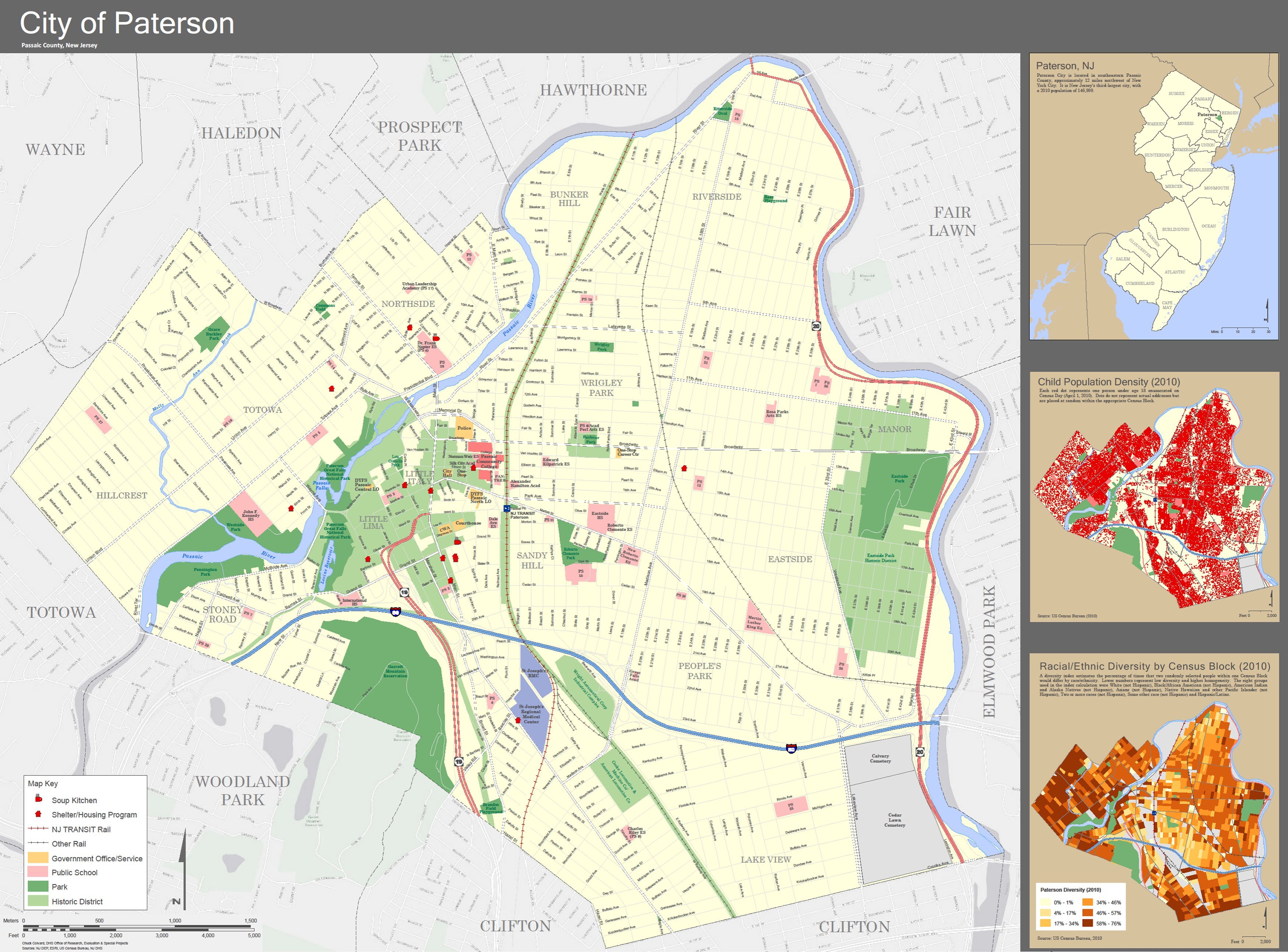
NJ's latest Map Contest has come and gone and Rutgers, once again , was well represented among the winners, which are posted online. It is hard for me to ever identify all of the former Rutgers students that particpate, like Chuck Colvard with his detailed mapping of Paterson. But I can clearly identify current student Eden Buenaventura, whose coastal resiliency map (below) brought home 3 awards including the 4th Annual Gail Carter Science Award. Outstanding!


A special congratulations goes to the high school students from the Marine Academy of Technology and Environmental Science in Ocean County. They went toe-to-toe with the professionals and came out great. Who knows, maybe they'll re-enter the competition in a few years as Geomatics students from Rutgers. Great job.

24 April 2014

Planning books as a resource

The semester is almost over but you still want to learn more about planning? Today's resource is books.

Even though it is a blog, PlaNetizen is a great place to learn about planning books. They frequently post reviews of new books, like this review of the GPS history book, You Are Here: From the Compass to GPS, the History and Future of How We Find Ourselves. Or you can check out their larger lists like the Top Ten planning books of 2013 or the 100 best books on city-making. Just remember, reading can be addictive, so try to use an internship or site visits to break up your sessions.

Old tech in NYC

You don't need a balloon, they can do this with computers now.


23 April 2014

More SCOTUS news

While our only required reading on the Supreme Court cases is the Sunday Magazine story on the Florida case, you may want to peek at old news coverage of the case like this NY Times article. Plus, New Jersey has had its own version of this conflict with a recent case that made it to the New Jersey Supreme Court.


Finally, a few years ago I made a list of links to detailed information about most of the major takings cases.

22 April 2014

Happy Earth Day


(Photo locations: Cannon Beach, OR; Cook Campus, NJ; Monterey Peninsula; Tuckerton, NJ; Little San Bernardino Mountains, CA?; Bedminster, NJ; Mt. St. Helens, WA; Monmouth Battlefield, NJ; Bedminster and Bedminster)

16 April 2014

Class reading

In 2010, the NY Times' Sunday magazine ran a piece by Andrew Rice called a Stake in the Sand.  It is a closer look at the Supreme Court case that was named, STOP THE BEACH RENOURISHMENT, INC. v. FLORIDA DEPARTMENT OF ENVIRONMENTAL PROTECTION ET AL

We will be re-reading this NY Times magazine article for class.  


But you might also enjoy this old photo and news clip from Pruned blog.

Common Lecture: Sungkyung Lee

Rutgers University Landscape Architecture Common Lecture
April 16, 2014 from 4:00 – 5:30 p.m.
Cook/Douglass Lecture Hall, Room 110, Cook Campus  (click for Rutgers Map)   
Sungkyung Lee, an assistant professor in the University of Georgia, College of Environment and Design, enjoys service-learning projects where students work on landscape design with community partners in need of resources and support. Her area of research is social sustainability in the built environment, place-oriented urban design, restorative benefits of nature, and healing garden design.

15 April 2014

The GIS&T Body of Knowledge

With efforts underway to update the Body of Knowledge for GIS&T, the original is now online as a downloadable PDF.  Take a look and think about what you would like to see changed. More remote sensing and aerial imagery? Add VGI? What else?


10 April 2014

Yet another eminent domain story

In Bridgeport, CT, the struggling community used eminent domain to create a property that could be developed as a large shopping center. " Bridgeport says it will build more than 1,000 new housing units and more commercial space, yet it started condemning businesses and 270 houses a generation ago, in the 1990s. All it has to show for it so far is a Bass Pro." Read Stephen Smiths' ‘We Razed 270 Houses and All We Got Was This Lousy Boat Shop.’ This is becoming a recurring theme in American development that has both ethical and political overtones.


The best of planning blogging?

PlaNetizen just posted its 5 most popular postings of the last three months. It represents some really good ideas.

09 April 2014

Just trying to tell the story

Regular readers of Places and Spaces will already know that we ran a series of studios last fall investigating different issues in the clean up and rebuilding after Hurricane Sandy. Together we called the studios, Rebuilding for Resiliency: New Jersey Shore, and were fortunate to have a great videographer following along throughout the process.

From the very beginning of the semester until the final presentations, Will Atwater trailed all four classes on multiple trips to the Jersey Shore and captured the explorations and discoveries along the way. In a pretty amazing job of editing, he distilled all of that video down to six short, elegant summaries of the process. Of course, as a good videographer, you never see Atwater, but you can see his diligent work throughout.

For students in Fundamentals, consider how this is part of Steiner's Chapter 8  where he talks about the importance of creating an informed and energized public. These student plans won't get built. But a public watching the videos and thinking about 5-year and 20-year plans for these areas might respond differently to the next round of public hearings whether they are held by towns or FEMA or NJ Future.

07 April 2014

Praxis studio in the news

Can landscape architecture really impacts people's lives? Frank Gallagher's spring studio was featured in the Star-Ledger because of that potential impact. The studio is exploring redevelopment alternatives at a former landfill in Somerville. But, as one of the students is aware, the impact could be good or bad:


“The people who live in the town are the ones who have to live with it,” Johnsen said. “What we’re supposed to be considering is…the health and safety of the public. So it’s not just about us and our big ideas.”

06 April 2014

Marlboro Master Plan Re-examination

The Township of Marlboro has their Master Plan Re-exam document posted online so you can look through it to see the sorts of issues that they considered. It includes issues from education to circulation, economic/commercial to utilities. It is fairly specific, listing specific owners impacted by some of the specific potential changes.

02 April 2014

The Power of Mapping

Mapping (and all things geospatial) are becoming so central to modern life that it is commonplace now for outlets like Atlantic Monthly to post features like John Tierney's The Power of Mapping which is linked to James and Deborah Fallowes' American Futures series, which is powered by Esri maps.

Good maps are everywhere. So are bad maps. But geospatial is getting integrated into everything we do.

31 March 2014

New eminent domain twist

We've seen eminent domain used for hospitals and highways. More recently towns have used it controversially for sand dunes and hotel/conference centers. But, according a report in the Star-Ledger, the newest twist in New Jersey is that Irvington is considering using eminent domain as a tool to fight against foreclosures. Too far? Or better than some of the other uses of eminent domain?

30 March 2014

Cool Public Art

Here is a great video of a new public art installation by artist Janet Echelman and Google’s Aaron Koblin in Vancouver for the TED Meeting there.


25 March 2014

Daniel Winterbottom lecture

Rutgers University Landscape Architecture Common Lecture 
March 26, 2014 
4:00 – 5:15 p.m. 
Cook/Douglass Lecture Hall, Room 110, Cook Campus 

Daniel Winterbottom, RLA, FASLA, a landscape architect with a Bachelor of Fine Arts from Tufts University and a Master of Landscape Architecture from the Harvard Graduate School of Design and Professor of Landscape Architecture at the University of Washington. His firm, Winterbottom Design Inc., focuses their practice on healing/restorative gardens. His research interests include the landscape as a cultural expression, ecological urban design and the role of restorative/healing landscapes in the built environment. He has been published widely in Northwest Public Health, Places, the New York Times, Seattle Times, Seattle P.I., Landscape Architecture Magazine. He has authored “Wood in the Landscape” and has contributed to several books on sustainable design, community gardens, therapeutic landscapes and community service learning.

He has developed several programs including the participatory design design/build program in 1995 where with his students he works with communities to design and build projects that address the social and ecological concerns of the community. He has completed projects in Seattle, New York City, Bedford Hills New York, Mexico, Guatemala, Bosnia/Herzegovina and Croatia. In 2006 he developed the Healing Garden Certificate program at the University of Washington.

24 March 2014

Suitability anlysis readings

Here are the old handwritten Suitability Analysis notes from when Steve Strom used these techniques in his studio. This four page set of Suitability Analysis notes is online now as a PDF. His description of weighted analysis lacks a graphic, so I created a digital version of both some of his graphics and a new Weight and Rate graphic that should help you work through it all as you look ahead to our next exam:To be clear, each grid shows the very same piece of land but being rated for a different issue (soils, slope, vegetation). Presumably that is fairly objective. But each individual criterion is then weighted based on relative importance. In this case, Slope has rather subjectively been weighted as 5 times more important that Vegetation. If you click on my graphic it will enlarge and be more readable.

23 March 2014

MAC-URISA PResentation opportunities

The Mid-Atlantic Chapter of URISA is holding a conference from October 22nd through the 24th (Wednesday through Friday) at the Revel in Atlantic City, NJ.  They are still in need of abstract submissions to help us build the best program.

MAC-URISA is looking for presentations in these areas of study (very general):

Agriculture
Business
Cultural
Demographics
Education
Emergency Management
Environment
Finance
GPS
Historical
Human Services
LiDAR
Natural Resources
Parcel Mapping
Planning
Public Health
Public Safety
Surveying
Transportation
Utilities

Please see the following link for additional details: http://www.macurisa.org/2014/present

21 March 2014

Help find the missing 777

Instead of watching the 24 hour news channels repeat speculation, you could participate in the search for the Malaysia Airlines Flight 370. Digital Globe has created a crowdsourcing web interface, called Tomnod, to help sift through massive amounts of satellite imagery. The interface works very smooth, giving viewers one small tile at a time but allowing them to build a larger image providing a macroscopic view of what they have already seen. The app keeps "score" by tracking how many tiles you've checked, how many markers you have dropped on potential oils slicks or debris, and how many other crowdsourcers have marked the same spots.

Like some other successful VGI applications, this has appeal on multiple levels. It feels like a humanitarian offering, helping with a massive problem that would have felt largely beyond the ability of the individual. It does feel a little like a game, both in its ultimate goal (find the plane) but also in creating an ongoing sense of progress with the counters for tiles and markers. Even though it lacks a forum or conversation area, it gives participants a way to connect (symbolically) with contributors with similar motivation, plugging them into a virtual global community.

And like other disaster-related VGI applications, it is something that can be done cheaply and quickly. Mobilizing GIS volunteers is more expensive and time consuming, although it clearly accomplishes something very different.

18 March 2014

Roy H. DeBoer


Roy H. DeBoer, FASLA, CLA # 00001
Professor Emeritus of Landscape Architecture
 May 7, 1933 - March 17, 2014


Feel free to post memories in the comments section.

17 March 2014

16 March 2014

NCAA brackets

Places and Space readers are invited to post their NCAA picks on the ESPN group, FoD - Friends of Dave v17. Good luck.

Blue Acres home demolished

"It's one down, 1,299 to go." NJ Spotlight reports that the first of the Sandy-devastated homes purchased under the Blue Acres has been demolished. This is a small but significant step towards getting residents out of the most floodprone areas.

Photo note: This is not the house in the story, but another victim of Sandy (and Sandy contractors).

14 March 2014

13 March 2014

Networking

Students graduating this spring are asking me how to meet professionals. My advice usually involves a time machine, because you should start meeting them around your sophomore year, not in your senior year.


Where ever you are in your studies or professional development, you might check out these upcoming events:

1)  FREE - TOMORROW     The NJ Geospatial Forum meets this Friday, March 14th, at 10 a.m.  The meeting will be held in the ITC Room at OIT, 300 Riverview Plaza, Trenton, NJ 08611.  Our speaker is Steve Welebny from Keystone Aerial Surveys Inc.  He will speak about "Innovations in Image-Derived 3D Point Clouds" and will discuss the generation of dense and highly accurate colorized 3D point clouds from conventional digital imagery.

2) FREE  Even if you do not enter the mapping contest you can attend and enjoy a really fun morning of GIS show and tell.
The 27th Annual NJ DEP GIS Mapping Contest
April 10, 2014 – 10:00 am – 12:30 pm (contestants should arrive at 9:00 am)
NJDEP Building, Public Hearing Room, 401 E. State St., Trenton, NJ 08608

Theme: GIS – Keeping New Jersey Safe

3) Finish Spring Break strong with this outstanding meeting that happens (this year) to be on the Busch Campus. The New Jersey Land Conservation Rally is one of the must attend gatherings of the year for those actively working to protect the landscapes of New Jersey. The incredible student rate of $25 makes this a particularly great investment in your future. 

4)  The Regional Plan Association has a slightly pricey meeting unless you are a student. how else are you going to spend a day at the Waldorf-Astoria for $125? And the meeting is a fabulous place to meet all sorts of professionals interested in planning.

Full RPA Assembly program available!
Register by March 15 to save $50!
 
When: Friday, April 25, 2014, 8:00 AM to 4:00 PM, followed by a reception
Where: The Waldorf-Astoria, New York, 301 Park Avenue
Register: https://rpaassembly2014.eventbrite.com
Full schedule: http://assembly.rpa.org


Featured Speakers

  • The Honorable Earl Blumenauer, Congressman, U.S. House of Representatives
  • Xavier de Souza Briggs, Vice President of Economic Opportunity & Assets, Ford Foundation
  • The Honorable Bill Finch, Mayor, City of Bridgeport
  • Polly Trottenberg, Commissioner, New York City Department of Transportation
  • The Honorable John S. Wisniewski, Assemblyman, New Jersey State Legislature
  • The Honorable Dawn Zimmer, Mayor, City of Hoboken
  • CLICK HERE FOR MORE


12 March 2014

Stoss in Blake


If you visit Blake Hall this spring, make sure you visit the back hallway (past the new computer lab). We have a temporary exhibit of some design work (as seen on the cover of LAM) from Stoss Praxis (http://www.stoss.net/).

08 March 2014

Great view

TIME.com has posted a high resolution panoramic photo from the very top of the new Freedom Tower at the World Trade Center. The photo is so high resolution that you can explore it in detail and find lots of interesting architecture and landscape architecture in both New York and New Jersey. The zoom it permits really allows you to feel a bit like you have found something completely hidden in the larger photograph.

Here are a few that popped out as I explored include:
  • World Trade Center 9//11 Memorial
  • The 9/11 Memorial at Liberty State Park
  • Pier A in Hoboken
  • Pier C in Hoboken
  • a corner of Teardrop Park
  • Nelson A. Rockefeller Park
  • Brooklyn Bridge Park
  • Fort Greene Park in Brooklyn

Can you find any interesting design work that I missed?

(Are you surprised to see Yankee Stadium to the left of the Empire State Building?)

07 March 2014

Friday funnies

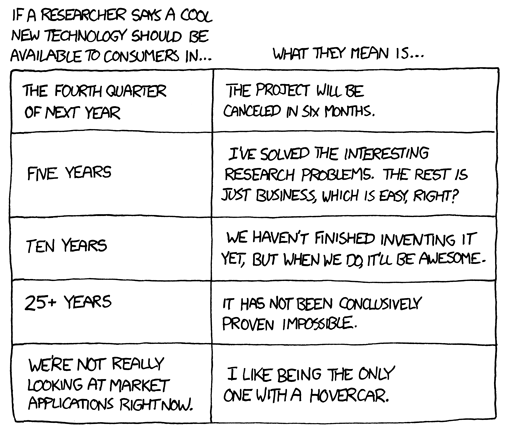
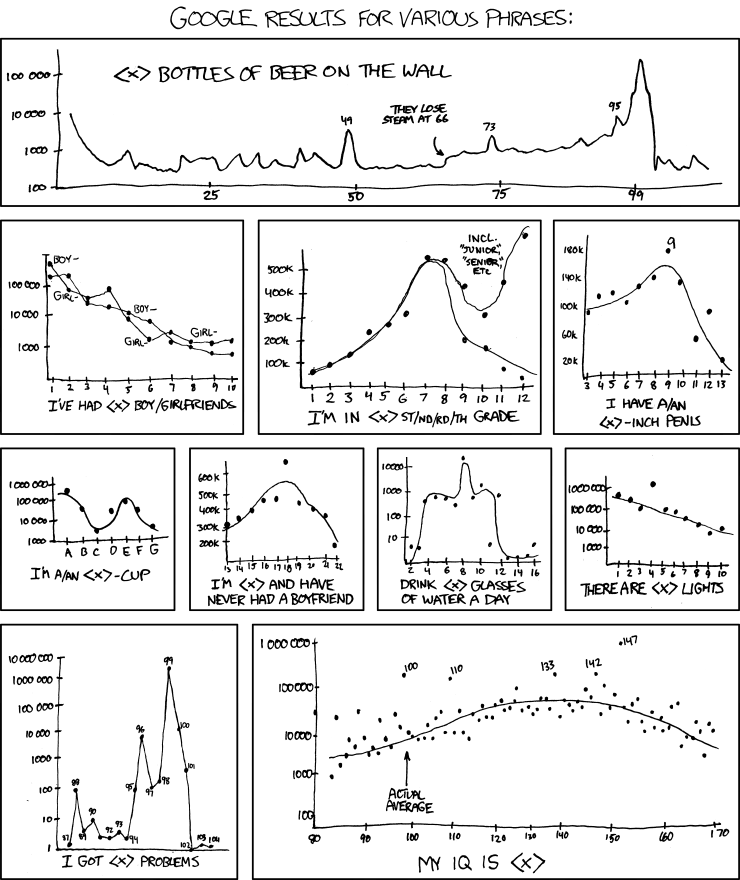
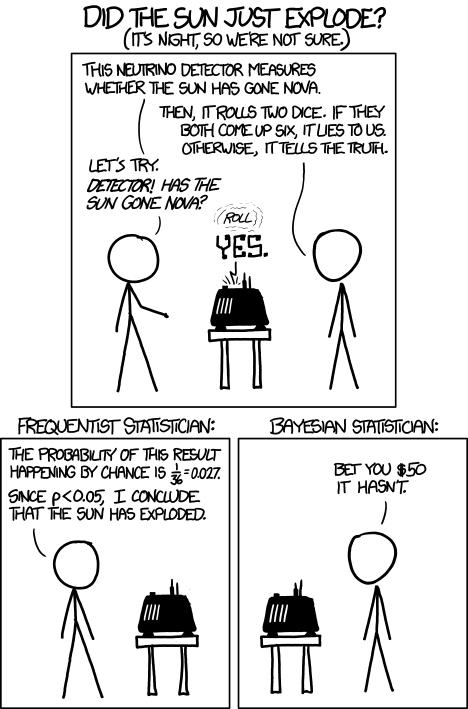
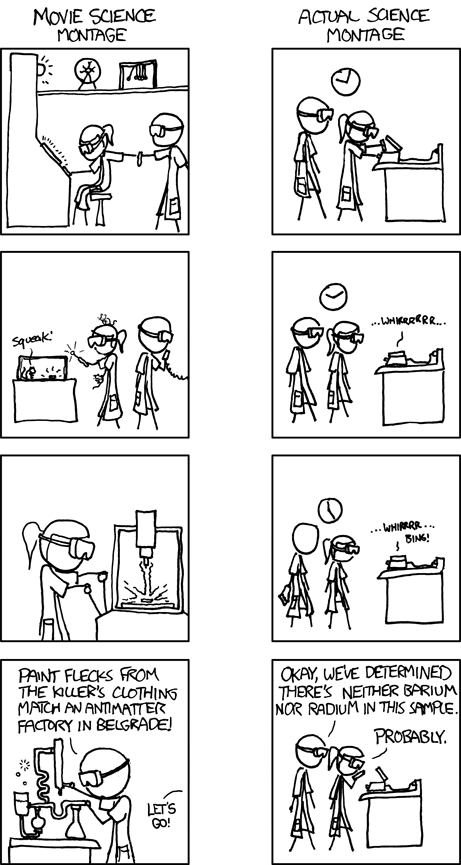
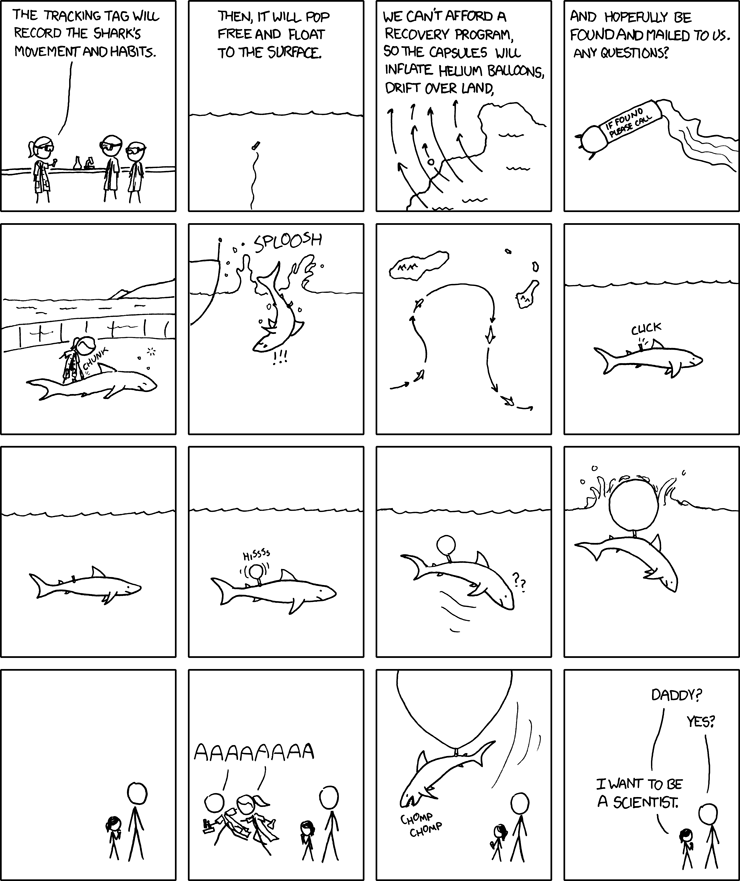
xkcd is a great online comic strip for research and statistics geeks. Sit back and enjoy a fun look at research and statistics issues.


If you don't get one of the comics, you could try to get an explanation at explain xkcd.


06 March 2014

Spring break reading

Spring break is coming, which means extra reading time. (Beach reading or not)  Make the most of the time by grabbing something from Brent Toderian's list of 100 "Best" books on city-making. I wish it were tagged or listed years but the links will get you that information eventually.

You still have time to go to the library or order them online.

Experimental design

I found a great resource to help with critical reading of research methods and findings.
Google's Driector of Research, Peter Norvig, has posted a useful list of red flags in experimental design reporting. It is pretty readable and covers many common mistakes.


05 March 2014

Sample topo maps

After talking about the free USGS topographic quads for NJ in class, I started getting more questions than usual about topo maps. So, I wanted to share some different scenes from around New Jersey that would be of interest. Just click and they'll expand.


A special thanks goes out to Mike Siegel and the Rutgers Cartography Lab.  This is a great resource for students and for pros.

04 March 2014

Slope maps

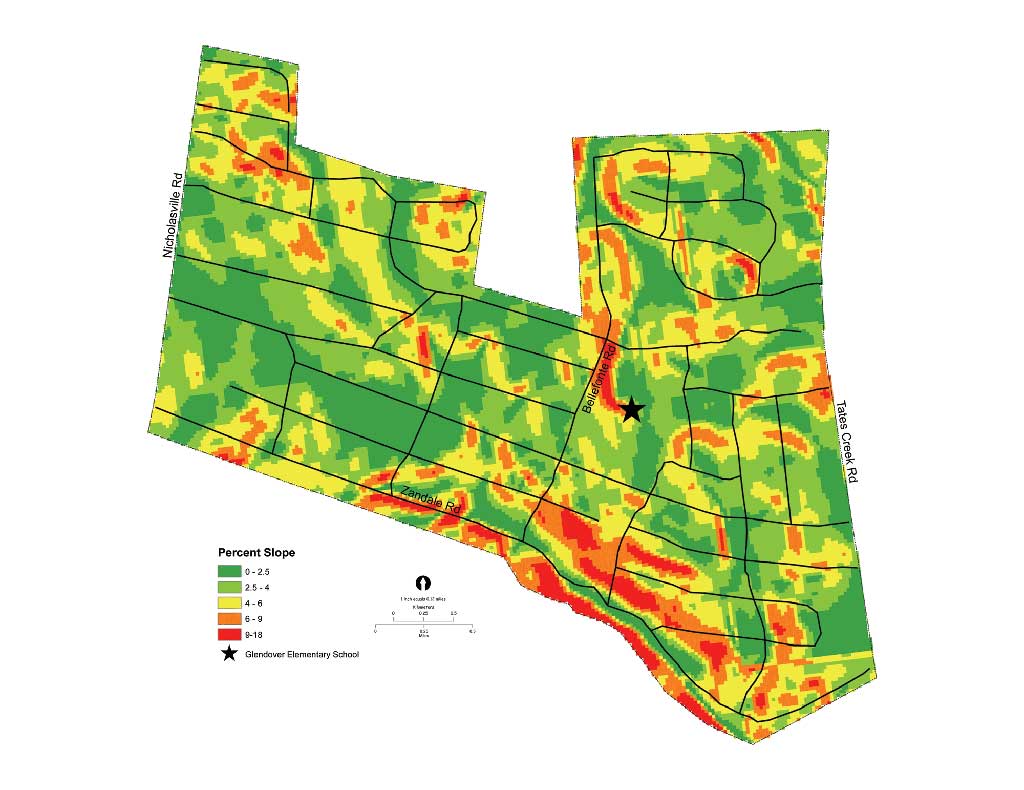
 I have gotten a few questions this week about slope maps. Here are a few samples that might make it easier to think about what a slope map does and does not show.

Please note that both show how steep different areas are, but neither shows how high the hills are (elevation) or which way they face (aspect). That is why you cannot make a topo map from a slope map.


01 March 2014

The future is now

"We are being propelled into this new century with no plan, no control, no brakes."
 
– Bill Joy, Cofounder and Chief Scientist, Sun Microsystems

27 February 2014

Community mapping in the news

Dr. Im is in the news again, this time for a very popular pothole mapping effort.

One of the continuing issues in crowdsourcing is how unpredictable the crowd response can be. I mean I can offer a crass pop psychology explanation of why this one has taken off (everyday experience, slow government response, appearance of accessibility) relative to something like wildlife or sewer outfalls. But we still see some fairly similar efforts wallowing with just a few data contributions. I wish we had a better sense of the motivating factors so that when we need to work on something important, but admittedly less sexy, we could better know how to improve the odds of success without a marketing staff of 20.

Remembering Peter Rona

The integrative nature of my work inserts me into projects with a wide variety of scientists and other academics. After all, we need expertise on soils and cultural landscapes, hydrology and plant science. So many different parts of the university seem

Still, as a deep sea scientist, Peter Rona seems like he might be working in a space that I wouldn't interact with. But a casual conversation with him 10 years ago led to one of his students taking a geomatics class. His project mapping the depths of Hudson Canyon was great because it pushed me into new analysis questions while helping him see new aspects of his own research. Since then, Rona's Engineering Geophysics program has given me a chance to remain connected to this remarkably different perspective on space and landscapes.

Peter Rona was a remarkable scientist and I am still amazed to see the breadth of the work that made up his life work. Pretty amazing. Dr. Rona will be greatly missed on the Cook Campus.


21 February 2014

Win a trip to Europe and help the planet

Check out the student entry category in the NASA's World Wind Europa Challenge in which competitors try to develop applications to better the world. Last year's winners are online and included some amazing applications meant to improve the planet. Proposals have to be in by May 31st.


20 February 2014

Save our soils

A quick link to the Resource of the Day which is the Web Soil Survey. Enjoy.

Losing another old tree

It is hard to imagine what could be causing the gradual decline of this 300 year old bur oak...except for the road they built that covers its roots and pushes up against the trunk.

Context quote

"Always design a thing by considering it in its next context-a chair in a room, a room in a house, a house in an environment in a city plan."

- Eliel Saarinen.

16 February 2014

On the role of professors today

"SOME of the smartest thinkers on problems at home and around the world are university professors, but most of them just don’t matter in today’s great debates," writes Nicholas Kristof in today's NY Times

He goes on saying first that "The most stinging dismissal of a point is to say: “That’s academic.” In other words, to be a scholar is, often, to be irrelevant." Ouch.

15 February 2014

Climate Science Meets Music: Listen to the Greenland Ice Sheet Melting

Climate Science Meets Music: Listen to the Greenland Ice Sheet Melting

Tuesday, 18 February 2014,  4:00 PM
Lower Dodge Gallery the Zimmerli Art Museum.
Reception follows seminar

Marco Tedesco, City College of New York, and
Jonathan Perl, Sonic Arts Center, City College.


Drs. Tedesco and Perl discuss their collaborative approach to climate research and music. Tedesco explains his fieldwork in Greenland studying surface processes of snow and ice. Perl discusses his process of sonification (translating climatological data into musical scores). Check out a feature about this collaboration here: http://www.loe.org/shows/segments.html?programID=13-P13-00034&segmentID=7

This even is part of the Seminar series Polar Perspectives on Art and Science  sponsored by: Zimmerli Arts Museum, Edward J. Bloustein School of Planning and Public Policy, Department of Geography, Rutgers Climate Institute, Institute of Marine and Coastal Sciences, Institute for Women and Art, Centers for Global Advancement and International Affairs

13 February 2014

On the passing of the Father of GIS

GISUser.com is reporting that Roger Tomlinson, the Father of GIS, has passed away. He is credited with giving us the name, GIS, for this world-changing technology. For this historic figure, his honors were many as shown in his lengthy UCGIS Fellows bio.

In an interview with Ben and Sue Niemann, you can find nice summary of an amazing career (part 1 and part 2). What did he say was the key to his success? "Serendipity!"  In 1961 he took plane ride where, simply by chance, his seatmate turned out to be the guy with whom he could innovate key steps forward. The amazing thing is how much he had to create from scratch and hom much computing work was undertaken with extraordinarily limited computing resources. He told the Niemanns:

“I had very little knowledge about actual computer capacity. In those days nobody in government did. The only computer programmers were in private companies and I needed to talk to these people, to ask if my ideas were possible. My input was system design; their input was knowledge about computers. It became a productive relationship, and it happened at the time when transistors were allowing computers to be information processors rather than only calculating engines. So there was a convergence of ideas, needs, skills, and technology that set the stage for the development of GIS.”
He went on with innovative coding, building hardware (including inventing a 48x48 drum scanner) and ultimately building an institution. In 1967 he made an amazing video showing the world the power of GIS. Data for Decision Part 1, Part 2, Part 3 is a must watch for serious GIS students.

Esri Canada posted a nice statement on Tomlinson. The GIS Lounge has an article as well.

The big papers haven't posted obituaries yet, but they will. When you think about the pervasive nature of GIS, there are few innovators whose work has touched more people than Tomlinson. Even those living without access to technology are having the landscapes around them cataloged, analyzed, and changed with Tomlinson's brainchild.

Thanks Roger.

Just crazy

From Kent we get a painful reminder of how much people value land, even just an extra 12 inches of it.

Some videos for a snowy day


Jamie Lerner on the greening of Curitiba
"I would like to say, if we want to have a sustainable world we have to work with everything what's said, but don't forget the cities and the children. I'm working in a museum and also a multi-use city, because you cannot have empty places during 18 hours a day. You should have always a structure of living and working together. Try to understand the sectors in the city that could play different roles during the 24 hours."

Michael Pawlyn on using nature's genius as inspiration for design
"Antoine de Saint-Exupery once said, "If you want to build a flotilla of ships, you don't sit around talking about carpentry. No, you need to set people's souls ablaze with visions of exploring distant shores." And that's what we need to do, so let's be positive, and let's make progress with what could be the most exciting period of innovation we've ever seen."

Kate Orff's Oyster-tecture
"We need new tools and new approaches. Similarly, the idea of architecture as this sort of object in the field, devoid of context, is really not the -- excuse me, it's fairly blatant -- is really not the approach that we need to take. So we need new stories, new heroes and new tools."


Jeff Speck on more walkable cities
"So on the one hand, a city saves money for its residents by being more walkable and more bikeable, but on the other hand, it also is the cool kind of city that people want to be in these days. So the best economic strategy you can have as a city is not the old way of trying to attract corporations and trying to have a biotech cluster or a medical cluster, or an aerospace cluster, but to become a place where people want to be. And millennials, certainly, these engines of entrepreneurship, 64 percent of whom decide first where they want to live, then they move there, then they look for a job, they will come to your city."
 
Majora Carter's Greening the Ghetto
"We have no excuse in this country. I'm sorry. But the bottom line is: their people-first agenda was not meant to penalize those who could actually afford cars, but rather to provide opportunities for all Bogatanos to participate in the city's resurgence. That development should not come at the expense of the majority of the population is still considered a radical idea here in the US. But Bogota's example has the power to change that."

Janine Benyus on Biomimcry
"And we are in a long, long line of organisms to come to this planet and ask ourselves, "How can we live here gracefully over the long haul?" How can we do what life has learned to do? Which is to create conditions conducive to life. Now in order to do this, the design challenge of our century, I think, we need a way to remind ourselves of those geniuses, and to somehow meet them again."


12 February 2014

Anita Bakshi Liveblog

Anita Bakshi
Is green always good? Landscapes of division and silence
(Note: as a live blog on a politically contested territory, I want to apologize in advance for notes that misconstrue Dr. Bakshi's comments with provocative links and comments that are probably unintentional)

In early 20th Century Jerusalem, Charles Robert Ashbee proposed eliminating some of the historic structures to create more enhanced views and green space. In part, this plan was based on his hope to return the city to what he called “the most perfect, medieval enceinte in existence.”

The area has areas called Mewat land, seen as unclaimed. But even village lands are contested, since the land outside of a village wall is seen as essential by the Palestinian village but available or unused by Israel.

Another type of land in these areas is the Peace Forest which is examined more closely in a documentary film called The Village Under the Forest.

Proposals for national parks become contentious for a variety of reasons. One of the examples was the City of David property which can be linked with a larger network of similar lands.

Our sense of connection and movement through connected lands is very different in our region than it is in Israel and Palestine. As such, evaluations of proposals (like the proposed Mount of Olives National Park) have to be considered from different perspectives than just those with which we might approach the situation.

Even neighborhoods, like Walaja, become contested territory.

Landscape as heritage
Mostar Bridge in Bosnia and Herzegovina 
Yad Vashem


09 February 2014

Lecture - Anita Bakshi

Rutgers University Landscape Architecture Common Lecture February 12, 2014 from 4:00 – 5:30 p.m. Cook/Douglass Lecture Hall, Room 110, Cook Campus Dr. Anita Bakshi completed her PhD in Architecture at the University of Cambridge, and is currently working as a Researcher with the Conflict in Cities Research Programme. Her PhD research on Cyprus focused on urban memory in the divided capital of Nicoisa – exploring personal memories and imaginings
related to Nicosia’s walled city center and the Buffer Zone, an uninhabited no-man’s land, that 
divides it. She received her BA degree in architecture from the University of Illinois at Chicago, and a Master of Architecture degree from the University of California at Berkeley. She has worked in architectural design firms in Berkeley, Chicago, and Istanbul as well as researched architectural heritage in Berlin and Cappadocia, Turkey. Current research interests include memory and history in divided cities, the design of memorial structures, the politicization of heritage, mapping and visual research methodologies for complex urban environments, and the overlap between urban spatial practices and issues of social and economic justice.

A change in NYC parks managment?

The new mayor of New York City is about to shake things up at City Parks. Could it include the relationship with the park conservancies? Looking ahead at the possible directions this could go, the NY Times writes, "The grandest parks, the royal courts of Central Park, the High Line, the Battery and Prospect Park, are in the hands of privately held conservancies."

One voice they quote suggested a radical departure, "At a round-table discussion held during Mayor de Blasio’s transition, State Senator Daniel L. Squadron spoke of his proposal that the wealthiest conservancies tithe 20 percent of the dollars they raised. This money, perhaps $15 million annually, would go the less well-endowed parks." 

Read the article (which fills in the topic in more detail) and then watch what de Blasio does.This could be interesting.


07 February 2014

MoMA's garden

MoMA wants to open up its garden to more people. It has a special wall/gate that can flip open and let masses stream in from 54th Street. In a recent NY Times article, Michael Van Valkenburgh was quoted as saying, “It’s a ludicrous idea,” said the landscape architect Michael R. Van Valkenburgh. “They fail to understand what’s brilliant about the garden and what makes it great — this cloistered isolation.”

The issue received a great deal of attention  last week at a meeting hosted by the Architectural League. The meeting featured some of the museum's leaders and architect Liz Diller, beginning with presentations of the vision for the future but then featured a rather energetic discussion/debate, all of which is now available on video.