Our Honors College students dive into so many deep topics. But I especially appreciate the ones that just wade in:
Donning Waders, Honors College Students Delve Into Coastal Research

Our Honors College students dive into so many deep topics. But I especially appreciate the ones that just wade in:
Donning Waders, Honors College Students Delve Into Coastal Research
The first map of the Mason-Dixon line is up for sale. Drawn on Japanese rice paper. Being sold at an auction house in Asheville.
The Library of Congress has a curated collection of Literary Map Paintings that are amazing.
Trophic State Index (TSI) rates water bodies based on how much biological activity they support.
Rivers that don't drain anywhere are their own special category, creating Endorheic Basins. The article lists some notable basins, but it also has a link to a lengthier list of endorheic basins.
Can you name an artist with no surviving paintings but who was, himself, painted by multiple masters? Apelles of Kos.
“And so I go into the woods. As I go in under the trees, dependably, almost at once, and by nothing I do, things fall into place. I enter an order that does not exist outside, in the human spaces. I feel my life take its place among the lives — the trees, the annual plants, the animals and birds, the living of all these and the dead — that go and have gone to make the life of the earth.”
Endorheic lakes and basins retain water and allow no outflow, just evaporation. If the water sneaks out underground, it is probably cryptorheic like Devil's Lake, Wisconsin.
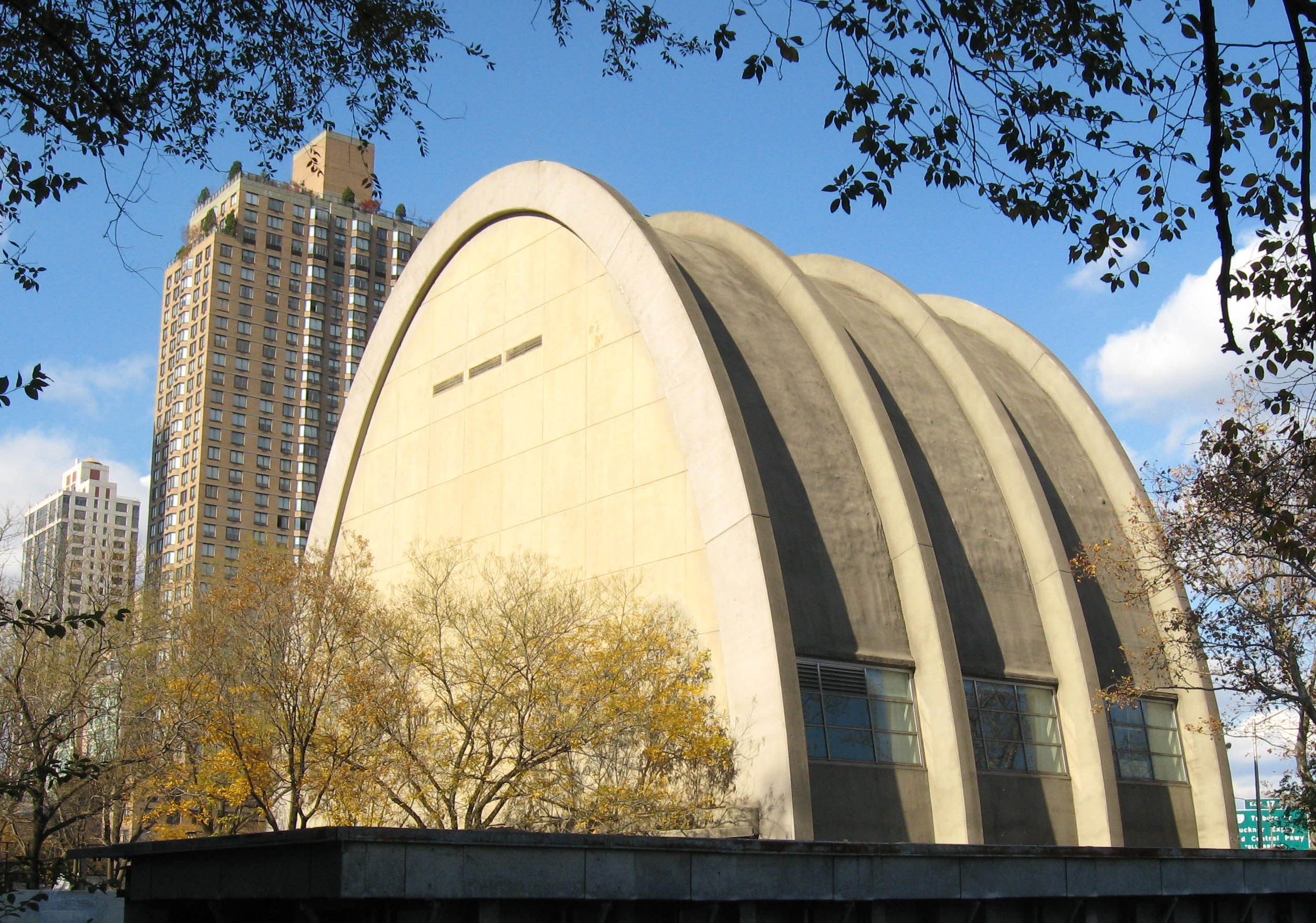
The often overlooked municipal architecture of the Manhattan Municipal Asphalt Plant. Robert Moses lampooned it as the "Cathedral of Asphalt" but now it is a recreation complex.
The first of Gen Z was born in 1997. And now they have a proper Wikipedia entry for Gen Z protests. Could it really include a 2010 protest?
Cast-iron skillets are all the rage, but cast-iron architecture? Don't put either one in the dishwasher.
An essential building block in GIS work today is the open source Geospatial Data Abstraction Library (GDAL). But, it is worth noting, that most of us don't realize that we are using it within the many other geospatial apps in our daily life and worklife. As the entry explains, it is embedded in the software that the GIS word relies on, including QGIS, R, ArcGIS, ERDAS, ENVI, MapServer and GRASS.
New York City has so many hidden features. Consider the Amiable Child Memorial that is dedicated to a bot that fell off a high bluff on the Hudson River in 1797. Not only is he remembered with a memorial, but also with a street named after him. Wikipedia tells the story.
This is a full article for what could otherwise be a long-forgotten incident. How many of these are there in NYC?
When a new idea or product displaces an entire previous category, we might call that a Disruptive Innovation. Some of these disruptions change entire markets. Think of how the smartphone has not only replaced the Palm Pilot and the landline, but maybe also the movie theater.
This is a rich and lengthy entry. I am especially appreciative of the section in which the editors have created an extensive table of examples and categories of disruptive innovations. The Examples are robust and fascinating - each with its own Wikipedia entry. The "See Also" list at the end is remarkable. Many of these topics have direct applications to the ongoing innovation and diffusion of GIS. The often misused Killer Apps, Hype Cycles, and the nearly forgotten Blue Ocean Strategy.
The wild dogs are gone. But the lengthy entry demonstrates the many personalities of Akegera National Park that remain. Quite a place.
The Door to Hell has become a tourist attraction despite the difficulties in travelling there and the dangers involved.
A stream in Colombia is so colorful that it is known as the Liquid Rainbow or the River of Five Colors. Plus, it runs very clear despite the colors. The Caño Cristales runs through the Serranía de la Macarena in Meta.
The world's most dangerous tree is the Manchineel. That gives it quite a reputation. The Wikipedia entry has an Historical Accounts and In Popular Culture section.


