24 July 2017

The manholes of Prospect Park

In a wonderful bit of writing, Karrie Jacobs turns the mundane discovery of a manhole into an exploration of the greatness of Olmsted's Prospect Park. The story wraps around to talk to Christian Zimmerman who is helping keep the park faithful to the original Olmstedian vision. Finally, Jacobs revisits something Olmsted worked to explain to the city - is it an urban park or a rural landscape?

Olmsted’s answer, in short, is that it’s a “special type of rural landscape,” one made specifically to be used by an unusually large number of people—in 2017, about 10 million a year. As Olmsted argued, “to permanently secure a high degree of rural charm in the public ground of a large city, special preparations are required.” Indeed they are.

Take a quick visit to Curbed to read the story.

17 July 2017

innovative projects

The Architect's Newspaper recently published a list of "Six innovative American projects you should know about." The most subtle solution (by Joan Nassauer) seems to be the one that is most likely to accomplish its goals. A couple seem so grand as to improve their chances at eventual (or near future) failure. Time well tell.


14 July 2017

The bobcat economy

According to the Washington Post, one wild bobcat in Yellowstone has been estimated to generate more than $300,000 of economic activity. This does not mean that he could be sold for his pelt, which has a market value of $315. instead, as the article explains, he gets people to spend real money:

"By crunching costs, from filling up a gas tank and guide fees to gear purchases and revenue earned from photo sales, Elbroch and his colleagues found that the Madison River bobcat brings in well over a quarter of a million dollars each year."

What is your cat doing for you?

(BTW, NJ fans will note that they slip in a reference to Island Beach State Park)

12 July 2017

New parks tool

The Greenprint system now has a major hub supporting park efforts in a variety of settings. Next City reports on the Greenprint Resources Hub which has been developed through combined efforts of the Nature Conservancy, Trust for Public Land and the Conservation Fund. The site is focused on the benefits of parks, and offers to help "Make the case for conservation with a greenprint".
The Greenprint Resource Hub allows interested parties to explore case studies (like the one in Hawaii), locate greenprints by geography, review best practices, and, perhaps most importantly, explore various funding strategies and policies that help enable greenprints.
While it seems like it is targeted towards park departments and NGOs, students will find it very helpful for projects, too.

10 July 2017

the dry fountains of DC

The Washington Post took a look at the problem with designers' heavy use of fountains in their designs.
Almost half of the Park Service water features in the District are in need of repair, including damaged grates at the cauldron-like spout on Theodore Roosevelt Island and the strainers and impeller motors at the U.S. Navy Memorial. The towering Dupont Circle fountain is tilting, its huge top basin inching off-kilter and slowly spoiling the flow from its three scuppers. 
As they point out, some have been off for a decade, like the Columbus fountain in front of Union Station. (BTW, be sure to follow the link inside the quote for more on the DuPont Circle Fountain)

12 June 2017

Catching up

The NY Times critics have published their list of the 25 best movies of the new century. While I have made a substantial dent in the list (I read the reviews often enough that I am not surprised by much of the list) I think I need to take a few days off to catch up. This heat wave seems like the perfect time to start.

Central Park news

Amazing to see how much notable news emanates from Central Park.

There is a proposal to build a more accessible inclined path to Belvedere Castle. Opponents say that it would be out character for the park. The article interviews Theodore Grunewald, who misrepresents the work of FLW:
Walking along the path, Mr. Grunewald said the same access could be provided by a subtler regrading. He said the planned walkway would tie Belvedere Castle to the land “in a way Frank Lloyd Wright would have done.”
“It’s a modern idea, the opposite of Vaux,” he said, shaking his head. “There has to be a better way to do this.”
 Wright loved surprises, too.

 Of course, the recent Shakespeare in the Park drama has made national news, too.

Most importantly, Doug Blonsky is retiring after leading the Central Park Conservancy for 32 years. The Rutgers alum has been credited with bringing the park back from the doldrums (if not death's door).

06 June 2017

05 June 2017

Expert advice: Picking a major

Each summer Places and Spaces gets discovered by a whole new group of students looking at majors like landscape architecture or environmental planning and design. While many of our readers are well those pre-career days, some will appreciate this bit of help.

A few years ago the NY Times published a helpful piece on Four Steps to Choosing  Major. (It should also include a minor with that)  I like the section on why you should ignore people telling you to follow your passion. But also the quote from Veronica Belmont saying: “If you’re really passionate about a topic, and you want to work in that field, you should already be doing it.”


31 May 2017

Landscape Project 3.3

If you want to understand ecological landscapes in New Jersey, one of the important tools you need to be using is the data/information from the NJDEP's Landscape Project. The new version (3.3) of the Landscape Project has been released, and you'll want to check it out for any regional habitat or wildlife studies.


23 May 2017

Iowa Data Bike

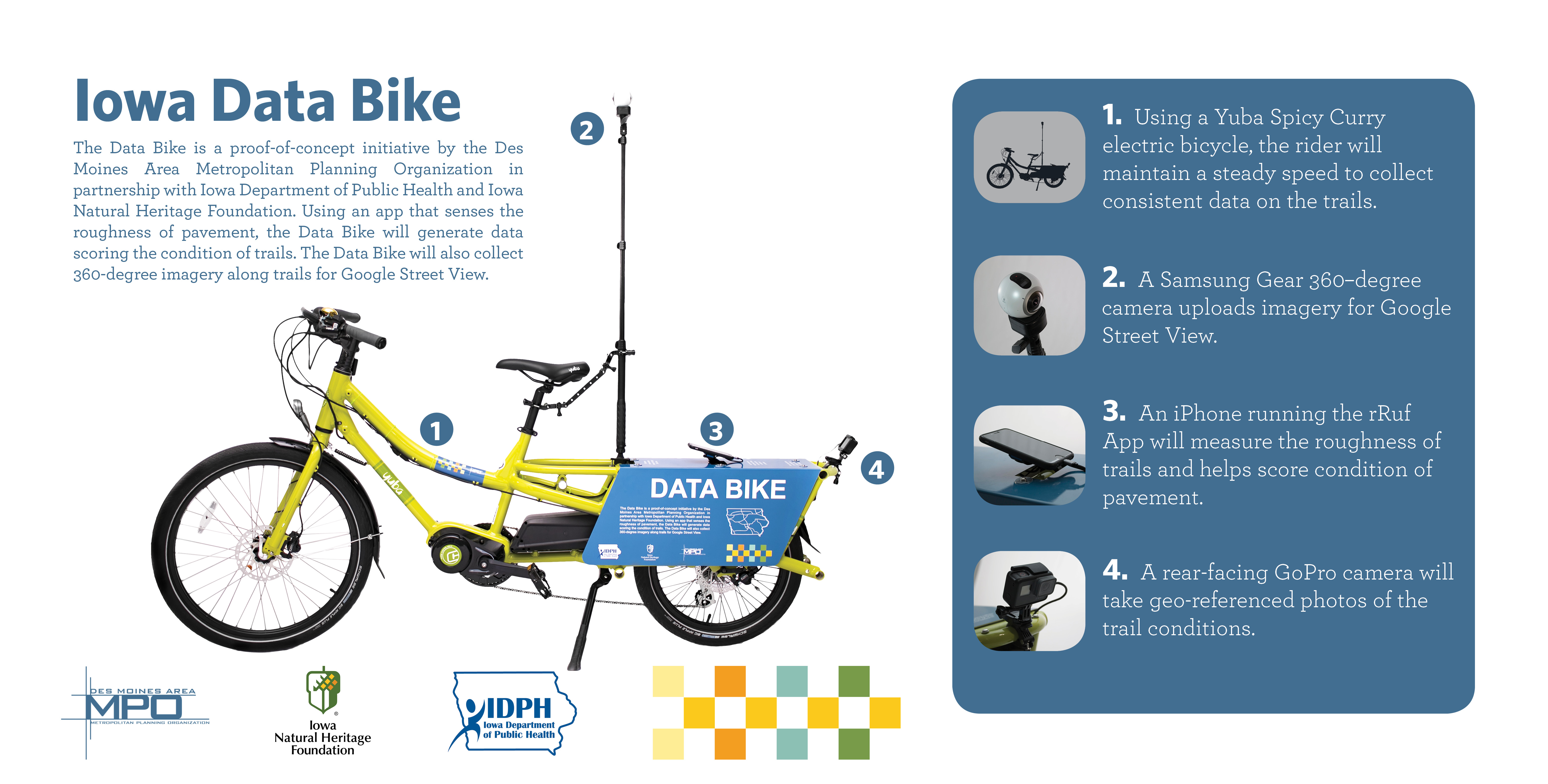
In GIS we know about data banks. But maybe it is time get to know the data bike. It will help collect data and even images that can be posted on Google Street View.


18 May 2017

Mapping the moving forest

 Climate change should cause tree species to move North, right? Well, it seems that (by one measure) they are moving West more than North. The Atlantic has a fascinating report that includes a killer map.
 

02 May 2017

Source code

At Rutgers we are currently celebrating Reading Days. For those looking for something short to read, these histories of NYC zoning would be a great investment of a few minutes of your time.

For starters, the Institute of Public Administration at Baruch has posted a helpful overview of the history. New York City has an official page on city planning and the historic 1916 zoning code. The trigger for the whole thing was the Equitable Building, as explained by the Gotham Observer.

But if you get hooked, the original code is online from NYC Planning.

Most visitors will agree, the city has turned out alright.


EIS

Even though they are mostly dealing with things like depleted uranium, the Argonne National Lab has a nice explanation of Environmental Impact Statements and the EIS process.

The PDF of a DEIS is available for the expansion of a marine sanctuary. The carefully crafted graphics make it clear that the document was meant for a broad public audience.

24 April 2017

Kelo video

This video visits Suzette Kelo 10 years after the original court case. It is interesting to hear her say that she has not returned to the Fort Trumbull neighborhood since she (and her house) left. That is remarkable considering how small New London is. Clearly the emotions are still strong. Note: the video is an advocacy video, so filter accordingly.


Duke's Law School presents a more explanatory video. It still interviews some key players. It also has a more academic discussion. The video incorporates some graphics I could not get for class.

21 April 2017

Martha Schwartz

In last night's Cekada Memorial Lecture, Martha Schwartz mentioned some notable projects worth looking at more if you don't know them yet.

The 1994 Village of Yorkville Park

The 


Manchester Exchange


Grand Canal Square in Dublin


20 April 2017

Musical weekend on Campus

This weekend the LTC is performing Oklahoma! at the Livingston Campus Center. Definitely worth some time for a classic American musical.