07 August 2016

Farmers Market Week

Make sure you get out and celebrate Farmers Market Week. Who knows, maybe there'll be a Pokemon gym there.


27 July 2016

Wish I could attend

For those interested in the intersection of health and place, this sounds like an outstanding conference. With the Baby Boomers reaching retirement age in the US and the UK, this is about to become a massive issue for designers to grapple with.

International conference on Habitats for Happy and Healthy Ageing |
Edinburgh | 11-14 October 2016 | Registration now OPEN

Mobility Mood and Place:
Habitats for Happy and Healthy Ageing Conference 

is delighted to announce that registration is
now open for the fourth Open Space: People Space Conference, ‘Mobility,
Mood and Place: Habitats for Happy and Healthy Ageing’.

The conference will take place in Edinburgh on 11th – 14th October 2016.

For further information and registration:
www.mobilitymoodplace.ac.uk/conference

Featuring keynote speakers including Professor Billie Giles-Corti
(Australia), Professor Gloria Gutman (Canada) and Professor Sarah
Wigglesworth (UK), the conference will showcase the best global research
on realising environments for healthy, happy and active ageing for all.

As well as plenary, parallel and poster sessions, delegates will hear
from the Mobility, Mood and Place (MMP) project team who will share
emerging findings from three years of research engaging over 750 older
participants in innovative studies, including co-design, mobile neural
imaging and lifecourse work.


The final day will include site-based activities and workshops and an
exhibition on MMP will run for the duration.


Follow us on twitter: #OSPS4

25 July 2016

100 years of zoning

Today is the 100th anniversary of New York City's comprehensive zoning ordinance. Generally viewed as the first city-wide comprehensive zoning ordinance in the US, this was a real watershed moment for urban growth and land use controls. Appropriately, the NY Times provides some context and reflection in a Building Blocks column by David Dunlap.

It is probably true that the nation's embrace of zoning was inevitable, so if NYC hadn't jumped in first, someone else would have. But the symbolism of NYC's early adoption and continued rapid growth undercut many ridiculous arguments about how government control would set cities back or make them less competitive. As Dunlap reminds us, NYC also created a phenomenal zoning document that helped show other cities how to structure zoning as a defensible and logical system.


11 July 2016

Pokemon Go


Pokemon Go is embracing the geospatial realm and encouraging more walking. But could Pokemon Go cost you your job? I assume that the next few issues of planning and GIS trade mags will be sprinkled with interesting celebrations and complaints about this new trend, but will be sorely lacking in cheat codes.

06 July 2016

History maps

Mapping history has been around for a while. But I thought this series of maps from the Washington Post were very interesting. They asked where there were towns in the US named after towns in England. The maps, while simple, tell a story a bit different than I had expected.

05 July 2016

Good news for Barcelona

The City of Barcelona is banning Segways from the central portions of the city. They are considered part of the class of transportation that could be called "novelty urban transit". Like duck rides in Boston or beerbikes in Amsterdam, they ensure that tourists have a visible impact on the city they visit. In a cultural setting they are the equivalent of poor ecotourism.

Writing on The Atlantic CityLab Feargus O'Sullivan says, " It would surely be going too far to damn Segways as Satan’s chariots, but they still need to go. Barcelona’s waterfront should be an open-air living room for the city, not a place where the experience of the city is simulated for motorized, walkway-clogging tourist groups."

23 June 2016

Geohealth Lab website

We finally made some long overdue changes to the Geohealth Lab web site. Lots is happening this summer, so watch for more updates.


06 June 2016

FitCity 2016

Exciting to see more designers getting onto the bandwagon of making our communities healthy places. This week there is a great meeting at BAM in Brooklyn called FitCity 2016 that is exploring how design can improve health. Since it is sponsored by the AIA, it will probably be a little heavy on architecture, but the ideas should be edgy. And, if you can't attend in person, you can follow along at #FitCity2016


05 June 2016

Social GPS versus local residents

That great cut through that helped shave several minutes off your commute is no longer a secret due to Waze. The residents of the cut through neighborhood may be more upset than you. And, as the Washington Post writes, some of them have started fighting back by posting false information.


31 May 2016

Maker Park at Bushwick Inlet

It seems that each potential post-industrial park has to be debated again as if it were the first. Hence, the NYTimes coverage of the proposed Maker Park at Bushwick Inlet.

(Naturally, I don't mean that all of these parks should be slam dunks either. Each new park is its own park. It just seems like the coverage never recognizes that these are advancing a collective idea over time.)

27 May 2016

For booklovers

Do you remember Andre Chiote's posters of Brazilian World Cup stadia? Now Chiote has developed some elegant posters of great libraries around the world. Awesome illustrations.

24 May 2016

Geohealth Lab @ CRSSA

If you haven't seen what we are doing at the Geohealth Lab, this is a great time to check out our website. It has been updated and is getting more traffic.

Work at the intersection of health and GIS is growing quickly. UCSB hosted a meeting on the topic in December.  URISA has a GIS and Health meeting that starts in a week. And Esri hired a Chief Medical Officer last year. It is an exciting time to see what is happening in the field.Esri has also created a Zika story map worth exploring.


23 May 2016

Sea level rise and property values

While the news story is several months old, I was struck when I read this story from Key Largo. It details how the streets of Key Largo are flooding with increasing frequency. The article includes a picture of a flooded street on what appears to be an otherwise nice day - just a high tide with a super moon will do it. But the interesting twist was this quote:
"So far we have not been seeing buyers being concerned with sea level rise, which I'm a little surprised given all the media attention it has garnered lately," said Lisa Ferringo, president of the Marathon/Lower Keys Board of Realtors.
When will shore towns see that change? How much flooding is a meaningful inconvenience? Is this a bubble about to burst or a new standard of social resilience. Seems like there should be some sociologists building predictive models on this.

18 May 2016

Detroit's new ecology

Here is yet another interesting use for vacant sites in Detroit: Joan Nassauer is turning old basements into bioretention gardens. One report on the project suggested that it is about more than just stormwater:
"I do think these projects have the ability to inspire hope," Mobley said. "And they reinforce a message to residents: We haven't forgotten about you. You're important. You matter."

Geohealth 2016

With Summer underway, this is a great time to step back and look at larger topics. In particular, if you are interested in applications of GIS for health applications, you might start with the recently updated website for out Geohealth Lab Group at CRSSA.


12 May 2016

Most Endangered in NJ

The most endangered historic sites in New Jersey has been announced for 2016. I was particularly disappointed to hear that the Whyman House in Elizabeth made the list. It must have been a very handsome house in its time, but now it is a somewhat expensive opportunity in a city where history seems often forgotten.


11 May 2016

Get out there!

Looking for something to do between all of the different commencement ceremonies this weekend? On Saturday you could get out and help clean up Middlesex County to make it a little better for the birds.


04 May 2016

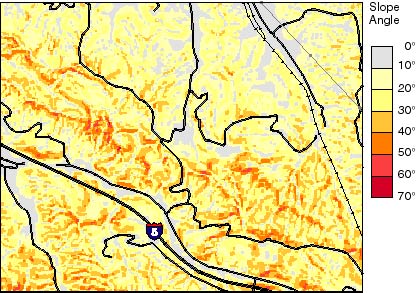
Slope Map

When was the last time you really looked at a slope map?


Happy Birthday Jane Jacobs

Today would have been the 100th birthday of Jane Jacobs.

Libby Nelson has a great piece on Vox celebrating Jacob's upbeat attitude about cities:
"Her theory of how cities worked was based on how she saw people behave, rather than how architects hoped they would behave. (She didn't mince words, either: In 1958, she called these experts "egocentric children, playing with pretty blocks and shouting "See what I made!")"
And Saskia Sassen at The Guardian summed up her work saying that:
"She understood it is the weaving of multiple strands that makes the city so much more than the sum of its residents, or its grand buildings, or its corporate economy."
 And as you can guess from the image above, Google is celebrating her with today's cartoon/image.

Noguchi viewing

If you are in the area, stop by the U-Haul facility on South Kingsbridge in St Louis on the evening of May 19th for an open viewing of the Noguchi.

Star Wars

May the 4th be with you.
To celebrate Star Wars Day, check out this great map which repurposed the London Underground cartogram as a chart map of the Star Wars universe.

03 May 2016

10 ______ that changed America

As a Reading Day turns into a cramming night, EnvPlan students could spend a little time watching an episode or two of the 10 that Changed America
Save one or two for after Finals as a celebration.

The Garden of Earthly Delights

I had the privilege last summer of taking a dozen landscape architecture students to see The Garden of Earthly Delights. It was a wonderful experience and I am sad that I don't have time to do it again for another 8 years.

However! You don't need to go. An interactive documentary has been created by Pieter van Huijstee to celebrate the 500th anniversary of Hieronymus Bosch's death later this year. Even if you have visited El Prado, you should take a few minutes to bask in the glory of this wonderful painting. It still amazes me to think how old it is. Parts of it seem more like a mid-20th Century painting.


27 April 2016

Garden Bridge

Thomas Heatherwick's proposal for a Garden Bridge across the Thames has reached another milestone with the signing of a construction contract for the project. If you haven't been following the project, Heatherwick has proposed a new green bridge in central London. The amount of trees and soil proposed on this bridge are quite substantial and will require a feat of engineering to support the weight. To explain the scale of what they are trying to do, they have generated an infographic.

https://s3-eu-west-1.amazonaws.com/gbt2016/Documents/GBT-infographic.pdf

There are a lot of different aspects to the project. Other news outlets (like CNN) are making a big deal about the project's inspiration derived from the movie Titanic. But there is also a concern about how much green space will be lost to make this artificial green space.

Stay tuned.

26 April 2016

Houston's planning and flooding problems

The Houston Chronicle published a column from John Jacob about how the city's laissez-faire approach to planning has backfired and created a city with substantial environmental planning problems. Particularly, the column says Houston has developed their wetlands and floodplains without mitigation and has placed thousands in danger. Meanwhile the city is letting developers build homes that no one will want in a few decades.

So what alternative is there? Jacob proposes...Transfer of Development Rights.


25 April 2016

Panel on Post-industrial Public Landscapes

Rutgers University - Landscape Architecture Common Lecture
Wednesday, April 27, 2016
4:00 – 5:30 p.m.
Loree Building - Auditorium 022, Cook Campus (click for Rutgers Map)

As part of common lecture series, the folks from the Forest Service, NYC Parks and CUNY who have been part of the Freshkills Park and the folks from Rutgers and Montclair State University, who have worked on Liberty State Park will be available to talk from 2-4 before the presentation in Room 148, Blake Hall.

Parking for visitors will be in Lot 87 at Blake Hall. It’s just a short walk to the Loree Building – right along Red Oak Lane.


19 April 2016

The story behind Kelo

When we talk about Supreme Court cases in planning, it often seems like they are truly an unique local conflict that was so fiercely fought that the Supreme Court's involvement seemed inevitable. Afterwards, many decisions seem accepted as inevitable and unquestionable.

But reading about Kelo v. New London, we see that the way the case bubbled up and how the decision was received are not like that at all.

Ilya Somin is a Professor of Law at George Mason who blogs for the Washington Post on this topic. He wrote a series of posts last year when his new book on the case was released. One of the posts provides insight into how such an obscure case became a foundational decision on eminent domain and property rights. He followed up with a detailed post about the public and political response to the decision.

He also has blogged responses to comments by Donald Trump on eminent domain. First, when Trump told an interviewer that eminent domain "is not taking property." And a second time when, during a primary debate, Trump said that the property owner "gets a fortune."   Finally, you can watch a short news video about the Trump case.

06 April 2016

Camp Pendleton

Camp Pendleton continues to be in the news as a project. But readers can go back to the notable 1997 report on Steinitz's Alternative Futures project online. The report has aged well. It is fascinating to look at the section on implementation which still reads as if it were current today.


Building a healthier community

Physical activity is one of the important ingredients of a healthier community. Princeton University is copying the bike rental programs of larger cities (NYC, DC, Minneapolis) with an on-campus bike rental system. The program, started in 2014, encourages students to be active. And, in a sense, it makes the entire community a little more accessible since it expands the distance that students can easily cover.

05 April 2016

MLUL and related links

The basis of much of local planning in New Jersey is the Municipal Land Use Law, usually lovingly referred to as the MLUL. You will notice that the ANJEC guide we mentioned in class only makes it to the second paragraph before citing the MLUL.

And NJ.com has just posted a NJ Geography quiz with lots of municipal madness questions. Did they spy on our class lecture yesterday?  Well, they have written about it plenty oin 2011 or in 2015.  (or the NYTimes in 1998 and in 2007)


It is a New Jersey story.

04 April 2016

Resources

Since our last exam, we have talked about the following RotD's:

1. Books (including Outside Lies Magic and The Pine Barrens)
2. Newspapers
3. Master Plans
4. American Memory
5. Ordinance.com
6. eGov


Daniel Burnham

Daniel Burnham famously said, "Make no little plans; they have no magic to stir men's blood and probably themselves will not be realized. Make big plans; aim high in hope and work, remembering that a noble, logical diagram once recorded will never die, but long after we are gone be a living thing, asserting itself with ever-growing insistency. Remember that our sons and our grandsons are going to do things that would stagger us. Let your watchword be order and your beacon beauty."

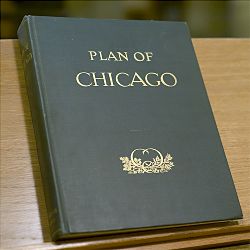
 But do you realize how grand his plan was? The entire Plan of Chicago (1909) is available online. The images are still remarkable and his writing holds up well. The eighth chapter sets out six goals the plan seeks to accomplish and all six are achieved to some degree.

As an aside, Variety reports that Martin Scorsese and Leonardo DiCaprio are making a film dramatization of the book, The Devil and the White City. No word who will be playing Daniel Burnham. Based on the painting below, who do you think it should be?


Sommerfrische lecture

Christian Lippman

Technische Universität Berlin

Sommerfrische

Dr. Christian Lippmann has a long standing research interest in ecotourism and the impact of touristic ideals on landscape planning. Besides his “day job” as owner and CEO of a Berlin consulting firm focusing on organizational development, he recently completed his Ph.D. at Technische Universität Berlin with the title: “Sommerfrische as a spatial symbol of bourgeois life style - the social construction of touristic rural space”.

Sommerfrische is a particular German tourism phenomenon dating back to the turn of the last century, describing (petite) bourgeois spending parts of the summer in the country. The presentation will focus on space and architectural structures which are commonly identified as "rural“ or "pastoral“ and which are considered touristic destinations. The outcome will be a deeper understanding of the cultural perception of such destinations and why they are considered beautiful and picturesque locations.

01 April 2016

Coordinate of the Year

Places and Spaces is happy to announce that this year's winner of the Coordinate of the Year is...

(drum roll)

Latitude!

After a few years of dominance by Longitude, it is exciting to see the return to prominence by Latitude. Its emphasis on the vertical is inspiring to us all. And, of course, we wouldn't have the horse latitudes without it. Another past winner, the Cartesian coordinate X, congratulated the winner noting Latitude's important work in navigation.

Congratulations Latitude! 2016 is going to be a special one.

31 March 2016

Quote

We are the bullies of the earth: strong, foul, coarse, greedy, careless, indifferent to others, laying waste as we proceed, leaving wounds, welts, lesions, suppurations on the earth body, increasingly engulfed by our own ordure and, finally, abysmally ignorant of the way the world works, crowing our superiority over all life.

- Ian McHarg

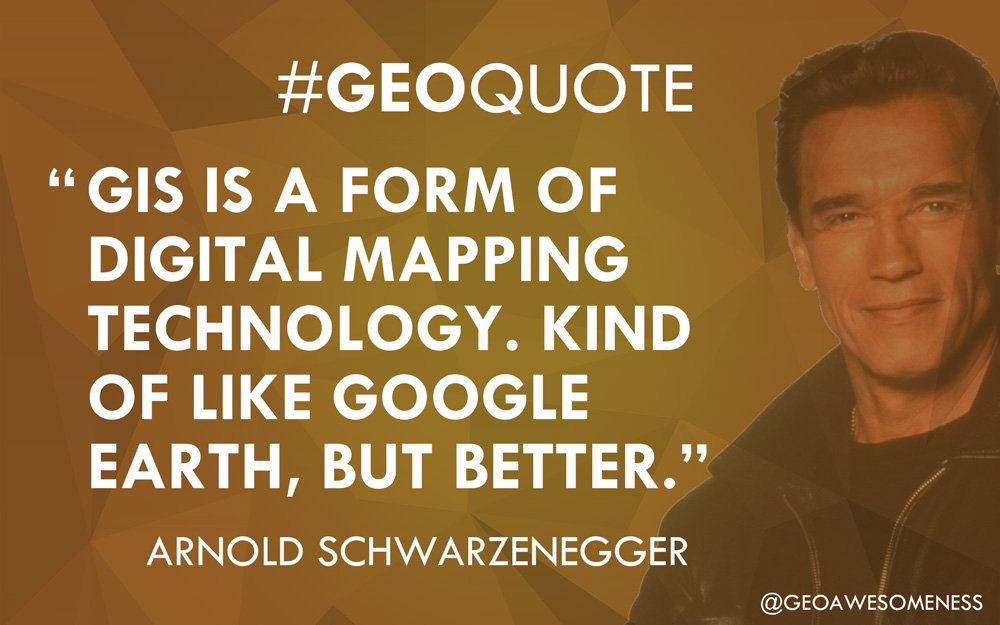
Celebrity endorsement

If you are not already following @geoawesomeness this image should convince you to.

30 March 2016

Shelterbelt landscapes

There was a time when the government paid people to plant trees. In response to the Dust Bowl, FDR created the Prairie States Forestry (Shelterbelt) Project, 1935-1942, which used the CCC and WPA to plant windrows and forests. This was an attempt to plant 220 million trees on private lands across the great plains. The map below shows the scale of the efforts. 


Today's Common Lecture by Sara Karle looks back at the project and traces its current remnants.

Implementing the idea was not as easy as it might have seemed. The science behind the ideas evolved with the project, establishing the idea but gradually improving the understanding of what should be planted and where. Congress designated $1,000,000 annually for labor and the rest was handled through cooperative agreements.

Of the first 6 million trees, 4 million were cottonwoods because they were seen as fast growing. This was disaster relief and needed to be quick.

The impact today is a series of unusually wide corridors of mature trees growing across the plains. Check out Scott Drickey's amazing aerial photographs.


Tunnel

Environmental planning builds on infrastructure that reinforces its efforts. Improving commuting in the NYC Metro area is key to keeping cars off the roads and making communities more livable. CBS says that the Gateway project could do that for Ridgewood.

21 March 2016

Master Plans

As an assigned reading for Fundamentals of Environmental Planning, students should look over this ANJEC piece on municipal Master Plans in New Jersey.  But they can optionally look over this scan of the 2006 Chatham Borough Master Plan. Does the quality of the scan say more about 2006 technology or the Borough's commitment to engaging the public in their plan? Before you judge, the slides from their 2016 update seem much more engaging.


And, in case you lost the link, this great Steve Strom handout on Suitability Analysis.

UCGIS Webinars

UCGIS has two webinars remaining in our 2015-16 season, including a new one just recently added. Attending a UCGIS webinar is always free of charge for those affiliated with our member institutions, and anyone else can participate for a $20 fee.  


 Something for serious Rutgers students to consider.

16 March 2016

Beach day?

A warm sunny day might seem like a good time for sneaking to the shore and walking on the beach. But 2 oceanfront homeowners in Brick say they can't walk to the beach because the state built a wall between their houses and the Atlantic Ocean.


15 March 2016

Is Washington DC a truly walkable city?

Tomorrow we find out.

Religion and zoning

Religion and planning can be  an interesting combination. Despite protections under the federal Religious Land Use and Institutionalized Persons Act (RLUIPA), many houses of worship find planning boards to be less than welcoming. The flip side is that many planning boards see applications that think that their religious status exempts them from any legal restrictions.

The Home News and Tribune writes that Hillsborough Township is currently caught up in multiple cases involving zoning of potential sites for religious institutions and their houses of worship.

The NY Times reports on Bernards Township being sued over the zoning change for an Islamic mosque. They say that there were 39 public hearings and lots of demands by public officials. The applicant, the Islamic Society of Basking Ridge, has as its president former Basking Ridge mayor Ali Chaudry, sothis isn't an outside group unfamiliar with the terrain.

The article suggests that some opponents dropped the land use concerns and opposed the mosque openly because of the religion's ties to Islamic Shariah law.

The planning board says it looked only at basic land use issues. But NJ.com writes about the lawsuit saying that it "also reports in detail how other churches and synagogues in the township met no resistance during their development applications." Based on the level of emotion in the responses online, I doubt that this is the last case we will see like this in our area.

UPDATE 3/15: Tom's River has a different case which is still tied up in landscape and religion.


10 March 2016

Mapping out the Anthropocene

As part of this year's celebration of the 250th anniversary of Rutgers, SEBS has used the theme, Exploring the Anthropocene: The Age of Us.

Pondering the impacts of the Anthropocene is difficult. It is hard to visualize what over 7 billion people look like or increasing species extinction looks like. Esri has developed an Anthropocene story map that helps tell the story of this period and looks at the kinds of steps we can take.

09 March 2016

Wilderness for how long?

I was just talking about the Boundary Waters Canoe Area Wilderness the other day and now I see that (unbeknownst to me) it is in the news again. The Minnesota Star reports that an EIS was recently completed for a sulfide mine adjacent to the wilderness.

The Star is questioning the quality of that EIS and the impacts it describes. Any impact will be major. But some of it is historic: "PolyMet’s proposal, if permitted, would be the largest single destruction of wetlands in modern Minnesota history."

Teach them young

A group of European designers have proposed a new approach to Pre-K education. Their proposal explores the potential for urban farms to serve as preschools. The idea of garden education is growing in lots of quarters. Atlanta has its Patchwork City Farms where middle school students learn about natural processes. But will these students treat the Earth any better than past generations that grew up on farms?

08 March 2016

Parks on TV

On April 10 PBS stations around the US are airing a special called 10 Parks that Changed America. Watch the preview here.

07 March 2016

Books!

Before you get stuck on a tarmack for 20 hours during your spring break travels, check out PlaNetizen's Top Books of 2016. I'll admit that I haven't read any of them yet. But I am particulalry interested in Jared Green's Designed for the Future: 80 Practical Ideas for a Sustainable World.  It sounds fascinating.


02 March 2016

Good timing

Mother Nature Network posted an article today about 11 nationally protected wetlands you should know about. It asks, "Did you know that the world's most biologically diverse ecosystems also happen to be some of the most fragile and endangered?" But I trust that our students knew that.

Okefenokee might not be a surprise, but Death Valley will be unexpected for many. In any case, some pleasant wetlands photos without as much talk about the storm protection and shoreline protection that wetlands often provide.

1951 case still unresolved

The nation's oldest ongoing civil lawsuit is a case about a water station at the edge of Camp Pendlteon that began in 1951. It is so old that it originally involved Frank Capra. And it is further proof that the case study in The Living Landscape is founded on serious concerns that the neighbors impact the ecology and security of the base.