You asked and I stammered. This won't be much better. But I found a short description of the Samoan Circle as a public participatory process from an Australian web site. They explain it all, "Samoan circles are similar to Fishbowls." Now you get it, right?
Maybe you should just focus on Samoa.
31 January 2007


Adam Yarinsky: 3 Landscapes
3 favorite examples of landscape architecture:
Central Park
The Lawn at UVA
Hudson Valley as a region
For background, go here: http://hahawall.rutgers.edu/tulloch/Candidates.html
Central Park
The Lawn at UVA
Hudson Valley as a region
For background, go here: http://hahawall.rutgers.edu/tulloch/Candidates.html
Moses on WNYC
The Brian Lehrer show explored a variety of issues and attitudes in regards to Robert Moses' legacy and the ways that he is being remembered. You can listen to the show online.
One guest, Major Carter, has already been mentioned here.
One guest, Major Carter, has already been mentioned here.
Vote for Adam's Future
Visit here to vote for the ARO's 2016 vision for New York. The deadline is February 2nd.
30 January 2007
Mapping Tear-downs
Since the blog is reasonably recent, I have lots of old finds to share. Here's one that I have been enjoying for some time now...
A Montclair-centric weblog that I enjoy reading occassionally, Baristanet, has gotten a lot of publicity out of its custom GoogleMap interface that maps out nice old homes in the Montclair area that are being torn down to be replaced with larger fancier vinyl homes. Not only is it a nice map, but it is an active effort at raising public awareness of a pattern occuring throughout the landscapes of New Jersey.
A Montclair-centric weblog that I enjoy reading occassionally, Baristanet, has gotten a lot of publicity out of its custom GoogleMap interface that maps out nice old homes in the Montclair area that are being torn down to be replaced with larger fancier vinyl homes. Not only is it a nice map, but it is an active effort at raising public awareness of a pattern occuring throughout the landscapes of New Jersey.
28 January 2007
Yosemite

A $60 million "enhancement" project in Yosemite has been frozen by the courts. Aside from the usual concerns about such work, the interesting comment in the news is that visitors are down at thsi crown jewel. Why? Could it be video games?
Ford Site in Edison
The old Ford site on Route 1 in Edison appears to be moving towards its next life as Edison Towne Center. I assume that the extra E is for excitement. The article makes it clear that there is no new housing but there will be a big cinema. That seems little odd since they keep conducting studies that report on a housing shortage in the region, but I never hear about a movie theater shortage.
You can see thepropaganda plans for the future at http://www.hartzedison.com/. They say it recalls the scale and style of the 1950s, but the newspaper account compares it more favorably with the artificial reality of downtown at Disney.
Like the J&J project in North Brunswick, this will be interesting to watch over the next decade or more.
You can see the
Like the J&J project in North Brunswick, this will be interesting to watch over the next decade or more.
Editorial on the Highlands

As a researcher and scientist who has contributed to the study of the region, I try to keep my opinions on the Highlands fairly muted. And, as I teach a planning class that relies on this as a case study, I see something fairly natural and common about the basic tensions that are being revealed in the Highlands debate pitting community needs (like water) and desires (like quality of life) against personal interests (property rights and money). As a generic issue, these as have a valid place in a debate about policy and planning decisions; that's what makes takings law interesting and makes it hard to sort out the current debate over eminent domain. But sometimes the rhetoric and politics gets out of hand, and that seems to clearly be happening.
Today the Daily Record published an editorial that addressed some of the imbalance in the arguments. In particular, some are arguing that concerns over water supply are inappropriate. Huh? Boonton has a moratorium on new hookups. It seems like nearly every summer there are water restrictions in place. And the Highlands supplies water to about half of New Jersey's population, which just keeps growing.
There's no reason -- other than partisan Republican politics -- for the freeholders to declare war on the Highlands. Instead, let the board zero in on what we see as the key problem in this debate: finding a way to force the state to compensate preservation area landowners. If the freeholders truly are thinking about litigation, this is an area to explore.There is also an argument advanced that the Act isn't based on science. Legislation is rarely based on science as much as politics, so that isn't anything new or unusual. Although the science that spurred on the Act was mighty sound. The weakest points of the Act might be the ways that it was built on compromise with many of the opponents. Often, the political compromises undermine the consistency and science but are necessities in a pluralistic society. I especially like the way the editorial says, "if the freeholders truly are thinking about litigation..." as if they think it is just political posturing by a group that is accusing others of being political. The Highlands are complex landscape, both physically and politically, and deserve some serious attention.
27 January 2007
Robert Moses Redux
After my earlier post about Robert Moses, I stumbled onto an interesting report by the New York Observer on Robert Caro and s little controversy around the exhibitions.
Learning from music
 For those of us interested in either design or technology, there are some lessons we can learn from art forms like music. Like landscape architecture, music is highly accessible and something that many enjoy as an avocation. Here are a few musical explorations that I think raise an interesting question or two: What is the landscape architectural equivalent? Is GIS the technology to tell the landscape's story?
In an effort to help new listerners understand classical music, the San Francisco Symphony created a web experience that walks visitors through large musical pieces combining animation and explanations. The flash animation lets you see the musical score as the conductor would and helps you follow along. My favorite (so far) is Beethoven's Eroica Symphony which is not only a great stand alone composition, but also has a strong connection with European history. The application brings aspects to life very nicely.
This weekend NPR's Studio 360 visited R. Luke BuBois, a computer musician, whose talents include time-lapse music. But instead of playing the music fast, he uses computer algorithms to reduce music to an abstraction that preserves the key and certain tonal qualities but looses melodies and lyrics. Wired recently dissected some of the pieces of his latest CD, Timelapse, which is a time-lapse compilation of all of the songs that topped the chart for the last 42 years. (He has also made a video, called Academy, that applies a similar idea to every Academy awards Best Picture.)
25 January 2007
Historic zoning
A developer in Lexington, KY is caught up in a fight with the city's historic preservation office over a 175 year-old property. He is trying build an addition on a historic home in one of Lexingotn's oldest neighborhoods. He says the city is being obstinate and too picky about what he does with his property. They say that he needs to tear down the work he has already done, about $225,000 worth, and start over.
allowing him to proceed. But somehere along the way, it turns out that the city agency actually approved a different The crux of the problem is that he bought the property knowing it was going to be a historic preservation property with serious limitations, but a great location and gorgeous facade and shell. He submitted drawings for approval. He recieved a "certificate of appropriateness". The addition he is building now is differnet than the drawings they approved. Who messed up? He says they approved different plans than he submitted. THey say it doesn't matter, he is building something unapproved.
As we sit here in the very old city of New Brunswick, Rutgers has some of the only buildings from the same era as this neighborhood. Think how different New Brunswick would be if we'd saved a few blocks of old houses somewhere just off George and Albany. Historic preservation is a tough situation to deal with and we forget how much balance is involved in compromises that stop short of perfect preservation, especially if the properties are going to be used actively and/or commercially. Throw in some government intervention and you really have opportunities for conflict and loss by all parties.
It will be interesting to see if this one gets resolved well. But that seems particularly unlikely right now. Read the article and comment.
allowing him to proceed. But somehere along the way, it turns out that the city agency actually approved a different The crux of the problem is that he bought the property knowing it was going to be a historic preservation property with serious limitations, but a great location and gorgeous facade and shell. He submitted drawings for approval. He recieved a "certificate of appropriateness". The addition he is building now is differnet than the drawings they approved. Who messed up? He says they approved different plans than he submitted. THey say it doesn't matter, he is building something unapproved.
As we sit here in the very old city of New Brunswick, Rutgers has some of the only buildings from the same era as this neighborhood. Think how different New Brunswick would be if we'd saved a few blocks of old houses somewhere just off George and Albany. Historic preservation is a tough situation to deal with and we forget how much balance is involved in compromises that stop short of perfect preservation, especially if the properties are going to be used actively and/or commercially. Throw in some government intervention and you really have opportunities for conflict and loss by all parties.
It will be interesting to see if this one gets resolved well. But that seems particularly unlikely right now. Read the article and comment.
Robert Moses
 I have a rather fun talk I give regularly on the Top Ten Shapers of the American Landscape. One of the Ten is Robert Moses, who is largely responsible for the New York City that we know today. He made many of the bridges, highways and landmarks that shape the city including the Throgs Neck, the the Henry Hudson, and Verrazano Narrows bridges as well as the BQE, the Staten Island Expressway, the Cross-Bronx, the Belt Parkway, Shea Stadium, 2 World's Fairs and the Lincoln Center. He also created parks and places like Jones Beach, but his projects often came with a lot of collateral damage. Many view him today as more of a wrecking ball than a builder. But, the way that he used NYC as a teaching tool to show other American cities how to destroy slums and build highways, whatever the cost, has shaped countless cities across this continent.
The New York Times is running a major feature on Moses this weekend as three different museum exhibits open, nearly simultaneously, re-examining his career and work. As part of their coverage the Times has included both a video on the exhibits and his legacy and slidehow on his work.
The exhibits, are going to be at the Museum of the City of New York, the Queens Museum of Art and Columbia University. We live in the shadow of the capital of the world, and opportunities like this are a major benefit of living here. As a student, here and now, you really should jump on that train and go.
24 January 2007
The Confluence Project
Maya Lin has been commissioned to build a series of public art installations along the lower Columbia River. Together, these works make up the Confluence Project. It looks like a very nice change of pace from her more visible projects that have been stuck between landscape and architecture. It displays a sensitivity for the tribal role in the area that has generated plenty of support for the work. But it isn't without some detractor(s).
23 January 2007
One person can really make a difference
When the Port Authority wanted to build a new jetport in the Great Swamp, it sounded like a good idea to some people. After all, no one else could afford to turn that swamp into a productive land use that would serve the entire region, and this site would allow the PA to build the world's largest airport. But, what most people failed to recognize in 1959 was that the Great Swamp was already a highly productive and deeply unique resource. The Great Swamp is a critically important piece of habitat that also serves as a recreational hub and an aesthetic centerpiece for a large portion of New Jersey's bedroom communities.
One woman, Helen Fenske, saw the intrinsic value in the landscapes of the Great Swamp and stood up to the Port Authority. She started a committee to fight the project and led a rapidly growing group to a new form of activism. ultimately, the efforts of her group led to the defeat of the port Authority (a first) and the creation of the Great Swamp Natural Wildlife Refuge. After that she helped create the DEP and establish programs like Green Acres and wetlands protections.
One of the news accounts sums it up pretty well: "She was ahead of everybody on so many things," [Abagail] Fair added of Mrs.Fenske's influence on the environmental movement. "She was a tactical lady. She brought us up to where she was. She was an amazing lady."
Helen Fenske has died, but her mark on the landscape of New Jersey remains as a real treasure. She is being remembered for a long list of accomplishments and, most importantly, how she taught us so much about what we could each accomplish if only we set out to do it.
One woman, Helen Fenske, saw the intrinsic value in the landscapes of the Great Swamp and stood up to the Port Authority. She started a committee to fight the project and led a rapidly growing group to a new form of activism. ultimately, the efforts of her group led to the defeat of the port Authority (a first) and the creation of the Great Swamp Natural Wildlife Refuge. After that she helped create the DEP and establish programs like Green Acres and wetlands protections.
One of the news accounts sums it up pretty well: "She was ahead of everybody on so many things," [Abagail] Fair added of Mrs.Fenske's influence on the environmental movement. "She was a tactical lady. She brought us up to where she was. She was an amazing lady."
Helen Fenske has died, but her mark on the landscape of New Jersey remains as a real treasure. She is being remembered for a long list of accomplishments and, most importantly, how she taught us so much about what we could each accomplish if only we set out to do it.
22 January 2007
The "old" Rutgers

After we recently posted the 1930s photo of Rutgers Gardens, some folks have asked me about the availability of earlier photos of Cook and its environs. Aaron Love at CRSSA pointed out that there are some B/W aerial photos of Cook and other campus areas in the 1927 Master Plan that is currently online at: http://collegeavenuecampus.rutgers.edu/pdf/1927mp.pdf The photo above shows the college farm areas where Route 1 now runs. You can see Helyar Woods near the water on the right about 2/3 of the way up. The fairly straight road is our Ryder's Lane and the long curve is part of the train track that runs to the current BMS property.
There are some VERY recent photos of the gardens and campus that are newly available at Live.com, too.
EnvPlan Class Links
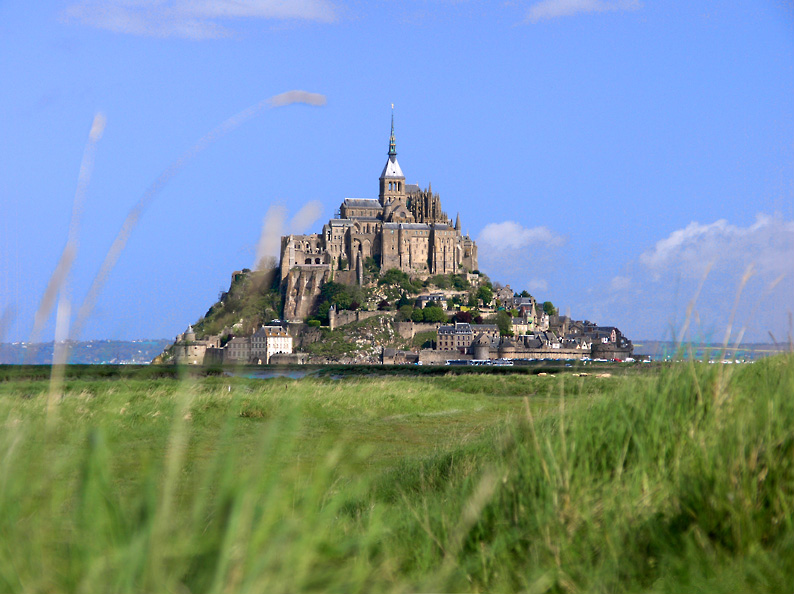
Today's class included some material that you might want to revisit.
We mentioned Mont St Michel (above).
We also talked about Ian McHarg and his book, Design with Nature.
And early environmental problems in the US.
Treeless tree photo
In one of those truly odd photographic juxtapositions, foresters in Sweden logged a site so heavily that it ended up looking like a tree.
21 January 2007
FAQ: Looking for data
Q. I need some spatial data for my class project. What can I do?
This and other FAQs are online at: http://crssa.rutgers.edu/people/dtulloch/faq/FAQs.htm
Here places where you might begin your search for data.
You can check the Data Downloads here https://njgin.state.nj.us/NJ_NJGINExplorer/index.jsp
You should also check out the DEP's site (even though they mean to put their data on NJGIN) http://www.state.nj.us/dep/gis/download.htm
Here's an excerpt from a class exercise that might help too...
Try Using Internet Data: Why just use CRSSA data when you can get really unreliable stuff from "out there"? Go to ArcCatalog and add an IMS Server for http://gisdata.usgs.net. Start a new ArcMap and add the Map Service:USGS_WMS_NED. The power is that this data mixes with CRSSA's. You could also add the DEP's hemlock data to begin to look for patterns in the landscape. Want to explore? Try looking at data at http://www.geographynetwork.com. More New Jersey-centric data can be found at http://njgeodata4.state.nj.us and http://njgin.aclink.org.
Unfortunately, data searches like these can take days if they are done well. And really the lectures on dealing with the data should be pretty extensive too. So don't feel bad if you this seems like it goes slower than you first expected.
This and other FAQs are online at: http://crssa.rutgers.edu/people/dtulloch/faq/FAQs.htm
20 January 2007
Google Earth for bad guys?
The London Telegraph reports that the British militarybelieve insuregents in Iraq are using Google Earth to plan terrorist attacks. The article quotes a military intelligence officer, "We believe they use Google Earth to identify the most vulnerable areas such as tents."
If you know anyone in Iraq you obviously should be concerned. If you like Google Earth, this should concern you as well. Unfortunately, we have a difficult time as a society balancing freedoms and security, so this story has a good chance of ending poorly one way or the other. (h/t to Pruned)
If you know anyone in Iraq you obviously should be concerned. If you like Google Earth, this should concern you as well. Unfortunately, we have a difficult time as a society balancing freedoms and security, so this story has a good chance of ending poorly one way or the other. (h/t to Pruned)
Women in Landscape Architecture

Beatrix Farrand. Martha Brookes Hutcheson. Gertrude Jekyll. Ellen Biddle Shipman. Florence Yoch. Lucille Council. Kate Sessions.
All were historically significant women in landscape architecture.
Historically, women in landscape architecture were few and far between. But stand-outs like Farrand and Hutcheson helped pave the way for a growing number of women practicing landscape architecture today (UNLV has a great reading list as a start for learning about some of these pioneeers). The ASLA has had multiple female presidents and women now account for 34% of practicing professionals (which, might be better than it sounds if you remember that the class of 1969 is probably still practicing as a nearly all male cohort, thus limiting the speed with which any change can occur). To continue addressing the problems and create a network of support, the ASLA has established the WILA network.
That doesn't mean that there isn't still prevalent attitude in many quarters that keeps women from prominent positions and creates a pay gap in the profession. And the supposedly enlightened sphere of Academia is no exception. Even though some have risen to positions as Deans, CELA presidents, editors of Journal, etc., only 24% of academics in the field are women. Could that be right? Are universities really less responsive than, say, design/build firms and contractors?
Well, the most prominent LA program in the country is under some serious scrutiny for its failue to hire women. Just over week ago Martha Scwartz, arguably the most prominent female landscape architect in the country, quit her adjunct position at Harvard because of the LA program's hiring practices in regards to women. As she pointed out to the interim president and the Harvard Crimson, the program hasn't hired a woman in a tenured position in over 100 years. “The world of architecture is still a major, major boys’ club, major, it’s an uphill battle still for women,” said Schwartz.
When you read the Higher Ed piece, make sure you get down to the comments at then end. They apear to be uncensored and, thus, provide some diverse and dissenting comments.
Photo: Princeton Campus. Princeton hired pioneering woman landscape architect Beatrix Farrand to design their campus, but didn't admit women as students until 1969.
Subscribe to:
Posts (Atom)


