Oregon tried to solve its fair housing problems without maps, and that is a problem: "In 2019 and 2023, Oregon passed two laws requiring city housing plans to affirmatively further fair housing. But rather than using maps to inform policy, many Oregon cities are refraining from mapping to avoid confronting patterns of segregated housing."
Showing posts with label housing. Show all posts
Showing posts with label housing. Show all posts
28 July 2026


18 June 2019
Single family cities?
The NY Times has a new richly-illustrated piece from Emily Badger and Quoctrung Bui that asks how our cities can live without density. The heart of the analysis is a series of 10 maps showing how major American cities are divided between single family homes and all other forms of housing. Of the cities they mapped, only DC and NYC have less than 50% single family units. The article is expansive and includes intriguing quotes from multiple faculty who raise fundamental questions about zoning as a tool.
And, they get through the entire piece without ever using the phrase, "Not in my backyard".
And, they get through the entire piece without ever using the phrase, "Not in my backyard".
19 January 2017
Starting the spring with a planning post on housing
StrongTowns.org has a post that really works for the start of a new semester of planning.
Written by Nolan Gray, the post explains how Lexington (the best little city in America) could address its affordable housing shortage without compromising the city's famous urban growth boundary. So for a first day lesson, it already integrates the UGB and an important social and economic issue.
The article goes on to talk about mixed use, setbacks, parking, and little zoning tweaks that could make a big difference. For a first day conversation, it is a useful piece because it shows how planning often uses indirect levers to manipulate a problem. It also serves as a reminder that there is a lot to learn from informal sources, like non-profit blogs. Plus, Lexington is a great city that you should read about more often.
Written by Nolan Gray, the post explains how Lexington (the best little city in America) could address its affordable housing shortage without compromising the city's famous urban growth boundary. So for a first day lesson, it already integrates the UGB and an important social and economic issue.
The article goes on to talk about mixed use, setbacks, parking, and little zoning tweaks that could make a big difference. For a first day conversation, it is a useful piece because it shows how planning often uses indirect levers to manipulate a problem. It also serves as a reminder that there is a lot to learn from informal sources, like non-profit blogs. Plus, Lexington is a great city that you should read about more often.
09 February 2016
Lathrop Homes
Here is a story to watch for a while. It seems unlikely to get resolved without a few rounds of news coverage.
In Chicago, an old housing project is getting update. In an effort to turn the historic project into a riverfront destination, some buildings will be torn down and others will be renovated. The proposal is for a mixed income development that will feature kayak launches and lush parks.
The Chicago Tribune describes the proposed changes this way: "The exterior of the historic buildings would be restored to their Depression-era luster, while the buildings will be gutted and updated with modern amenities. New buildings would be designed to fit with the original architecture." It will include But the project is controversial. Perhaps because project reduces the number of affordable units from 925 to 525. But the Tribune says that there are currently only 140 low-income families living there.
The slideshow accompanying the Tribune story gives a sense for some community protests and concerns. Curbed reports that the landscape architecture is being designed by MVVA.
The projects were named after Julia Lathrop who led the United States Children's Bureau from 1912 to 1922.
In Chicago, an old housing project is getting update. In an effort to turn the historic project into a riverfront destination, some buildings will be torn down and others will be renovated. The proposal is for a mixed income development that will feature kayak launches and lush parks.
The Chicago Tribune describes the proposed changes this way: "The exterior of the historic buildings would be restored to their Depression-era luster, while the buildings will be gutted and updated with modern amenities. New buildings would be designed to fit with the original architecture." It will include But the project is controversial. Perhaps because project reduces the number of affordable units from 925 to 525. But the Tribune says that there are currently only 140 low-income families living there.
The slideshow accompanying the Tribune story gives a sense for some community protests and concerns. Curbed reports that the landscape architecture is being designed by MVVA.
The projects were named after Julia Lathrop who led the United States Children's Bureau from 1912 to 1922.
16 October 2014
Building project at Rutgers
Students learn about building and housing while raising money for charity.
16 September 2014
Could Parking Day become Housing Day?
The 9x18 Plan for affordable housing could turn parking into residences.
14 June 2012
Affordable housing is hard to make work
DC requires that new housing include some low income units but, writes Matt Yglesias, those units aren't moving as quickly as you might think.
12 March 2012
Uncertainty for affordable housing
We are still wondering what will happen to affordable housing in New Jersey?
11 July 2011
Housing report
A new report from John Hasse at Rowan is being reported on in different ways that show how hard it is to decipher the media message on an academic report.
The Star-Ledger reports that it finds that affordable housing rules in New Jersey are keeping sprawl from being worse than it already is: "It found that although it’s not a catch-all, court-ordered affordable housing efforts were effective in some areas, and sprawl would be significantly worse without them." It takes an interesting look at how towns appear to be over-zoning their land for commercial and industrial, which doesn't add a burden to local schools, but would create traffic nightmares if developers built these lands to their legal maximum density. But, phillyBurbs.com quotes the report about the flip side of the problem:
The Cherry Hill Courier Post (and other Gannet papers) reports it as "Looking for affordable housing in N.J.? Good luck, report says". They interview Dr. Hasse (a Rutgers and CRSSA alum) who pointed a finger at Home Rule:
Does this mean that affordable housing rules are hurting affordable housing availability? Since no one seems to know where things stand with affordable housing in NJ right now, a report that offers a serious, nuanced description of the current situation will simultaneously be seen as a call for refining the parts that aren't working so well and for dismantling the whole requirement.
If you think this is obscure stuff about which no one cares, read some of the comments on the NJ.com link. Whether or not they understand the deeper issues, commenters clearly saw this as a topic worth writing about.
The Star-Ledger reports that it finds that affordable housing rules in New Jersey are keeping sprawl from being worse than it already is: "It found that although it’s not a catch-all, court-ordered affordable housing efforts were effective in some areas, and sprawl would be significantly worse without them." It takes an interesting look at how towns appear to be over-zoning their land for commercial and industrial, which doesn't add a burden to local schools, but would create traffic nightmares if developers built these lands to their legal maximum density. But, phillyBurbs.com quotes the report about the flip side of the problem:
“By consuming practically all remaining residentially zoned land, large lot subdivisions are locking in a residential land-use pattern that excludes many New Jersey households that cannot afford a large-lot single-family home that ability to live near their jobs,” the report said.
The Cherry Hill Courier Post (and other Gannet papers) reports it as "Looking for affordable housing in N.J.? Good luck, report says". They interview Dr. Hasse (a Rutgers and CRSSA alum) who pointed a finger at Home Rule:
"What led New Jersey to the Mount Laurel rulings was a very strong home rule approach to housing and planning. If you leave the choices to the towns themselves, they're going to zone to their advantage and there are other built-in biases that will drive large-lot zoning and other exclusionary measures," Hasse said.The release of the report came a week after Gov. Chris Christie submitted a plan to the state Legislature to abolish the state Council on Affordable Housing.
Does this mean that affordable housing rules are hurting affordable housing availability? Since no one seems to know where things stand with affordable housing in NJ right now, a report that offers a serious, nuanced description of the current situation will simultaneously be seen as a call for refining the parts that aren't working so well and for dismantling the whole requirement.
If you think this is obscure stuff about which no one cares, read some of the comments on the NJ.com link. Whether or not they understand the deeper issues, commenters clearly saw this as a topic worth writing about.
01 November 2010
Mount Holly's Gardens
Mount Holly has been demolishing a 1950s housing area called The Gardens. There have been plenty of news stories about it over the years, but they've generally been small and ignored. Places and Spaces wrote about it 2 years ago.
Last week Bill Potter posted an opinion column describing how egregious he considered the latest chapter. Bill Wolfe responded with a comment on Places and Spaces as well as his own recent photos of the Gardens, which he pointed out looked a little like some parts of post-Katrina NOLA.
When we talk about policy solutions to planning problems through tools like eminent domain and COAH, the conversations (whether for or against) are often fairly abstract using numbers and zones and units to describe the policy instead of focusing on the lives of the individuals. Last year a video was made showing the toll that the process is having on the residents. It is touching and very personal:
Last week Bill Potter posted an opinion column describing how egregious he considered the latest chapter. Bill Wolfe responded with a comment on Places and Spaces as well as his own recent photos of the Gardens, which he pointed out looked a little like some parts of post-Katrina NOLA.
When we talk about policy solutions to planning problems through tools like eminent domain and COAH, the conversations (whether for or against) are often fairly abstract using numbers and zones and units to describe the policy instead of focusing on the lives of the individuals. Last year a video was made showing the toll that the process is having on the residents. It is touching and very personal:
19 October 2010
Christian Werthman lecture
We had an outstanding lecture yesterday by Harvard GSD's Christian Werthman. He spoke about the rapid growth and critical importance of informal cities around the world. Called by many names, favelas, barrios and slums are all a neglected part of the urban landscape, treated as illegal and given little or no support by most governments even though they represent more than 50% of the population in some cities. Werthman challenged the audience to step up to something new and described the landscape architectural response to it as a moral imperative.
Three different citations stood out:
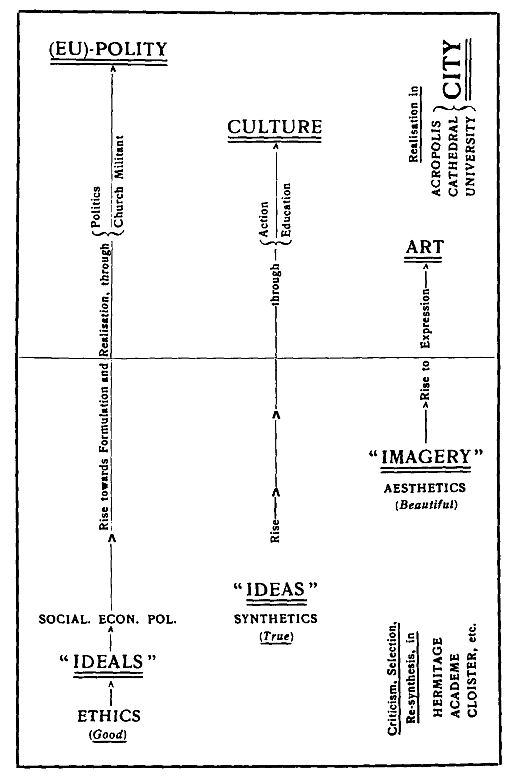 (This Geddes image is from Project Gutenberg's copy of Civics.)
While the examples like the Kolkata Sewage Fish Ponds from informal cities may be new to many of us, it is interesting to see how old some of the solutions are.
Three different citations stood out:
- Konstantinos Apostolos Doxiadis, whose Ekistics proposed a more focused effort of studying Human Settlement, but proposed it in a more top-down approach that isn't very well accepted today in places like the barrios in this talk
- John Turner whose Housing by People argued for acknowledging the positive aspects of slums, which are really a locally-driven grass roots design
- Patrick Geddes, particularly as described in Patrick Geddes in India, recognized the importance of green infrastructure as a tool for transforming these areas into less dangerous habitats (see also Civics: as Applied Sociology)
While the examples like the Kolkata Sewage Fish Ponds from informal cities may be new to many of us, it is interesting to see how old some of the solutions are.
Subscribe to:
Posts (Atom)


