11 October 2010

Common Lecture: Dagmar Grimm-Pretner

LA Fall Lecture Series presents Dagmar Grimm-Pretner

Wednesday, 10/13 at 4:00 pm,
Cook/Douglas Lecture Hall
3 College Farm Road
New Brunswick, NJ


Landscapes of Vienna - Qualities in Public Open Space

The presentation discusses various aspects of quality in open space. It gives an overview of c ontemporary landscape architectural work in Vienna and it presents results of research work dealing with open space design and the concept of critical sustainability.


Dr. Grimm-Pretner is an associate professor teaching and researching at the Institute of Landscape Architecture, University of Natural Resources and Life Sciences Vienna, since 1993. Her research focuses on contemporary landscape architecture in urban settings. Important topics within the research are public open spaces in densely populated urban areas and the interaction of usage and design of open space. Landscape architectural quality, as well as evaluation strategies of designs and sites, are fields of interest.

(My contemporary photos from Vienna aren't very contemporary, it turns out)

Columbus Day

I am surprised to realize how many Columbus pieces I've seen in recent years.


The Smithsonian's Museum of the American Indian includes a display on Columbus.  It talks about his second visit, with 17 ships, which included a stop at St Croix.  You can see the Columbus Landing Site at Salt River Bay in this picture.  While it is his only known landing site in what is now US territory, he is not believed to have gotten off his ship.  Still, imagine those ships sitting out there and the natives having no idea, yet, about guns smallpox or NYC Ivy League schools.


In Barcelona, one of the big landmarks is the Columbus statue on a very high pedestal.But they also have a plaza where he supposedly met Ferdinand and Isabella and the Cathedral where he had 4 Carib tribe members baptized. 


A complicated bit of history.

10 October 2010

10/10/10

You can celebrate the symmetry of the date by contributing to the Global Work Party.

Who is Howard Boyd?

"If it weren’t for Howard {Boyd], there would be no Pine Barrens," said [Louis] Cantafio, a Ph.D. conservationist.
Di Ionno tells you all about this 96 year old Pinelands hero.

06 October 2010

Live Blog: Laura Lawson, Rutgers


Dr. Laura Lawson
Chair, Department of Landscape Architecture
Community Gardens: Trend or Fad?

Official Summary:
To some, the recent upsurge in interest to start community gardens, school gardens, and socially-based urban agriculture programs is a reactionary fad that satisfies the impulse to “do something” amid multiple social, economic, and environmental crisis. To others, however, it represents a trend towards more sustainable communities and food systems. Which is it? Acknowledging the many timely benefits associated with such programs, it is also important to frame community gardening in the context of over one hundred years of advocacy and programs.  This presentation will describe the evolution of community gardening from the 1890s to present.  While past phases tended to be opportunistic and temporary responses to social and environmental concerns, today’s programs are increasingly framed as permanent resources to serve individuals and communities. Developing and sustaining gardens that in turn sustain communities requires attention to land tenure, community outreach, and engagement of a wider network of support.

 With the beginning of this fall semester, Dr. Lawson has taken over the leadership of the Department of Landscape Architecture. She has joined us from the University of Illinois, where she was a member of the Landscape Architecture faculty and Director of their East St. Louis Action Research Project.  Laura has been involved in a broad range of landscape architecture practice and teaching.  Her scholarship focuses on community building through landscape design and activism.  We highly recommend her books, especially City Bountiful: A Century of Community Gardening in America (University of California Press, 2005).


 ____________________________________
 Let the liveblog begin...

What are the benefits?
What is our contribution as LAs?
  Turning red squares into green squares
What does it take to sustain an urban garden program?

History
The history goes back to the 1890s
One example is the creation of Vacant Lot Cultivation Associations (1893-1897)
   a response to the depression
Then there was a children's school garden movement (photos)
Vacant lots and backyards became important resources
War gardens of WWI
  A community effort
   then everyone celebrated the end of war by getting away from this
Relief and subsistence gardens (1931-1935)
  Selling food was discouraged - use it as local aid but don't compete with farmers
WWII Victory gardens (1941-1945) were much more notable - but some wondered whether it was efficient
10 days after Pearl Harbor the desire to do more was so great that the government embraced it
  treat it as a lifestyle

  Victory Garden posters
  The response from landscape architecture? "Yes, but with discretion."
Community Garden Movement (1970s-????)


Learning from Successes: Seattle
Seattle is a major success - P-Patch Program
Here is Thistle from above:

View Larger Map

Here is Bradner Gardens P-Patch in StreetView:

View Larger Map

One of the challenges today is that they are still seen as temporary by many people and viewed as a very local use.  (You can drop in and play soccer at the park, but you can't drop in and eat a carrot at a garden, unless you are willing to let Mr McGregor chase you.)

Urban Personalities
Place-based character and sustainability
Why are Chicago's gardens different than other places
_Great organizations, but does the alderman system keep them from coordinating better?  Redundancies occur
_Growing native plants instead of veggies
_NeighborSpace Land Trust

Land availability in Detroit creates a different pattern - 10 month growing season (hot houses, etc.)
Food desert forces more farming than gardening

Important enough that streets get named after this:


View Larger Map

Community + Garden


Here is a nicely maintained community garden in the Boston Fens that we saw on a Fall Field Trip several years ago.  You should join us on the next trip...


We didn't need to ask 3 Landscapes because we did it so recently.

01 October 2010

Cool mappings

In class we talked about some online outlets where you could find interesting maps. I've taken an old list and updated just a little:

NJ State Mapping contest - with Rutgers students as winners
ASLA 2008 Student Awards - more than just good graphics
ESRI's Map Museum - maps on virtually every topic
Visual Tools for Planners from the Lincoln Institute - 2 links since I can't tell the difference

Now here is where I go astray:
Hipkiss' Scanned Old Maps - Could give us ideas for faux-antique
Strange Maps - clearly not such good design ideas, but plenty of fun
Data Visualization - a few great examples that have nothing to do with our project
Edward Tufte - a graphics and visualization blog from a real master
things to look at - a blog for graphic ideas
Election "maps"
NYC Subway "Map"
Map links


GDP Map

Is New Jersey's GDP really equivalent to Russia's?  That is what this state GDP map suggests.

29 September 2010

Live Blog: Gale Fulton, Univ. of Illinois

Towards Landscape Intelligence
Gale Fulton, University of Illinois


Opening strong with a Pierre Bélanger quote
Counterpointed with a Homer Simpson quote
Something for everyone

The rapid progression of references begins:
Civitas project in San Diego

Mark Taylor's Crisis on Campus

So is everyone changing their curriculum? It sure seems like a change

The Perpetual Post-normal - things like dealing with uncertainty and adaptive management approaches

Shrinking Cities - Philadelphia - Urban voids
25000 vacant homes
What are good strategies

The rise of asymetrical threats
...An array of changing human conditions that might be reaching a tipping point
What would be landscape strategies that address these conditions?

Parsons MFA in Transdisciplinary Design - what are they seeing?  What are they reacting to?

Expansive disintegration - Retooling by Rosalind Williams

Which brings us to Landscape Urbanism -
Corner, The Agency of Mapping - "the difficulty today is less a crisis of what to do than of how to do anything at all"

Michael Speaks has written about Design Intelligence in ways that inform and help us think through new ways to approach landscape

Change by Design - Tim Brown


A dense forest of references so far, but now we turn the corner into a field of ideas.   This transforms the critique into a more prescriptive diagnosis.

1 Design and Design Thinking First, Profession Second
2 From Objects and Sites to Services and Systems
Move towards infrastructure - manufacture urgency and "shape the path"
3 Political practices: From the Projective (poli-fi) to the Pragmatic (poli-ni)
 ...R. E. Somol
4 Cultivate the Synthetic Mind
see: Howard Gardner
Synthese and Integration at out Doorstep
5 Engage the Contingencies of Real Design...
6 Know when to let go - Extinction timeline


DT:   How is the critique different than Heidi Hohmann and Joern Langhorst's Apocalyptic Manifesto?  Or KERB 17: Is Landscape Architecture Dead?

Summer Study Abroad in Munich 2011

Dr. Hoefer is hosting an organizational meeting for students interested in a Summer class in Munich tomorrow (Thursday) at 12:30 in Blake Hall Room 152. Attendance does not mean you are committed to attending, but a chance to learn more about what is going and what you can see there.

Check out the photos from one of our earlier class.

28 September 2010

Common Lecture: Gale Fulton

This Upcoming Wednesday, 9/29 at 4:00 pm, Gale Fulton will speak about Landscape Intelligence.

This lecture explores the idea of landscape intelligence and what such a concept might imply for the future of landscape architectural education and practice. Unlike landscape urbanism, which was formulated as a replacement to the traditions of landscape architecture, architecture, and urban design – at least in their relationship to urbanism - landscape intelligence is offered as a way to renovate and contemporize traditional landscape architectural thinking in order to more fully engage the plasticity of the landscape medium for its cultural and ecological potentials.

Gale is Assistant Professor at the Landscape Architecture Department, University of Illinois at Urbana-Champaign. His research is focused on three primary areas which include 'graphic' form in suburban residential landscapes; re-programming the American small park; and entrepreneurial opportunities and techniques in contemporary landscape design practice.

For more information about the speaker see: http://www.landarch.uiuc.edu/people/faculty/fulton/fulton.aspx

Place-based Policy Quote of the Day

"It is important to note the urgency of this effort. The prosperity, equity, sustainability, and livability of neighborhoods, cities and towns, and larger regions depend on the ability of the Federal government to enable locally-driven, integrated, and place-conscious solutions guided by meaningful measures, not disparate or redundant programs which neglect their impact on regional development."

27 September 2010

NJASLA 2011 Awards

 NJASLA 2011 Professional Awards Program
Entry Deadline: November 1, 2010
The New Jersey Chapter of the American Society of Landscape Architects
 2011 Professional Awards Program: Call for Entries
The New Jersey Chapter of the American Society of Landscape Architects is pleased to issue a call for entries for the 2011 New Jersey ASLA Awards Program.

Participation in the awards program will help broaden professional boundaries, increase public awareness of the role of landscape architects, raise the standards of the discipline, and bring recognition to organizations and individuals who demonstrate superior skill in the practice and/or study of landscape architecture.

A jury of qualified professionals will review each submittal and determine winners in each award category.  Award-winning projects will be featured in upcoming NJ ASLA chapter newsletters and displays promoting the profession within the State of New Jersey.

Deadline for entries is Monday, November 1, 2010. 

Fall Field Trip Revisited

The 2009 Fall Field Trip to Boston was complicated by the filming of a movie at our motel. On the lighter side, we got to see Ben Affleck and Jon Hamm.


For a few hours an entire city block is transformed; it is a radical urban change.  Overnight the hotel gets a new sign and the abandoned fast food place gets repainted. When we work on places like this, it takes months to get a light standards changed and new sidewalks.

24 September 2010

Pioneers biography of Doc Reich

We had posted a brief note previously about the passing of Doc Reich.  The Cultural Landscape Foundation has a more complete biography with photos of a few select projects.

22 September 2010

Another interesting competition

A National Ideas Competition for the Washington Monument Grounds is being run to generate ideas for making the grounds more inviting to visitors.  Does that mean that the recent design of the grounds isn't inviting?  Our guided tour of the grounds seems to suggest otherwise.

20 September 2010

Crossing over

As much as its residents like to act a world apart, New York City is inescapably connected to New Jersey.  But that connection isn't easy for pedestrians or cyclists.  Jersey City's bike enthusiasts, Bike JC, have created a competition for bridge proposals that help make this idea seem a little more tangible.  Since it encourages fanciful ideas more than buildable bridges, our students might not find the November deadline so hard to meet.  Details are online at: http://hudsonriverbridge.com/

16 September 2010

New University Rankings out

Rutgers is ranked 105th in the World by the Times Higher Education in London. Internationally that places us ahead of Lancaster, Barcelona and Utrecht. In the US it puts us ahead of Georgetown, Drexel, Penn State and the completely unranked University of Texas.

The Wall Street Journal ranks Rutgers in the Top 25 for corporate recruiting.

A win over North Carolina next weekend could jump us up pretty high in the Sagarin rankings too.

Lecture: Migration and Citizenship in the Global Age

POSTPONED

Migration and Citizenship in the Global Age


Aneesh Aneesh, Assistant Professor of Sociology and Global Studies, University of Wisconsin-Milwaukee


Wednesday, Sept. 22nd, 8PM
Rutgers Student Center Multipurpose Room
College Avenue Campus


Dr. Aneesh is the author of Virtual Migration based on research on Indian migrants in New Jersey. He is also a Rutgers University alumnus.

14 September 2010

The Fountainhead reviewed

TV Worth Watching just published a review of the movie adaptation of Ayn Rand's The Fountainhead. It presents it in a fairly standard review of its watchability to a non-design audience: "It's all here: unapologetic personal gain, artistic passion, romance and selfless sacrifice... hot off the drawing board in the drafting room."

And there are plenty of political and philosophical reviews online about this as a metaphor for life.  But what I couldn't find easily is a designer's critique of how this ego-driven approach doesn't work today, especially in collaborative and participatory settings.  There must be plenty, but where?  I trust my readers will let me know.

13 September 2010

ASLA makeup: Majora Carter

If you missed Majora Carter's ASLA Keynote, you might watch this short video of her TED talk from 2006.

Crowdsourcing forest managment and maintenance

As America's forests struggle with the continuing growth of invasive, who can they turn to?  The crowds?

12 September 2010

ASLA makeup: Richard Jackson

If you missed ASLA this year, you can still see a few of the speakers. One of the keynotes was public health expert Richard Jackson who talked about the connection between the way our communities are designed and the health of our next generation.  While this isn't the same speech, it includes similar material.

09 September 2010

Not so private

Can your cell phone provide give your location history to the authorities without a warrant?  Maybe.

10 Towns; Morris Township

Morris Township is the doughnut to Morristown's doughnut hole. It includes Convent Station, but it probably also includes some things that many people thought were part of Morristown. In contrast with the urban core of Morristown, this appears to be a fairly sprawling residential town.


The blog will now return to its regular lack of schedule.

08 September 2010

Making old things new again

The Bergen Record has a opinion piece on efforts to turn old industrial properties into new parks.  It focuses on the continuing efforts by Bergen County to convert the Bergen Waterworks into something that the community can use,  While it is good to see this sort of work getting such high-profile attention in the paper, it is especially gratifying to see them giving this attention to our colleague, Wolfram Hoefer, and Beth Ravit from Environmental Science.  You can learn more at this page from their Center for Urban Environmental Sustainability.

10 Towns: Morristown Town

It really is named Town of Morristown even if you only call it Morristown.  With its historic Green, old churches and much of Fort Nonsense.  It is also home to a growing Hispanic population. 


Tomorrow: Morris Township

07 September 2010

10 Towns: Mendham Township

Mendham Township wraps itself around Mendham Borough, protecting it from the rest of the Borough.  Governor Chris Christie calls it home. It has lots of pieces of open space woven between a fair number of developed areas.
Tomorrow: Town of Morristown

Better City, Better Life.

That's the basic idea of many urban designers, a better city would lead to better lives for the residents. It is also the theme of Shanghai Expo 2010, which implies to some degree that they agree with the premise and implies that Shanghai is a better city. Anyway, it looks like they'll get their 50 millionth visitor this week despite the Kazakhstan pavillion. 

06 September 2010

FDR Four Freedoms Park

The FDR Four Freedoms Park is under construction.  Unfortunately, the park's location on Roosevelt Island isn't likely to make the Manhattan hike anytime soon.

10 Towns: Borough of Mendham

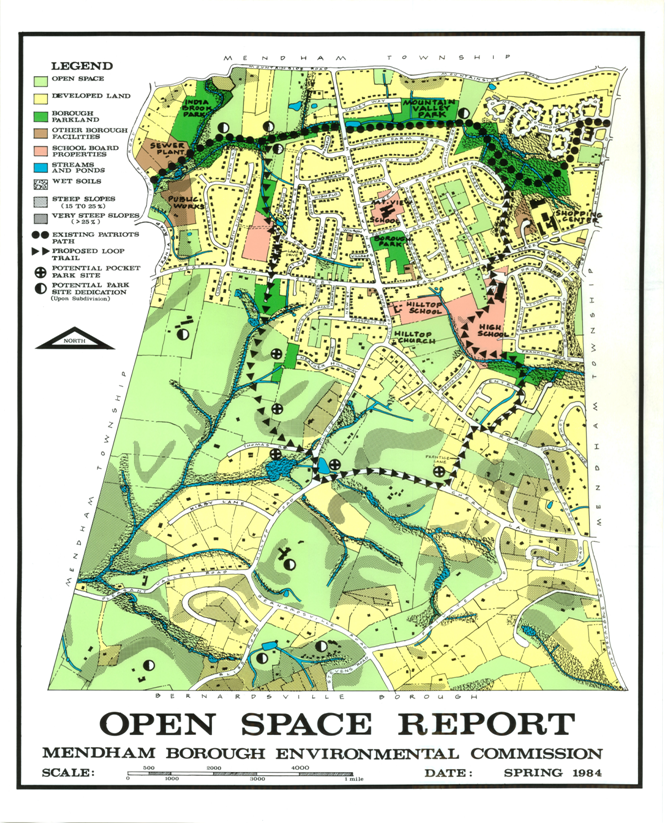
The Borough of Mendham is cut right out of Mendham Township. Visually their maps look like a classic argument for consolidation, but I trust that they are more important criteria for altering the municipal landscape than simpler mapping.  The environmental commission has proposed a Loop Trail as part of their Open Space Plan.


Tomorrow: Mendham Township

05 September 2010

10 Towns: Madison

Look at that map.  How is this the same small watershed as the previous towns?  Madison is known for its walkable downtown and good restaurants.  But it also made news for a few minutes when it became a 3D pioneer.

Tomorrow:  Mendham Borough

04 September 2010

10 Towns: Long Hill Township

Long Hill Township runs an urban corridor along a ridgetop that drops down to the North into the Great Swamp and in the South to the Passaic River.

We are half way done with the 10 Towns now, are we down to just 17 readers yet?

Tomorrow: Madison

03 September 2010

DC Getting its Geek on

Washington City Paper notes how "geeks" are using tools like blogging to change the District.

10 Towns: Harding Township

Harding Township represents more of the land in the watershed than any other municipality.  The Township is named for the controversial President Warren G. Harding.  It includes New Vernon, which is home to Jets Coach Eric Mangini.


Tomorrow: Long Hill

02 September 2010

10 Towns: Chatham Township

I think that Chatham Township has more land in the Great Swamp Watershed than any other town with the notable exception of Harding.  It describes itself as "a quiet, carefully developed, residential community."


Tomorrow: Harding Township

01 September 2010

10 Towns: Bernardsville

Today's Great Swamp Watershed town is Bernardsville Township.  I think this is where General Charles Lee was captured during our War for Independence.  Did Jackie O really live here?
Tomorrow: Chatham

31 August 2010

A reminder that infrastructure is important

Since no one seems to be taking infrastructure as seriously as we need to, the NY Times runs a piece with 5 different examples of crumbling infrastructure ranging from levees and dams to wooden municipal water pipes and problematic electrical wiring.

10 Towns: Bernards Township

The 10 Towns Committee was disbanded in June. Our fall studio will be looking at the Great Swamp Watershed and its 10 towns this fall. Coincidence? (mostly, yes)

We'll spend the next 10 days or so taking a peek at Land Use in the 10 towns. Even though newer LULC data is available, the posts will be using the 2002 land use. (Sorry) Since each map will use the same legend, I've included it below. None of the maps will include a scale bar - we'll explore scale in class.

Here's Bernards Township founded in 1760. Wikipedia reports that is is home to headquarters of Avaya, Fedders, Hitachi Power Systems and Verizon, but maybe we'll seek out some independent confirmation.


Tomorrow: Bernardsville

30 August 2010

Hasse and Lathrop in The Record

Dr. John Hasse of Rowan and Dr. Rick Lathrop of Rutgers-CRSSA were featured with a sizable opinion piece in The Record this weekend. Included in this was an assessment of where they think we should be looking for change as the first built out state in the US:
Today’s land management system is designed for the short term and small horizon of the single home buyer striving to maximize the amount of house that can be purchased in a town with good school systems; of the developer who is trying to supply that house under the existing big-lot zoning rules in play; of the municipal official, in office for only a short time, trying to chase that ratable.
It also includes a challnge for the future:
We didn’t ask for it, but our generation is the designer of what New Jersey’s built-out landscape will be like and how it will function for centuries to come.

In case you missed it, this comes on the heels of their well publicized and slightly criticized report on Changing Landscapes in NJ.

Rutgers' new Chair of Landscape Architecture

Dr. Laura Lawson has begun her role as Chair of the Department of Landscape Architecture. She joins from the University of Illinois, where she was a member of the Landscape Architecture faculty and Director of their East St. Louis Action Research Project. In order to help everyone start to get to know Laura, we have posted information about her past projects on the faculty website http://landarch.rutgers.edu/fac_staff/Laura_Lawson/index.html.

Laura will be at ASLA in a few weeks and will be at our Alumni Table on Friday evening.

Go See DC: Portrait Gallery

(NOTE: This is a re-purposed post  from the past as part of the ongoing Go See DC series.)

Just a few blocks from the student hotel is the Foster + Partners new Kogod Courtyard at the National Portrait Gallery.  They keep late hours, are free, and are well worth the stop, even if only for 15 or 30 minutes.
On the floor of the courtyard is this "fountain" which just has water sheeting across the granite. The drains on are the left side of the photo. (Mapped)While there I saw their newest addition, the iconic but controversial portrait of Obama by Shepard Fairey.


Los Amigos Community Garden

A former guest speaker (and fellow LSU alum) Richard Alomar has some great photos posted from a fun-looking garden opening in NYC.  We should have this much fun at all of our new parks and gardens.

29 August 2010

Go See DC: Olin's NGA Sculpture Garden

(NOTE: This is a re-purposed posting from the past to get you excited about going to DC this fall.)

Sadly, after digging through disks and folders, I can't find many of the dozens and dozens of photos I have taken at this elegant design.  Just steps off of America's front yard is this sculpture garden which provides one of the great spots for resting during an active day in DC.  At its center is this massive, yet simple fountain.  The garden uses a generous array of plant material to  soften it while it sits between the large institutional buildings that contain it on three sides.  And it uses classic forms and materials allowing the sculpture to take much of the credit here. 


28 August 2010

Go See DC: Washington Monument

(NOTE: This is a re-purposed post celebrating our upcoming Fall Field Trip to DC)


As part of a larger effort to solidify the security of the nation's monuments and critical buildings, Olin Partnership was hired to develop an attractive security enhancement for the Washington Monument. The result was an award-winning plan that completely hides its primary role as security enhancement, while enhancing the visitors' experience climbing up the hill.


One of the primary elements in the plan is a low series of stone walls which, while new, look like they could almost be original if only they had a light patina or bit of weathering. These walls and some retractable bollards, shape the rounded path systems as it encircles the plaza at the top of the hill.

The Bing Bird's Eye offers a great look at the hilltop plaza around the Monument. At ground level, it is easier to overlook the organization of the plaza, but the photo shows how the paving and benches subtly emphasize or reinforce the effect of the obelisk in. The rings of paving are part of Olin's more recent treatment of the site. These forms are elegant and universal, although it is easy enough to link them with more symbolic traditions by pointing out how the rings form a circumpunct (sometimes associated with the symbol for the greek letter Theta) around the point of the monument itself. Check the older air photos and you get a hint that it was pretty different before the remake.


View Larger Map


(BTW, when you look at the Mall in the 1949 historic Aerial, there is a large building West if the Monument. Anyone know what that is? A temporary WWII building? A temporary office building while something new was being built elsewhere?)

Finally, I find the benches at the top to be absolutely wonderful. Their shape makes them great for people who need to collapse on them after a death march down the Mall (sorry about that, alums!). The curve lets soda and rain roll off, and the cross-sections look very much like those Olin designed for Columbus Circle. But they also are large enough that many complete strangers can share them simultaneously without ever feeling like their personal space has been violated.

You can look at the plaza in isolation, but the Monument is something larger than that. Looking across from Lincoln to Washington, we like to talk about them together as reminders of the Birth and Redemption of the nation.


It is a big hill, but worth the climb. Olin helped make it a much more pleasant climb. Although the view from down here is pretty good too.

It even adds to its neighbors...


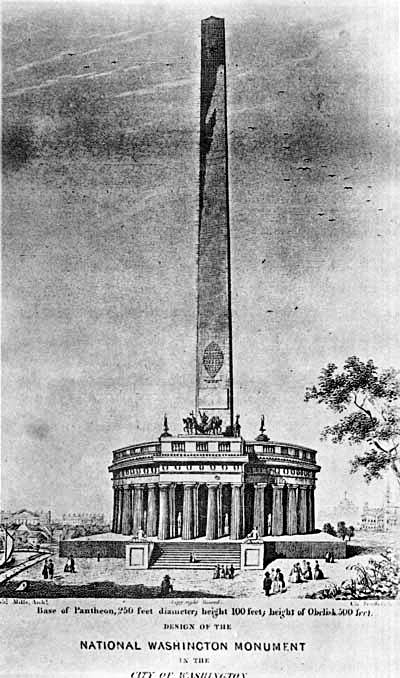
It is a shame that Olin couldn't help finish the project as it was originally planned:


On October 21, at 6:30pm, Laurie Olin delivered the Steve Strom Memorial Lecture at the Douglass Campus Center. Don't miss this year's Lecture, to be announced soon.

26 August 2010

Go See DC: Best of the 2007 Fall Field Trip

A few of my favorite photos from the 2007 DC Fall Field Trip...RE-purposed from an older post, naturally.


25 August 2010

Go See DC: VIsualizing Washington DC

Although we've written about it before, it bears mentioning again. The University of Maryland-Baltimore County's Imaging Resource Center has built a resource to help imagine what Washington used to look like. The Visualizing Historic Washington project was made for a PBS show on Latrobe, but also helps us visualize how this estuary turned planned city slowly came to be the traffic-snarled mess of diagonals that it is today.