As Rutgers LA prepares for yet another Fall Field Trip, we are
continuing to look at some interesting and intriguing places. Even if
you can't join in on the trip, you should stop and see some of these
notable landscapes sometime soon.
For many students a real highlight is a trip across the Charles to see the campuses at Harvard and MIT. Of course, we spend much of the time dodging questions comparing Rutgers campuses with these.
05 September 2012
Invasive species problem
Even when an invasive species experiences a significant die off, it can still be a problem. The latest example is from Louisiana where Hurricane has left piles of dead nutria (15-20 pounds each) on the beach. Students from my environmental planning will already be familiar with my stories about these very large rodents that have been wreaking havoc on the marshes of Louisiana since the earliest days of the Tobasco empire.
NBCNews.com reports that the clean up isn't as easy as you might think:
"As they're picking them up, they're busting open," Hancock County Supervisor David Yarborough told the Biloxi-Gulfport Sun Herald. A federal contractor with experience in hazardous waste has been brought in, but even a handful of its workers had quit Sunday morning, the Sun Herald reported.Welcome back.
04 September 2012
Camden gardens tour
NJCF is hosting a tour of the urban garden scene in Camden on September 12. They say that this morning tour will be "showcasing the Delaware Valley's fastest growing urban garden movement". Details from NJCF.
Boston: The Big Dig
As Rutgers LA prepares for yet another Fall Field Trip, we are
continuing to look at some interesting and intriguing places. Even if
you can't join in on the trip, you should stop and see some of these
notable landscapes sometime soon.
Often called the most expensive highway project in US history, Boston's Big Dig created a serpentine swatch of greenness wrapping around downtown. Boston.com details the parcels that make up the project. Since my photos fail to capture the full array of spaces created, you might also want to check out this NY Times slideshow.
Like the High Line, the Big Dig has become an enduring landmark that is likely to be the subject of any number of graduate seminar papers and theses over the next decade. So it is good to see it now as background for future readings and revisits.
Often called the most expensive highway project in US history, Boston's Big Dig created a serpentine swatch of greenness wrapping around downtown. Boston.com details the parcels that make up the project. Since my photos fail to capture the full array of spaces created, you might also want to check out this NY Times slideshow.
Like the High Line, the Big Dig has become an enduring landmark that is likely to be the subject of any number of graduate seminar papers and theses over the next decade. So it is good to see it now as background for future readings and revisits.
03 September 2012
Boston: New England Holocaust Memorial
As Rutgers LA prepares for yet another Fall Field Trip, we are continuing to look at some interesting and intriguing places. Even if you can't join in on the trip, you should stop and see some of these notable landscapes sometime soon.
One very interesting place is the New England Holocaust Memorial. It is squeezed into a piece of land that is little more than a wide median between a very busy downtown street and the local spur for parking and deliveries. But somehow it makes you look past that and focus on the message.
It may have actually been even better in the rain than on a nice day.
One very interesting place is the New England Holocaust Memorial. It is squeezed into a piece of land that is little more than a wide median between a very busy downtown street and the local spur for parking and deliveries. But somehow it makes you look past that and focus on the message.
It may have actually been even better in the rain than on a nice day.
31 August 2012
Summer souvenirs
Is there a better way to finish off the summer than by looking back at the horrible souvenirs that you got in various cities during your vacation? Yes. Looking at a more comprehensive collection of some of the most awful city souvenirs.
28 August 2012
Bringing back the chestnuts
Some folks at Rutgers are working to see if we can replace invasive species with chestnut trees.
27 August 2012
Isaac maps
As Isaac nears the Gulf coast, the Google Crisis Response Team has created new Hurricane Isaac materials. I trust that they will continue to add overlays or create new maps as needed.
26 August 2012
The changing landscape of sports conferences
For the sports fans out there, the changing conferences have made college sports a challenge. But nothing clarifies a complicated landscape like a clear map. And the NY Times has come to the rescue with 8 maps of recently changed conferences. It is clear, simple and may change how you visualize the MAC.
Late Addition: Slate has a similarly intriguing map of Romney and Obama's campaign stops. If you tell me that they spend much of their time in battleground states, I think it is obvious. But when you show me, I realize how limited their travels really are. (in the battle between electoral college and football college, we all win?)
Water, water everywhere
With Hurricane Isaac hogging all of the attention, you might miss a close-up look by the Star-Ledger at the frequently flooded Lost Valley in Manville or their larger call for better infrastructure in NJ before our next hurricane. Road damage included washing away a bit of an Interstate, huge swathsof the state without power, and then there were the dams:
"Six dams failed during the storm and another 14 were damaged, according to the Department of Environmental Protection. For the most part, repairs have been made where needed, while other low-risk dams were allowed to wash away."Good reading while you wait for Hurrican Leslie.
20 August 2012
LA-GIS history
I was luck to meet GIS pioneer Bruce Rowland back i January. He was a key figure in getting TVA to adopt GIS after leaving the Graduate School of Design at Harvard. This short interview highlights his experiences in the early days at Harvard. I especially enjoy hearing talk about the impressive young turks at the Computer Graphics Lab who had "monitors". That was the sign of where they really stood.
16 August 2012
14 August 2012
09 August 2012
The videos of Versailles
Dior has a promotional video (read: ad) set entirely with the Palace and Gardens of Versailles that does an good job of emphasizing the extreme decadence of the place. After watching their "Secret Garden" video, you may need to cleanse your palate, so I offer this 1961 educational film showing Versailles through a blurrier and less extravagant lens.


08 August 2012
Pedestrian bridges
I will admit to being a complete sucker for Calatrava bridges (who isn't?), but it was great to see this alternative: Atlantic Cities' slideshow of Non-Calatrava pedestrian bridges.
07 August 2012
A Grand Park for LA?
Los Angeles is getting a new Rios Clementi Hale park. But it seems to still be open to debate whether Grand Park is great. As the LA Times points out, it is an expensive park in a 9-5 park of the city.
06 August 2012
History quote
Process finds its origin in a multitude of remote pasts, so historical - in evolutionary terms - become almost arbitrary punctuations. The future can't tell because it has never existed. Only the present receding into the past exists. History, the past, will tell, and although the labeling will be different, the content, if worthy, will maintain its own substantiveness.
- Paolo Soleri
02 August 2012
Cool Olmypic graphics
Check out this set of infographic representations showing different statistics about the five continents using the Olympic rings as its basis.
Form givers and forest architects
Within the architectural profession, I distinguish the form givers, with the "orchids" they often produce, and the forest architects. Given the number of people in need of shelter, we require the equivalent of the forest, that is, cities coherently designed. In the urban forest, orchids are welcomed as orchids might be welcomed in the organic forest.
- Paolo Soleri
30 July 2012
Variable definitions of walkability
Steve Mouzon has an article up that describes changing walkability distances for different settings. His category set comes, primarily, from the different transect zones. While it doesn't quite help me describe why the walkability distances are different in Newark than downtown Seattle (which look roughly the same on the map), it is an easy to understand concept that more planning and design students need to recognize. And, weirdly, it would sort of suggest that you need more 7-11s closer together in suburban NJ than in downtown New Brunswick if you want people to walk there.
Business writing for designers
As many design projects keep moving towards
While some think that brainstorming is dead, this HBR on brainstorming frames it as a still productive creative exercise in business.
Tammy Erickson writes about collaboration as the hot new skill, but
Related to that is also trying to maintain creativity in a business setting. This short piece on innovation seems related.
While some think that brainstorming is dead, this HBR on brainstorming frames it as a still productive creative exercise in business.
Tammy Erickson writes about collaboration as the hot new skill, but
Related to that is also trying to maintain creativity in a business setting. This short piece on innovation seems related.
28 July 2012
Summer tweeting
Two fun twitter feeds to watch this summer:
KimKierkegaardashian @KimKierkegaard The philosophy of Søren Kierkegaard mashed with the tweets and observations of Kim Kardashian.One of my favorites was this:
Each individual fights for himself, with himself, within himself, in order to free himself before God. I'm gonna be sooo sore tomorrow!Elsewhere is an exploration of technology and silliness with
Zooey Asks Siri @ZooeySiri Sometimes I get confused, so I ask Siri...She asks questions like:
Siri, why don't we just recycle more rubble?Since Siri is wonderfully flawed, I find the answers to be as interesting as the questions. Here is the answer to that last one.
Siri, do states have Official State Restaurants?
27 July 2012
This makes home rule look trivial
In New Jersey we often hear complaints of how home rule sets apart individual municipalities. But the City of London (which is surrounded by London) turns out to be a much more dramatic version than anything in NJ. This fun video begins to explain:
26 July 2012
More EROS images
Someone with more time than me created a great slideshow at Weather.com of outstanding Landsat images from the last 40 years.
25 July 2012
Satellites making news
NASA has released findings on an unprecedented ice sheet melt in Greenland this summer, and it is getting play in the larger media. Of course it is only possible with satellites, in particular with satellites that have collected consistent data over 30 years. As GIScience matures, imagine the impact that longitudinal satellite data will have on other areas as disparate as conservation, agriculture, traffic, land use change, and historic preservation.
24 July 2012
Cool conference name
If you missed this week's Esri UC in San Diego, maybe you should plan a trip elsewhere. Georgia Tech is planning a conference with one of the catchier names for a conference: Spatial Plexus.
Automated advising
I have considered the faculty-led, individual advising in our program here to be one of its greatest strengths. Between complex, dynamic schedules, and difficult life decisions, there is a lot of ground to cover. So it is with disappointment, but not surprise, that I read about the new online advising algorithms. Another sure way to keep students from asking faculty questions, hearing answers they don't want to hear, and prevent them from developing relationships that would be useful in an advising/life emergency.
23 July 2012
Social media in government
Government Technology reports on a recent survey that looks at how government users are using different social media. While it is mostly just a small infographic, it gives you a glimpse into how things might change in the next year or two.
21 July 2012
Other people's pictures
I meant to post more photos this summer, and will try, but for now here are the Ten Top Images on Archinect's "Architect Sure!" Pinterest Board.
20 July 2012
Lots of drawing
One guy is trying to draw, one building at a time, all of the buildings in New York.I am looking forward to seeing the Gristede's on 26th (which should also include a long line of UCB fans).
18 July 2012
Yet another online masters in GIS
It is interesting to see the growth of online masters degree in GIS. Georgia's Delta State has announced a one year online MAS. Penn State, USC, and Florida are among the other schools already serving the online market. It truly remains unclear to me how much potential employers are ready to embrace online degrees and MAS degrees. But I suspect that GIS may get an interesting test in that area if the GIS Certification Institute moves ahead with accreditation of individual programs.
17 July 2012
Parks as a political tool
Has Bloomberg made parks a centerpiece of his three terms as mayor? Not only does Frank Bruni think it is one of the lasting legacies of Bloomberg's NYC, but he sees urban parks as a new trend. Add to that the idea that parks make you smart and you've really got something.
16 July 2012
Clinton and Geodesign
in some recent comments, President Bill Clinton wasn't talking directly about geodesign, but Esri's Jack Dangermond took them as being directly applicable to the topic:
If you look at the work that academics in landscape architecture pursue, they often use projects as a foil for investigating or demonstrating the implications of the human dimensions of our uses and costs in the landscape. The profession's academics had learned this lesson long before the former president. But where will it lead?
"He talked about all the policies and discussion about climate change and population, and he said, 'I'm not really sure all these discussions are going to matter.' There was silence in the room. He said, 'What I actually have faith in are real projects. I'm dedicating my life to doing projects.' He said where the rubber hits the road is doing real project work. Isn't that really what geodesign is about?"
If you look at the work that academics in landscape architecture pursue, they often use projects as a foil for investigating or demonstrating the implications of the human dimensions of our uses and costs in the landscape. The profession's academics had learned this lesson long before the former president. But where will it lead?
Years from now, Dangermond said, people will look back at geodesign as "an evolutionary step for humans. It's going to be, 'Ah, finally we connected the dots. Finally we began to realize the implications or the consequences of our actions.'"With the possibility of integrating instantaneous feedback tools into geodesign software, we may soon become increasingly aware of explicit environmental or social costs of design elements and schemes in a way that stops sounding like a gimmick and starts to change the underlying design processes. Interesting stuff indeed.
Is the map dead?
Rebecca Rosen at The Atlantic writes about why maps may not be the best way to display spatial data. She gets some of that from Ed Parsons at Google, so it might be both insightful and biased, but it is well worth the read.
12 July 2012
11 July 2012
Heat waves aside, summertime is often a dry time. But drought conditions are supposed to be exceptions to the regular patterns of dry weather. But with 56% of the country currently shown in drought (below, from the US Drought Monitor at Nebraska) and with climate scientists anticipating significant dust bowl effects, it is worth asking whether the ASLA is doing enough on water efficiency. They give awards to projects that demonstrate innovative and sensitive responses and provide general guidelines, but many members continue to design water-intensive landscapes. How much should we lead and how much must we follow?
10 July 2012
Kevin Roche's Pyramids
When I first saw Kevin Roche's Pyramids in Indianapolis, I was still a high school student and was excited simply to see something other than the same old same old. By college I began to write them off as gimmicky without knowing who had designed them or thinking seriously about what they were really like.
While I would like to think that I am generally more thoughtful about such these days, I am particularly influenced on this by having an office next to Kate John-Alder who has both written and lectured on Roche's work and his sophisticated explorations of nature from within modern architecture. So when I had the chance to check them out this past weekend (but only from the outside), I was really struck by how different they seemed to me now. These quite solid buildings sit on a rectilinear parcel that juts into a very constructed lake, facing other office buildings. Nature doesn't seem much part of the picture. And yet the relationship with the water and sky is impressive. And the recent re-landscaping creates experiences that connect with nature a tiny bit, if you look past the drought conditions that make these photos seem less inviting.
While others have more complete and well considered photosets, here is my quick drive-by:
While Roche might have been able to control the site, these large iconic buildings are heavily embedded in a suburban sprawl context that has probably changed significantly since the Pyramids were built. With that in mind, I offer this last photo from a distance.
While I would like to think that I am generally more thoughtful about such these days, I am particularly influenced on this by having an office next to Kate John-Alder who has both written and lectured on Roche's work and his sophisticated explorations of nature from within modern architecture. So when I had the chance to check them out this past weekend (but only from the outside), I was really struck by how different they seemed to me now. These quite solid buildings sit on a rectilinear parcel that juts into a very constructed lake, facing other office buildings. Nature doesn't seem much part of the picture. And yet the relationship with the water and sky is impressive. And the recent re-landscaping creates experiences that connect with nature a tiny bit, if you look past the drought conditions that make these photos seem less inviting.
While others have more complete and well considered photosets, here is my quick drive-by:
While Roche might have been able to control the site, these large iconic buildings are heavily embedded in a suburban sprawl context that has probably changed significantly since the Pyramids were built. With that in mind, I offer this last photo from a distance.
06 July 2012
05 July 2012
Missed Connection
A reader recently wrote with a few questions about Germany. Unfortunately that email got lost before I could respond. Not that I have answers, but please write back so I can send you to a better source.
A new old map
One of the thrills of visiting the map collection at the Library of Congress was getting to see Martin Waldseemüller's map which identified America. Now scholars in Munich have found its non-identical twin.
03 July 2012
GIS Job in Central Park
The Central Park Conservancy is looking to fill a senior GIS position. It could be a great opportunity for someone looking to connect a love of great landscape architecture with experience in GIS.
02 July 2012
Olmsted quote
Earth gets the price for what Earth gives us, and the truth is that, regarding the price I have paid, I need all the esteem I have earned from you to sustain my self-esteem. I have been selling being for doing.
- Frederick Law Olmsted
as quoted by Melvin Kalfus in Frederick Law Olmsted (1990)
150 years of land granty goodness
The Library of Congress describes today's anniversary this way:
Sponsored by Vermont Congressman Justin Morrill (pictured above), the Morrill Act was signed into law by President Abraham Lincoln on July 2, 1862. Officially titled "An Act Donating Public Lands to the Several States and Territories which may provide Colleges for the Benefit of Agriculture and the Mechanic Arts," the Morrill Act provided each state with 30,000 acres of Federal land for each member in their Congressional delegation. The land was then sold by the states and the proceeds used to fund public colleges that focused on agriculture and the mechanical arts. Sixty-nine colleges were funded by these land grants, including Cornell University, the Massachusetts Institute of Technology, and the University of Wisconsin at Madison.
It also includes Rutgers.
29 June 2012
University Reoganization
While you can read the news accounts of the Rutgers-Rowan-UMDNJ reorganization, you can also remember the lesson I teach in class: When in doubt, read the legislative code. Here is your link to S2063/A3102.
28 June 2012
EPA enforcement on stormwater in NJ
After an alleged 600+ stormwater violations by the Toll Brothers at 43 sites across NJ, the EPA has successfully gotten them to agree to penalties of over $700,000 according to the Start-Ledger. The paper asks where the NJ DEP was on the matter. But, is $1100 per violation really that much? How much more would compliance have cost?
27 June 2012
A war on zoning?
Anthony Flint takes a look at the effort to drag zoning into the America's culture wars.
Another great map room
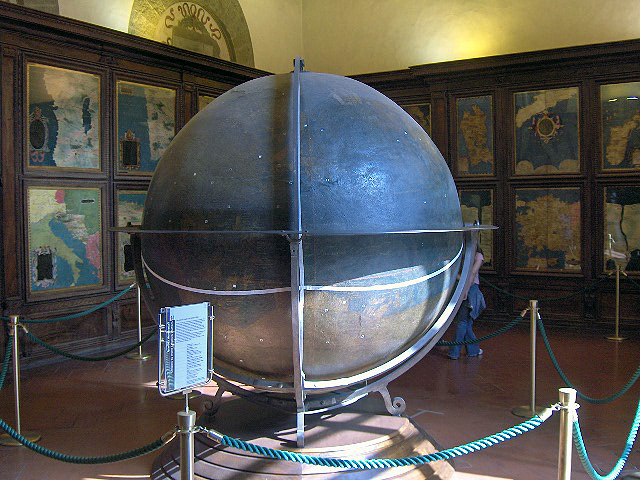
One of the best parts of traveling abroad is discovering the secrets of the past in places like the old map rooms. The first one I really remember being impressed by was at the Vatican Musuem, where the Papacy used maps as a means for displaying the lands over which they had influence, hundreds of years ago.
High on my list of rooms left to visit is the Giorgio Vasali's Hall of Geographical Maps in Florence with the Mappa Mundi at its center. Looking at some of the photos online you can see that he elegantly connected astronomy and geography in a space that both impresses and is simply beautiful.
So, go online and dig around some. This is worth checking out.
High on my list of rooms left to visit is the Giorgio Vasali's Hall of Geographical Maps in Florence with the Mappa Mundi at its center. Looking at some of the photos online you can see that he elegantly connected astronomy and geography in a space that both impresses and is simply beautiful.
So, go online and dig around some. This is worth checking out.
Comparison maps
Maps make explicit things that we sort of already knew. Compare the map of MLB player hometowns with the map of NHL player hometowns.
(h/t/ Kottke)
(h/t/ Kottke)
25 June 2012
24 June 2012
Design documentary films
True Films is a site that offers thoughtful reviews of documentary films. The site includes a short list of films about design that might help change your perspective on what we do. The next heat wave might be a good time to try one.
16 June 2012
Old and at-risk
The new list of the Top 11 Endangered Historic Places is out. New Jersey is prominent yet again as Ellis Island and Princeton Battlefield both make the list.
14 June 2012
Prison Map mines Google Map images of about 700 prisons to create an overwhelming representation of the "geography of incarceration".
View Larger Map
(the USP Florence Admax is pictured above. Great comments, BTW.)
View Larger Map
(the USP Florence Admax is pictured above. Great comments, BTW.)
Affordable housing is hard to make work
DC requires that new housing include some low income units but, writes Matt Yglesias, those units aren't moving as quickly as you might think.
13 June 2012
That new job
For our new grads, the Harvard Business Review blog offers 5 tips for you on your first job.
12 June 2012
Water war
Southern Arizona has always been susceptible to water problems, with the threat of a full water war persistently looming on the horizon. A case study is currently underway as Tombstone AZ has found itself needing to take heavy equipment through a US FS protected Wilderness Area to restore their water supply. While it is mostly a local story, it got some national attention when the Supreme Court declined to hear the case this week. Some have tried to characterize it as friendly neighbors vs. scary Federal government, or people vs. spotted owls, but it also serves as a more fundamental lesson in how tenuous water supply is, and will continue to be, in a growing number of areas in the US.
How far has Curitiba fallen?
For a while, Curitiba, Brazil was the talk of sustainable community planning. Its former mayor had a popular TED talk and its successes were described in many publications. However, Atlantic Cities says that the city's shine is beginning to fade.
08 June 2012
More writing tips
Writing tips, this time from McSweeney's. Be careful, because as they explain..."A writer’s brain is full of little gifts, like a piñata at a birthday
party. It’s also full of demons, like a piñata at a birthday party in a
mental hospital."
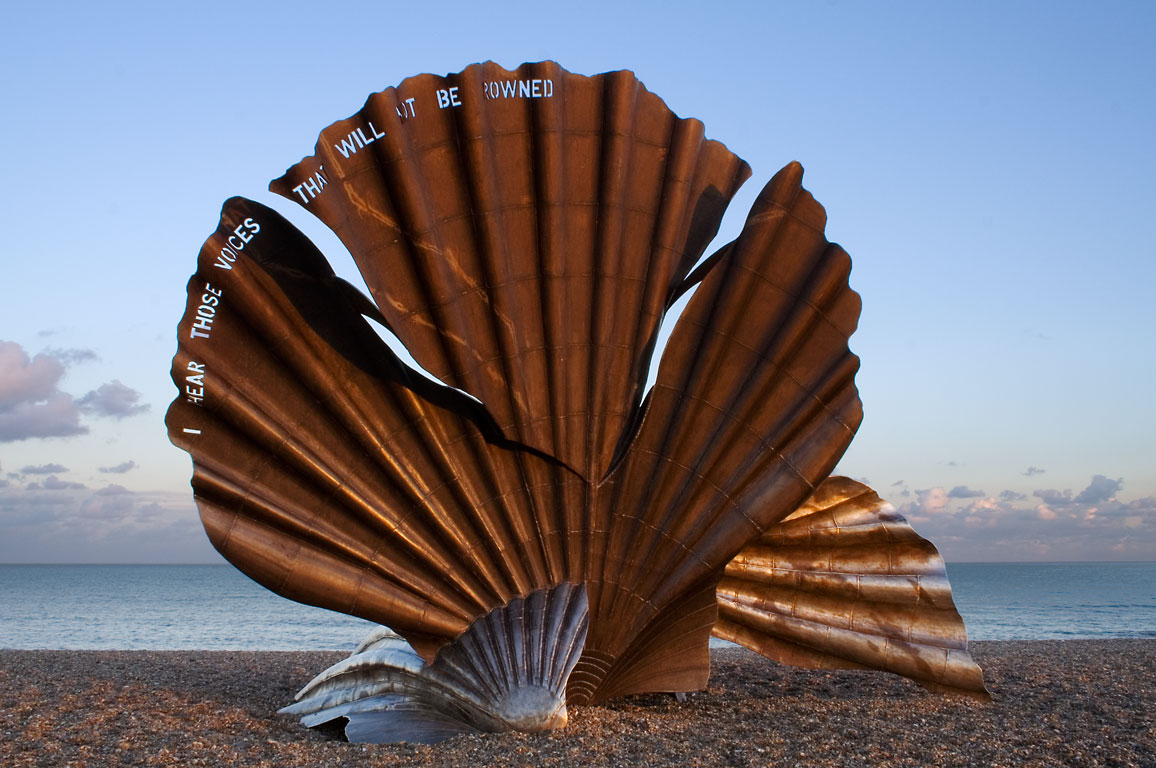
Britten Scallop
With lots of talk about Benjamin Britten lately (his music is used as a core to the score of Moonrise Kingdom), I couldn't resist this striking photo by Andrew Dunn showing the Maggi Hambling's Memorial Scallop on a beach near Aldeburgh. (Bigger than it looks. Check out this YT video for scale.)
07 June 2012
This past weekend the NY Times Magazine featured 32 innovations that will change your life. While all 32 are worth your attention (well, 29 of the 32), one is spatial: #30 GPS-enabled gardening.
06 June 2012
The "mobile mapping wars" are heating up
The LA Times reports that Google Maps is adding new functions, but Apple is about to drop it as one of its featured apps.
05 June 2012
Getting around NYC
Summer is a great time for getting out and finding new experiences in New York City. Museum exhibits and new buildings are always out there. But just a simple walk through Astoria or Morningside Heights can help you see urban life in a different light. What else could you do to tap into NYC this summer?
Of course, you could go on the walking tour this Saturday
Check out the changes at the Brooklyn Botanic Garden
As you walk around ask whether the work is almost done (one more term!)
Feed the birds at Pier 15
Or, weigh in on the illegal Dunkin' Donuts signs (which, FWIW, also missspell doughnuts)
With that in mind I offer you my growing, draft map of underappreciated spots in NYC that you might visit. But use it at your own risk.
View Dr. T's Map of New York City's Underappreciated Sites in a larger map
Of course, you could go on the walking tour this Saturday
Check out the changes at the Brooklyn Botanic Garden
As you walk around ask whether the work is almost done (one more term!)
Feed the birds at Pier 15
Or, weigh in on the illegal Dunkin' Donuts signs (which, FWIW, also missspell doughnuts)
With that in mind I offer you my growing, draft map of underappreciated spots in NYC that you might visit. But use it at your own risk.
View Dr. T's Map of New York City's Underappreciated Sites in a larger map
01 June 2012
Winning!
The Woodrow Wilson Institute's Lea Shanley posted a link to a fascinating Pew Research report called The Future of Gamification by Janna Anderson and Lee Rainie.
But what about urban plazas? Could there be special lights that only come on when the plaza's users sit in certain patterns? Or movable features (like chairs or rolling planters) that somehow trigger scores or rewards when position in a specific way?
Is it all crazy?
What does this mean for landscape architecture? It isn't very different than when kids pursue Junior Ranger status by achieving multiple goals. I could certainly imagine visitors to Central Park getting points for each landmark they visit or accumulating virtual ribbons for more than 10 visits or 50 visits. Or maybe a "Water, Land and Air" award for people who hike, boat and kite in the park.Tech stakeholders and analysts generally believe the use of game mechanics, feedback loops, and rewards will become more embedded in daily life by 2020, but they are split about how widely the trend will extend. Some say the move to implement more game elements in networked communications will be mostly positive, aiding education, health, business, and training. Some warn it can take the form of invisible, insidious behavioral manipulation.
But what about urban plazas? Could there be special lights that only come on when the plaza's users sit in certain patterns? Or movable features (like chairs or rolling planters) that somehow trigger scores or rewards when position in a specific way?
Is it all crazy?
Subscribe to:
Posts (Atom)